.png)


Sami Spring Migration in Norway: Complete Finnmark Guide (2026–2027)

Updated: Mar 7

Quick answer: The Sami spring migration in Finnmark, Norway usually happens between April and May, when reindeer herding families move their herds from inland winter pastures toward summer grazing areas. The exact timing changes each year depending on snow, weather, grazing conditions, and the behaviour of the herd, so there is no single fixed date. |
The Sami reindeer spring migration in Norway is one of the most meaningful ways to understand life in the Arctic. In Finnmark, reindeer herding families move with the herd toward summer grazing areas, following snow conditions, weather, and the rhythm of the animals.
Updated for the 2026–2027 season.
This guide is based on Visit Natives’ direct work with Sami host families in Finnmark and on real migration seasons on the ground. It is updated with practical traveler information, seasonal timing context, and first-hand operational knowledge from organizing small-group experiences with Sami reindeer herders.
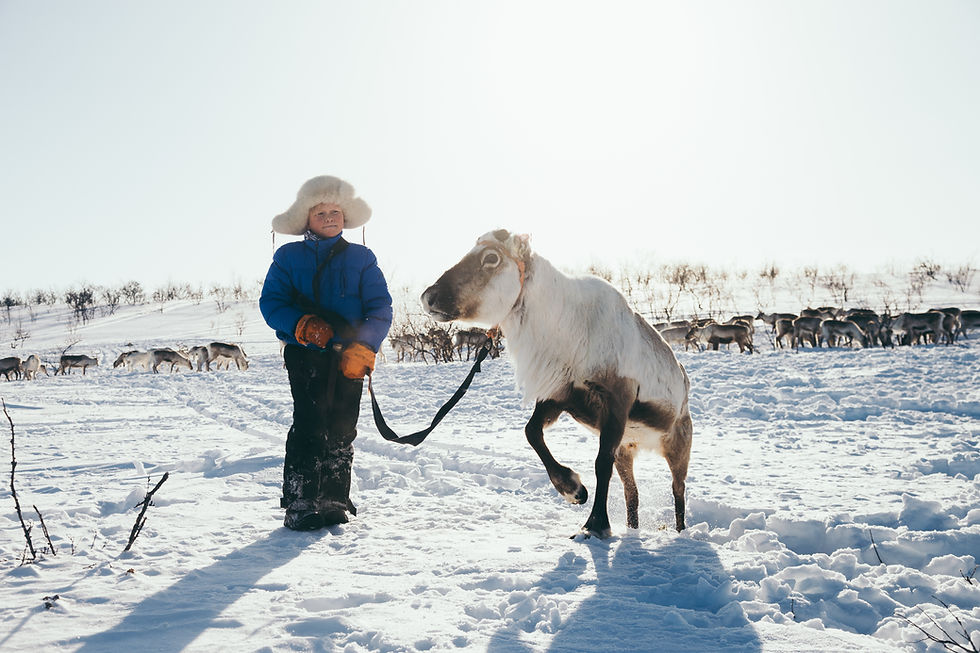
What is the Sami reindeer spring migration in Norway?
The Sami reindeer spring migration in Norway is the seasonal movement of reindeer herds toward summer grazing areas, led by reindeer herding families who follow the herd as snow, weather, and grazing conditions change. In Finnmark, spring migration is one of the clearest ways to understand how reindeer herding life works in practice, day by day.
The Sami are one Indigenous people whose homeland, Sapmi, stretches across northern Norway, Sweden, and Finland, and into Russia’s Kola Peninsula. Because migration routes differ between herding areas, and because conditions change from year to year, there is no single fixed pattern that applies everywhere. As our Sami host Nils often says, migration does not begin because people decide a date. It begins when the herd and the land say it is time.
In Finnmark, the spring migration usually happens sometime between April and May, as the herd begins moving toward summer pastures. The exact timing depends on snow conditions, temperatures, and how the herd is behaving that season. Understanding this helps you plan realistically and gives important context for experiencing the Sami reindeer spring migration responsibly with a Sami family in Finnmark.

Spring migration explained: what it is and what changes year to year
In Finnmark, northern Norway, the Sami reindeer spring migration is the seasonal movement of the herd toward summer grazing areas after the long winter. It is easy to imagine this as a fixed event, but migration is not something you can schedule on a calendar. Weather, snow, and grazing decide what is possible, and even the herders do not control the start in the way outsiders often assume.
Reindeer are semi domesticated animals. They live closely with people, yet they still follow their own instincts, their own pace, and the needs of the herd. As spring approaches, their behaviour changes. They become more restless, they begin to drift, and the herd starts to move toward the areas where conditions are better. At that point, migration is not a decision that can be postponed for convenience. The work of the herders is to read the herd and the land, and to follow, guide, and protect the animals as they move.
Most spring migrations in Finnmark take place sometime between April and May, but the exact timing cannot be guaranteed. One year might bring stable snow and steady travel. Another year can bring sudden warm spells, strong winds, or freeze–thaw periods that change the snow surface and affect how easily the reindeer can move and feed.
Our Sami host Nils, a reindeer herder from Finnmark who hosts our migration, has said that spring no longer behaves quite the way it used to. Climate change has made conditions less stable and more difficult to predict. What may look like a small weather shift to an outsider can affect snow quality, grazing access, and the rhythm of the herd, which is one reason migration can feel very different from one year to the next.
Seen up close, migration is also one of the great animal movements of the North. It is a living rhythm. The herd leads, people adapt, and the route and pace take shape day by day. For visitors, understanding this changes everything. You stop looking for a perfect date, and you start appreciating what it means to witness a real migration in real conditions, with flexibility and respect.

Where in Finnmark does the spring migration happen?
In Finnmark, the Sami reindeer spring migration usually moves from inland winter pastures toward coastal summer pastures. Many herds travel across the wide Finnmarksvidda plateau and continue toward the coast as spring advances and grazing improves.
Winter grazing is often inland, where the climate is colder and drier and reindeer can dig for lichen under lighter snow. Summer grazing is often closer to the Arctic coast, fjords, and islands, where the green season arrives earlier and fresh plants become available.
There is no single route called “the Finnmark spring migration.” Finnmark is divided into East Finnmark and West Finnmark reindeer herding areas, which are further divided into districts. Each district and herding community has its own seasonal pastures and its own practical migration route, so distances and timing can vary from year to year depending on conditions.
For most visitors, Alta is one of the easiest gateways into inland Finnmark, especially if you want to understand the geography around reindeer herding communities before you travel. If that is you, you might also like our related guide on where Sami people live in Norway near Alta.

When does the reindeer spring migration take place?
In Finnmark, the Sami reindeer spring migration usually takes place sometime between April and May, but there is no single fixed start date. Different herding districts and families move at different times, depending on their seasonal pastures, local snow conditions, and how the herd is behaving that year.
Migration timing is not decided months in advance like a festival date. The pace of spring, snow conditions, temperatures, wind, and access to grazing all shape when movement begins. Some years spring arrives early and the herd starts moving sooner. In other years, winter holds on longer, and families wait for conditions that make travel safer and grazing more reliable.
This is also why you will see different dates mentioned online. People are often talking about different regions, different herding groups, or a different year with different conditions. If you are looking for Sami reindeer spring migration dates in Finnmark (Norway) for the 2026 to 2027 season, you can see our current travel windows and availability here: Sami reindeer spring migration dates and availability.
Why do reindeer migrate?
Reindeer migrate to follow the seasons in the most practical way possible. In spring, movement is closely linked to snowmelt, fresh plant growth, and the herd’s need to reach better summer grazing areas. For female reindeer, this seasonal movement also matters because of calving and the need for safer feeding conditions for newborn calves.
What shapes the migration most is not only where food exists, but how easy it is to reach. Reindeer depend heavily on ground forage such as lichen, and snow conditions can make grazing easier or much harder. Deep snow, hard crusts, and ice layers all affect how and when the herd begins to move.
Reindeer also tend to follow traditional routes that have been used for generations. Herders guide and protect the animals, but migration does not happen on a fixed timetable. In Finnmark, the route and pace depend on snow, weather, wind, and the behaviour of the herd, which is why each spring migration looks a little different.
If you also want a cultural lens on Arctic seasons beyond migration, you might enjoy our story on Northern Lights and Sami culture.

Why is spring migration different from autumn migration?
Many travellers ask how the spring migration differs from the autumn migration in Finnmark. The biggest differences are light, weather, ground conditions, and the overall feel of the days.
Spring migration usually takes place in April and May, when daylight is increasing fast and the landscape is still covered in snow. For many visitors, this makes the experience feel brighter, more open, and easier to photograph. Travel often happens on snow, so snowmobiles and sleds are commonly part of the journey when conditions allow.
Autumn migration, by contrast, usually feels darker, wetter, and less predictable. Some years there is little snow at all, which can mean mud, rain, bare tundra, and travel by ATV instead of snowmobile. Because of the shorter days and wetter conditions, autumn often feels more physically demanding.
For many first-time visitors, spring is the easier and more accessible season. It offers more light, more classic snowy Arctic scenery, and a more forgiving daily rhythm. Autumn can also be powerful, but it usually suits travellers who are comfortable with rougher conditions and shorter days.
If you want to understand the spring migration in Finnmark, it helps to know that this is one reason many guests choose spring over autumn. Spring often feels like forward movement and transition into the green season. Autumn often feels like gathering, preparation, and return. Autumn can also include more time around corrals and sorting phases, depending on the timing, while spring is more about following the herd as conditions open up. If you want a bit more background on what reindeer herding life actually involves beyond migration season, read our guide on Sami reindeer herding in Norway and five things you probably didn’t know.
Spring vs autumn migration in Finnmark: visitor comparison chart
Category | Spring migration (April to May) | Autumn migration (late Oct to Nov) |
Light | Long and increasing daylight | Short days, darkness comes early |
Look of nature | Snowy plateau, bright Arctic light | Often no snow yet, brown tundra, wet ground, early winter mood |
Weather feel | Cold but often clearer and lighter | More changeable, can be mild then suddenly wintery |
Ground conditions | Snow conditions vary from firm to softer later | Can be muddy, rainy, wet, sometimes icy later |
Travel methods | Often snowmobiles and sleds when snow supports it | Often ATVs on bare ground, sometimes snowmobiles if winter arrives early |
Comfort level | Easier for many because of light and more predictable daily rhythm | More demanding because of wet cold, darkness, and quick weather shifts |
Photography and filming | More natural light and more time to shoot | Dramatic atmosphere but low light challenges, need better planning |
Pace of the days | Movement and transition toward summer grazing | Gathering, sorting phases, preparation, then return toward winter pastures |
Best for | First timers, people who want clearer logistics and more light | People who want a deeper Arctic season turning feeling and do not mind challenge |
If you want a broader overview of Sami seasons beyond migration, you can also read our related guide on the best time to visit Sami reindeer herders in Norway.
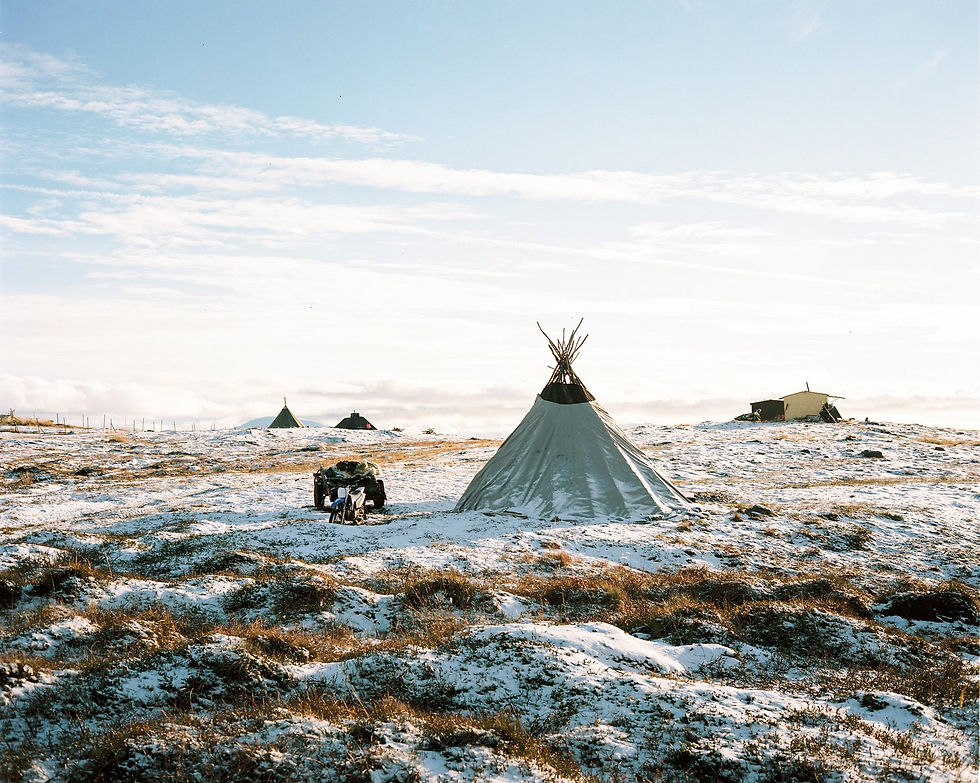
What you will actually do on a Sami reindeer spring migration in Finnmark
Every Sami reindeer spring migration in Finnmark is different. Weather, snow conditions, and the movement of the herd shape each day, which means there is no fixed timetable. Some days involve steady travel across the tundra, while others are slower and require waiting, regrouping, and adapting to conditions. As a guest, your role is not to control the pace, but to take part respectfully in real migration life.
From the first day, the experience begins immediately. After pickup, you change into proper Arctic clothing, go through the practical basics, and travel out toward the migration area by car and snowmobile. Once you reach the herd and the host family, the daily rhythm is shaped by the needs of the reindeer and the conditions on the plateau.
During the day, you stay close to the herd and follow the movement as it unfolds. In spring, this often means travelling by snowmobile and sled, with long stretches across open snow and regular pauses to observe, wait, and adjust. You may also help in small practical ways, such as carrying light items, supporting meal preparation, or helping keep camp organised under the family’s guidance.
Not every day is fast moving. If wind, visibility, or snow conditions change, the day may become slower and more camp focused. In the evenings, you share food, stories, and time around the fire, which is often one of the most memorable parts of the whole experience. The goal is not constant activity, but real closeness to a working spring migration, with all the flexibility that life on the tundra requires.

How hard is the Sami spring migration physically?
The Sami spring migration is not extreme, but it does require a normal level of everyday fitness and comfort with active days outdoors. You will spend many hours on the tundra, getting on and off snowmobiles, walking short distances in snow, and standing still for periods while the family works with the reindeer.
Most guests do not need special training. Basic balance, mobility, and a willingness to be outside in cold and changing conditions are usually enough. The experience is more about stamina, flexibility, and attitude than athletic performance.

Weather in Finnmark during the Sami spring migration
The Sami spring migration in Finnmark usually takes place in April and May, when the sun is already stronger but the plateau can still feel fully wintery. Snow often remains deep across Finnmarksvidda, and conditions can change quickly depending on wind, temperature, and recent snowfall.
Near Alta, April daytime temperatures are often around 1 to 5°C, while inland areas such as Kautokeino are usually colder. Wind is an important part of the experience, because even temperatures near freezing can feel much colder on the open plateau, especially when standing still.
Spring snow also changes through the day. Mornings may be firmer, while afternoons often become softer as the surface warms. Clear days can feel very bright because of the light reflecting from the snow, so sunglasses are essential and sunscreen is a good idea. In practice, the most uncomfortable conditions are often not extreme cold, but damp cold around freezing, which is why good layering and moisture control matter so much.
If you want practical clothing guidance that still applies well for spring conditions, you can also read our guide on how to dress for a Sámi reindeer experience in Arctic winter
What to pack for spring migration
Packing for spring migration in Finnmark is less about bringing more and more about bringing the right layers. Spring can look bright and calm, yet the tundra is still wintery, and wind can change how the temperature feels in minutes. The key is to dress so you can stay warm while standing still, but also cool down quickly when you start moving.
Start with a good base layer that sits comfortably against your skin. Merino wool is ideal, because it stays warm even if it gets slightly damp. On top of that, bring one or two warm mid layers, for example a wool sweater or fleece, and if you tend to get cold, a light down jacket as an extra insulation layer for breaks. The most common mistake is dressing too warmly and sweating. Once you stop moving, moisture turns into cold fast, so being able to adjust your layers is what keeps you comfortable.
When you travel with Visit Natives, you do not need to worry about heavy outerwear. We provide the main Arctic outer layers, including overalls, winter boots, mittens, and a warm hat, so you can focus on getting your base and mid layers right. Think of your own packing as building the inside of the system, while we take care of the outer shield against wind and snow.
Spring sun is also stronger than many people expect. Even when the air feels cold, snow reflects a lot of light, so bring good sunglasses. If you are riding a snowmobile, snow goggles can make the experience much more comfortable, especially in wind or bright conditions. Sunscreen is also worth packing, because people do get sunburned in Arctic spring without noticing it.
One more practical tip is food. We provide meals throughout the experience, but migration does not follow a clock. The herd moves at nature’s speed, and cooking in tundra conditions can be slower than people are used to. You also burn a surprising amount of energy simply by being outside all day. Bringing a small bag of energy-rich snacks can make the experience more comfortable, especially on longer days or while waiting. Think simple, high-calorie options that are easy to carry, such as energy bars, nuts, dried fruit, chocolate, or even sweets if you like. There are no shops out there, so a little extra comfort food for the evenings is never a bad idea.
It is also worth packing a few small personal comfort items. There are no shower facilities out on the tundra, so wet wipes can be very useful for a quick freshen-up. Because everyone sleeps in the same lavvu, some guests also like to bring earplugs and an eye mask for sleeping. A book or e-reader can also be nice for slower moments, weather days, or quiet evenings, although many people find they are happy just to rest and be present.
Finally, bring the small things that keep your day smooth. A thermos or bottle you like drinking from, lip balm, and a power bank for your phone are simple, but they make a real difference when you are outside for long days.

What is it like to sleep in a lavvu?
Sleeping in a lavvu is one of the most memorable parts of a Sami migration, because it connects you to the older logic of life on the move. Today, most Sami families in Norway live in modern houses like everyone else, but reindeer herding still follows the seasons, and a mobile shelter is still the most practical way to live out on the plateau when the herd is moving.
A lavvu is often compared to a North American tipi, and the resemblance is real, but in scholarly descriptions the lavvu is defined as a temporary dwelling built from three or more evenly spaced forked or notched poles forming the main support, with additional poles creating the conical frame.
To understand why it feels so “functional”, it helps to know that the interior has traditionally not been an empty space. Academic descriptions of Sami dwellings talk about clear zones, including an entrance area (uksa), the hearth as the centre of daily life, and a back area often referred to as boaššu or possjo, which carried special meaning in earlier belief systems and later also had practical household functions. Historical accounts also describe a structured organisation of space, including different “seats” along the sides and a strong sense that the home had an order people followed.
On migration with Visit Natives, the host family and herders set up one large lavvu as the shared living and sleeping space, just as a moving camp has been organised for generations. Everyone sleeps in the same tent. Most guests are surprised by how natural this feels once you are there. It is warmer, calmer, and more practical than separating into small shelters, and it keeps the group together in an environment where weather can change quickly.
Comfort comes from insulating the ground properly. Ethnographic research describing lávvu use notes the use of branches on the floor as part of maintaining and refreshing the base layer. In migration camp, the family builds a thick foundation first, then layers reindeer skins on top, and your sleeping bag goes over that. With Visit Natives, we provide the sleeping bags, so you do not need to bring a heavy expedition bag yourself.
It is also worth coming with realistic expectations. There are no showers out on the tundra, and most people stay in the same warm base layers for the whole time. That actually makes shared tent life easy. You are not doing outfit changes, and you are not stripping down in the lavvu. People keep it practical, respectful, and simple.
Toilet facilities are basic. There is usually a separate toilet tent, and sometimes the tundra is the reality when you are far from everything. After the first day, most people find this feels much less dramatic than they imagined, because the whole camp rhythm is focused on warmth, practicality, and getting the daily work done.

Food and daily routines on the Sami spring migration
Food on migration is simple, warming, and closely tied to what makes sense out on the tundra. Many Sami reindeer herding families still have strong traditions of fishing, gathering, and using reindeer as an important part of their food culture, even though modern life also includes store bought ingredients. During migration, meals are built around warmth, energy, and ingredients that travel and store well in Arctic conditions.
You can expect reindeer meat in different forms, often as slow cooked meals and also as more portable options like smoked or dried pieces that are easy to carry. Fish is another cornerstone, and when conditions allow, the family may ice fish and cook what is caught, with Arctic lake fish such as Arctic char being a classic example in the North. Alongside that you will often see familiar comfort sides like potatoes, simple bread, and hot soups or stews that feel exactly right after hours outside.
Berries are part of the seasonal story too. In Finnmark, people commonly use Arctic berries such as lingonberries and cloudberries, sometimes alongside other preserved berries depending on what the family has gathered and stored. These bright flavours balance richer foods and add a very northern character to meals.
Daily routine is shaped by the herd, not by a dining timetable. Mornings usually start with something warm, strong coffee is common, and the day is built around movement, pauses, and work. Meals can be slower than you are used to, because cooking outdoors takes time and sometimes the day simply runs on nature’s schedule.
If you have special dietary needs, do not worry. Vegetarian, vegan, and other diets can be catered for when we know in advance. That said, if you cannot eat some of the local staples, it can be smart to bring a few extra snacks you personally rely on, especially for protein and energy. There are no shops out on the tundra, so having a small backup of familiar foods can make the experience more comfortable while still enjoying the shared meals around camp.

How travel works on the Sami spring migration
Travel on the Sami spring migration is practical, weather dependent, and built around staying with the herd in the safest way possible. In Finnmark, long distances and open terrain mean that snowmobiles and sleds are often used to move people, gear, and supplies across the plateau when snow conditions allow.
You will still do some walking, but usually only short distances, such as around camp or when approaching the herd more quietly. Because spring snow can change through the day, with firmer mornings and softer afternoons, routes and speed often need to adapt.
For guests, travel is not just a way of getting from one place to another. It is part of migration life itself. You quickly learn that moving well in Arctic conditions means dressing properly, staying flexible, and understanding that the herd, the weather, and the land decide the pace.

Sami culture basics for visitors
The Sami are the Indigenous people of Sapmi, and their culture is dynamic, contemporary, and diverse. While not every Sami individual is a reindeer herder, reindeer husbandry remains one of the most visible and culturally significant livelihoods, particularly in Finnmark. Since ethnicity is not officially recorded in Norway, population numbers are estimates, but it is commonly believed that the Sami population in Norway ranges from approximately 50,000 to 65,000.
A few cultural expressions you may encounter can provide insight into the atmosphere surrounding migration. One such expression is yoik (also spelled joik), an ancient Sami vocal tradition that is often deeply personal. Yoik is used to evoke a person, a place, an animal, or a feeling rather than to “perform a song” in the Western sense. Traditional clothing, known in Norwegian as kofte and in Northern Sami as gakti, is another key cultural element. It is not merely a “costume” but a meaningful representation of identity, with specific colors and designs often connected to family and region. Additionally, you may hear various Sami languages spoken, with estimates suggesting there are around nine to ten different Sami languages still in use today, depending on how they are counted.
For deeper context beyond the surface, you can read our long-form article on the Sami worldview and spirituality here: What are the shamanistic beliefs of the Sami reindeer herding people in Norway?

Ethical travel guide: how to experience the Sami spring migration responsibly
The most responsible way to experience Sami migration is also the simplest. Arrive with curiosity, good energy, and a flexible mindset. Out on the tundra, life follows weather, snow, and the herd, so the best experiences happen when you let the days unfold naturally instead of trying to control the pace. When guests are relaxed and adaptable, everything feels easier, more genuine, and more connected.
Responsible travel is also about relationships and value. A good migration experience is community led, fairly paid, and built on trust over time. It supports the families and herders who are hosting, keeps group sizes small enough to feel personal, and creates space for real conversation, learning, and shared routines.
This is how we work at Visit Natives. We offer seasonal experiences with Sami families in Finnmark, including spring migration, autumn migration, and winter family stays. To see all options at a glance, please explore all our Sami experiences on our website.

Safety on the tundra
Finnmarksvidda is vast, open, and beautiful, and that is exactly why safety matters. Conditions can change quickly, especially with wind, and distances can feel much longer than they look. The reassuring part is that Norway has a well developed emergency system and a high standard of healthcare, and when you travel with an experienced Sami host family, safety is built into the daily decisions and routines.
Most safety is simple, everyday comfort management. The main risk is getting chilled when you are standing still, especially if gloves or socks become damp and the wind picks up. Dressing in layers, avoiding sweat, keeping spare gloves and socks dry, and speaking up early if you feel cold makes a huge difference.*
Weather and visibility are the next factor. On the plateau, wind and snowfall can change the plan fast, and that is normal. Safe migration days are built around flexibility. Some days you move far, other days you move less or wait for conditions to settle. That is not lost time, it is experienced tundra logic.
Navigation is also a real topic in Finnmark because the landscape can look similar in different directions, especially in flat light. During the migration you are not navigating alone. You travel with the family and herders who know the area and adapt routes based on conditions.
Finally, it is important that all travellers have travel insurance. Norway’s healthcare system is high quality, but visitors should not assume costs are automatically covered, and in a severe illness or accident, air ambulance or helicopter support can be part of the response in remote areas. Having insurance that covers medical treatment and evacuation is what allows everyone to focus on the situation calmly, without worrying about logistics or costs.

Cost breakdown: what you are paying for
A Sami migration experience in Finnmark is not priced like a standard tour, because it is not built like one. You are joining a working season in a remote Arctic environment, where logistics are complex, safety planning matters, and the experience is hosted by real families and herders whose time and knowledge have value. The price reflects what it takes to do this properly, with small groups and a high level of care.
A large part of the cost is local work and local value. Our model is simple and transparent. About 70 percent of the trip price goes directly to the Sami host family and the herders, and about 30 percent goes to Visit Natives for planning, marketing, administration, guest communication, and managing the full logistics. This means the majority of what you pay stays with the people hosting you in Finnmark, while we handle the work behind the scenes to run the experience professionally and keep it community led.
It also helps to understand how limited the hosting window is. Sami families do not host visitors year round. In our case, guests are welcomed only during a short seasonal window, mainly from January to March for winter family stays, and during the spring and autumn migration periods. The rest of the year is focused on herding life and other responsibilities, not tourism. That means the income from a few hosting weeks needs to support families beyond the exact days guests are present.
Logistics are another major piece. Finnmark is vast, and migration takes place far from towns and services. Reaching the herd requires transport, and depending on the season that can include vehicles, snowmobiles and sleds in spring, or ATVs in autumn, plus fuel, maintenance, spare gear, and contingency planning. Remote travel has real costs, especially when you want the experience to be safe and reliable.
Group size is intentionally small. We run only three to four departures per year, and we take a maximum of six travellers at a time. That means only about 18 to 24 people per year can experience this with us. It is not designed to scale into mass tourism. It is designed to stay respectful and realistic for the families, the herd, and the land.
This is where the local value becomes powerful. Visit Natives exists to support Indigenous families in a practical way, by creating fairly paid hosting opportunities that help reindeer herders stay focused on reindeer husbandry rather than needing extra jobs in towns and cities to make the year work. Because the hosting window is small and the groups are tiny, each traveller matters. Every person who joins the migration is not only participating in a rare Arctic experience, but also contributing to the continuity of Sami reindeer herding knowledge, seasonal lifestyle, and cultural heritage in a way that feels real on the ground.

Who is the Sami spring migration experience best for?
This experience is perfect for people who want something real, quiet, and meaningful, and who feel excited by the idea of spending long days outdoors in the Arctic with a Sami family during a working season. If you enjoy nature, cultures, and learning by being present rather than being entertained, you will likely love it. It suits travellers who are open minded, flexible, and comfortable with plans changing, because migration follows weather and the herd, not a schedule.
It is also an excellent fit for photographers, filmmakers, and documentary makers. We work with many content creators, and our Sami hosts are used to welcoming people who come to document Arctic life respectfully. If your main goal is strong visuals, spring migration is usually the best season. You still have plenty of snow, but you also have brighter days and beautiful sun, which makes it easier to capture the movement of the herd, the open plateau, and the atmosphere of migration in a very cinematic way.
Winter stays in January and February can be amazing too, especially if your main focus is the Northern Lights, but it is also a darker time of year with limited natural light for filming and photography. You can sometimes still see Northern Lights in April, but it requires a truly dark sky, so it is less reliable than mid winter.
You should choose something else if you need comfort level tourism, fixed timetables, private rooms, and guaranteed daily activities. Shared lavvu life, basic facilities, and outdoor days are part of the experience, and that only feels good if you genuinely want it. It may also not be the best choice if you are very sensitive to cold, have difficulty with mobility on snow or uneven ground, or you know that being tired, hungry, or wet makes you anxious. In that case, a shorter Sami visit or a more hotel based Arctic trip might fit better.

If you cannot catch the spring reindeer migration dates
The spring migration season is short, and it does not happen on a fixed calendar, so sometimes the dates simply do not align with your schedule. The good news is that you can still experience Sami reindeer herding life in Finnmark at other times of year, just in a different format.
From January to March, we host a Sami winter reindeer herding experience. Instead of moving camp in a lavvu, you stay in a reindeer herder’s tundra cabin. It is a simple, rustic cabin in the middle of the plateau, far from roads, with no running water and no electricity like in a normal house. You reach it by snowmobile, and the family heats it with firewood. There is usually a small generator for basic power, but the atmosphere is still very traditional and quiet.
Winter herding days have their own rhythm. The herders go out to check and work with the reindeer several times a day, and you get to follow that routine closely, with warm meals and rest back at the cabin in between. It feels more settled than migration, but it is still very much tundra life, just with a cabin base instead of a moving tent camp.
Outside these short hosting windows, Sami families focus on the herd and seasonal work rather than tourism, which is exactly why these experiences remain rare and small-group. If the spring migration dates do not work for you, a winter reindeer herding stay can still offer a meaningful way to experience Sami life in Finnmark.

Related Sami Guides
If you want to understand Sami life in Finnmark more deeply before you travel, these related guides are a good place to continue.
4 Unique Festivals to Experience Sami Reindeer Herding Culture in Lapland 2026
Explore four unique Sami festivals in Lapland where you can experience reindeer herding culture, Arctic traditions, and seasonal life in 2026.
Where Do the Sami People Live in Norway? A Guide to Authentic Sami Experiences Near Alta
Learn where the Sami people live in Norway and discover authentic Sami experiences near Alta, one of the best gateways to Finnmark.
Best Time to Visit Sami Reindeer Herders in Norway: Seasonal Guide & What to Expect
Find the best time to visit Sami reindeer herders in Norway, from winter stays to spring and autumn migration seasons.
Sami Reindeer Herding in Norway: 5 Things You Didn’t Know
Discover five surprising facts about Sami reindeer herding in Norway and how herding life really works beyond common travel clichés.
Learn useful Sami phrases and greetings before travelling to Norway to meet Sami reindeer herders with more respect and cultural awareness.
FAQ: Sami reindeer migrations in Norway (Finnmark)
When is the Sami reindeer spring migration in Finnmark?
Most spring migrations in Finnmark happen sometime between April and May, but there is no single fixed start date. Timing depends on snow conditions, weather, and how the herd begins to move that year.
When is the Sami reindeer autumn migration in Finnmark?
Autumn migration usually takes place in late October and November. Some years it starts earlier or later depending on when winter conditions arrive and how the grazing and ground conditions develop.
Do all Sami families migrate at the same time?
No. Different herding districts and families move at different times, and routes vary by region. Even within Finnmark, migration timing can differ from one community to another.
Where does the migration happen in Finnmark?
Many herds move between inland and coastal seasonal grazing areas, often travelling across Finnmarksvidda. There is no single “one route” migration. Each district has its own seasonal pastures and practical routes.
Is the migration guaranteed on exact dates?
Nature decides the schedule. We plan around realistic seasonal windows, but exact timing can shift due to weather and the herd’s movement. This is normal and part of what makes the experience authentic.
How long does a migration experience usually last?
It depends on the departure and the season. Visit Natives offers 6-day trip lengths and formats, and each one begins with an active first day out to the tundra.
How hard is it physically?
You do not need to be an athlete, but you should be comfortable with long outdoor days, cold exposure, and a flexible pace. Spring is usually more forgiving. Autumn can be more demanding due to wet ground, rain, and faster changing conditions.
How do you travel during migration?
In spring, travel is often by car first and then snowmobiles and sleds on the plateau. In autumn, conditions vary more. Some years travel is on bare ground with ATVs, and in early winter conditions snowmobiles may be used again.
What is it like to sleep during migration?
Migration camp is usually based around one large lavvu where the group sleeps together. The tent is warmed, and sleeping comfort comes from good insulation on the ground, reindeer skins, and a proper sleeping bag.
Is there a shower or normal bathroom?
No. This is tundra living. Toilets are basic, usually in a separate toilet tent, and there are no showers during migration.
Can you cater for vegetarians or special diets?
Yes, as long as we know in advance. If you have a very specific diet or rely on certain protein snacks, it is smart to bring extra snacks too because there are no shops out on the tundra.
What should I pack?
Layers are everything. Bring good base and mid layers and small essentials like sunglasses, sunscreen, and snacks. For spring migration, the sun can be intense due to snow reflection. For autumn migration, waterproofing and a headlamp are key.
Is it safe? What if something happens?
Safety is built into how the days are run, and Norway has high quality healthcare. All travellers should have travel insurance that covers remote travel and medical evacuation, just in case.
Can I take photos and film?
Yes. Photography is welcome, and we often host photographers and filmmakers. We will naturally guide you on what works well in camp and around herding work so everyone feels comfortable.
Is spring or autumn better?
Spring is brighter, usually easier for photography, and often feels more forgiving for first timers. Autumn is more dramatic and raw, but can be wetter, darker, and more physically demanding.
What if I cannot catch the migration dates?
You can still experience Sami reindeer herding life from January to March on a winter herding stay based in a rustic tundra cabin, reached by snowmobiles, with daily herding routines.
When will you publish next year’s migration dates?
We usually publish the next season’s dates once the current migration season is over. Because timing depends on how the season unfolds, we do not release dates more than about one year in advance. In practice, after spring migration ends, we normally publish the new dates for the following year in May.


About the Author
Written by Anniina Sandberg, founder of Visit Natives. Through direct work with Sami host families in Finnmark, Anniina has helped create small-group migration experiences that are community-led, respectful, and grounded in real life on the tundra.
Instagram: @theanthropologisttraveler
Visit Natives is a purpose-led travel company creating Indigenous-led journeys for travellers who want something real, human, and responsibly hosted. We work directly with local communities and design small-group experiences where the hosts lead the way and the value stays where it belongs.
Our core destinations include Norway with Sami reindeer herders, Tanzania with Hadza hunter-gatherers and Maasai and Datoga pastoralists, and Morocco in the Sahara with Tuareg and Berber nomads. We also curate selected culture-focused itineraries in Papua New Guinea.
We believe travel can support living heritage and long-term livelihoods when it is done well. That is why our journeys are built around fair partnerships, small groups, and experiences that respect local life, land, and culture.


