.png)


How to Dress for a Sami Reindeer Experience in Arctic Winter

Updated: Dec 21, 2025
Key Takeaways: Dressing for Arctic Winter When spending long hours outdoors in Arctic winter, warmth depends more on wind protection, stillness, and moisture control than on temperature alone. Dressing in layers, protecting hands, feet, and face, and using proper Arctic footwear and headwear are essential. Traditional Sami clothing made from reindeer fur offers exceptional insulation and breathability. With the right preparation, even extreme cold can be experienced comfortably and safely. |
Last winter, we hosted travelers from Japan and Italy deep in the Arctic tundra, where temperatures dropped to minus 34°C. We spent up to four hours outdoors every day, feeding reindeer, traveling by snowmobile, and standing still on open tundra, the coldest situation of all.
Yet no one suffered from the cold. Not because it wasn’t extreme, but because we dressed the way the Sami have done for generations.
Arctic Cold Is Not Just About Temperature
Arctic winter cold is not just about the number on the thermometer. Wind, stillness, moisture, and time spent outdoors matter far more. Standing still with reindeer at minus 25°C can feel colder than walking at minus 35°C, while snowmobile travel dramatically increases wind chill. Moisture is especially dangerous, because once sweat freezes, body heat disappears quickly.
We managed extreme cold conditions comfortably because we were properly prepared, using multiple layers and wearing traditional Sami clothing made from reindeer fur and skin. These garments are designed specifically for Arctic conditions and have been refined through generations of lived experience. Comfort and warmth are always the top priority when visiting the Arctic in winter, as temperatures can range anywhere from 0°C down to minus 40°C.
There are two main factors that determine how cold you feel: air temperature and wind speed. During our stays with Sami reindeer herders, we move between locations by snowmobile when visiting the reindeer. This movement increases exposure to wind, making proper clothing essential. Without adequate protection, time outdoors can quickly become uncomfortable or even unsafe.
This is why, on our Sami reindeer herding experiences, we provide or arrange high quality winter clothing for guests, depending on the trip. These garments are designed for real Arctic conditions and allow visitors to focus on the experience rather than the cold. If you would like to better understand where these winter journeys take place and why inland Finnmark presents such demanding conditions, our guide Where Do the Sami People Live in Norway? A Guide to Authentic Sami Experiences Near Alta offers helpful geographic context.

"There is no such thing as cold weather, only bad clothes"
Remember to protect your extremities well too! Fingers and toes can get very cold very quickly. Mittens are much more warmer than gloves so we recommend wearing them. A warm woolen scarf is a must and warm hat that covers ears.
Dressing in Layers: How the Sami Actually Do It
The biggest mistake visitors make is dressing too warm while moving. Each layer has a specific role. The base layer keeps moisture away from the skin. The mid layer traps warm air for insulation. The outer layer blocks wind and snow while allowing moisture to escape. Layers should never be tight, as trapped air is what creates warmth. Adjusting layers throughout the day is part of Arctic life, especially when moving between activity and stillness. The Sami taught us to remove layers even when we felt cold because sweat is the real enemy in Arctic winter. It is good to remember that the warmest way to dress is by using the system of layers. As a general rule of thumb is to build up layers of clothes that will trap air. You should have three layers when you go out.
The base layer (long- thermal underwear), mid layer (pants and sweater) and outer layer (winter pants and jacket which are made of windproof material). Jackets should always have hoods as they protect head from wind. On top of this clothing we also use snowmobile overalls or traditional Sami reindeer fur jackets. It is worth investing on good quality base layer garments like wool. Merino wool is best material for the base layer as it dries quickly and repels odour. Wool and fleece are good materials for mid layer. And if you ask the Sami, the best material is reindeer skin and fur - and we couldn't agree more!

What Most Arctic Visitors Get Wrong
Even well prepared travelers often struggle in Arctic winter, not because they lack expensive gear, but because they misunderstand how cold actually works in the tundra.
Tight boots are one of the most common mistakes.
If your boots are too tight, blood circulation is restricted and your feet will feel cold no matter how warm the boot claims to be. In Arctic winter, slightly loose boots with room for air and thick wool socks are far warmer than tight, insulated footwear.
Gloves instead of mittens.
Fingered gloves separate the fingers and allow heat to escape. Mittens keep fingers together and preserve warmth far more effectively. The Sami almost always choose mittens in extreme cold, especially when standing still for long periods.
A warm jacket but weak extremities.
Many visitors invest in an expensive jacket but underestimate hands, feet, face, and ears. In Arctic winter, warmth is lost first from the extremities. If your core is warm but your hands and face are exposed, you will still feel cold.
No proper wind protection for the face.
Wind is often more dangerous than low temperatures. Exposed skin on the face can freeze quickly, especially on snowmobiles. A thick wool scarf or balaclava that fully covers the face is essential.
Assuming movement equals warmth.
Walking generates heat, but Arctic life involves long periods of stillness. Feeding reindeer, listening, waiting, and observing all happen without constant movement. Clothing must keep you warm when you are not moving at all.
Understanding these points makes the difference between simply enduring Arctic winter and truly enjoying life outdoors with the Sami reindeer herders. These are the same principles our guests learn firsthand during our Sami Reindeer Herding Winter Stay, where proper clothing allows you to focus fully on life with a reindeer herding family rather than on the cold.
Traditional Sami Winter Clothing: Why Reindeer Fur Is Unmatched
Reindeer fur is uniquely insulating because each hair is hollow, trapping warm air while remaining breathable. This quality makes it exceptionally effective in extreme cold, which is why it has been used for centuries in Arctic survival rather than for symbolism.
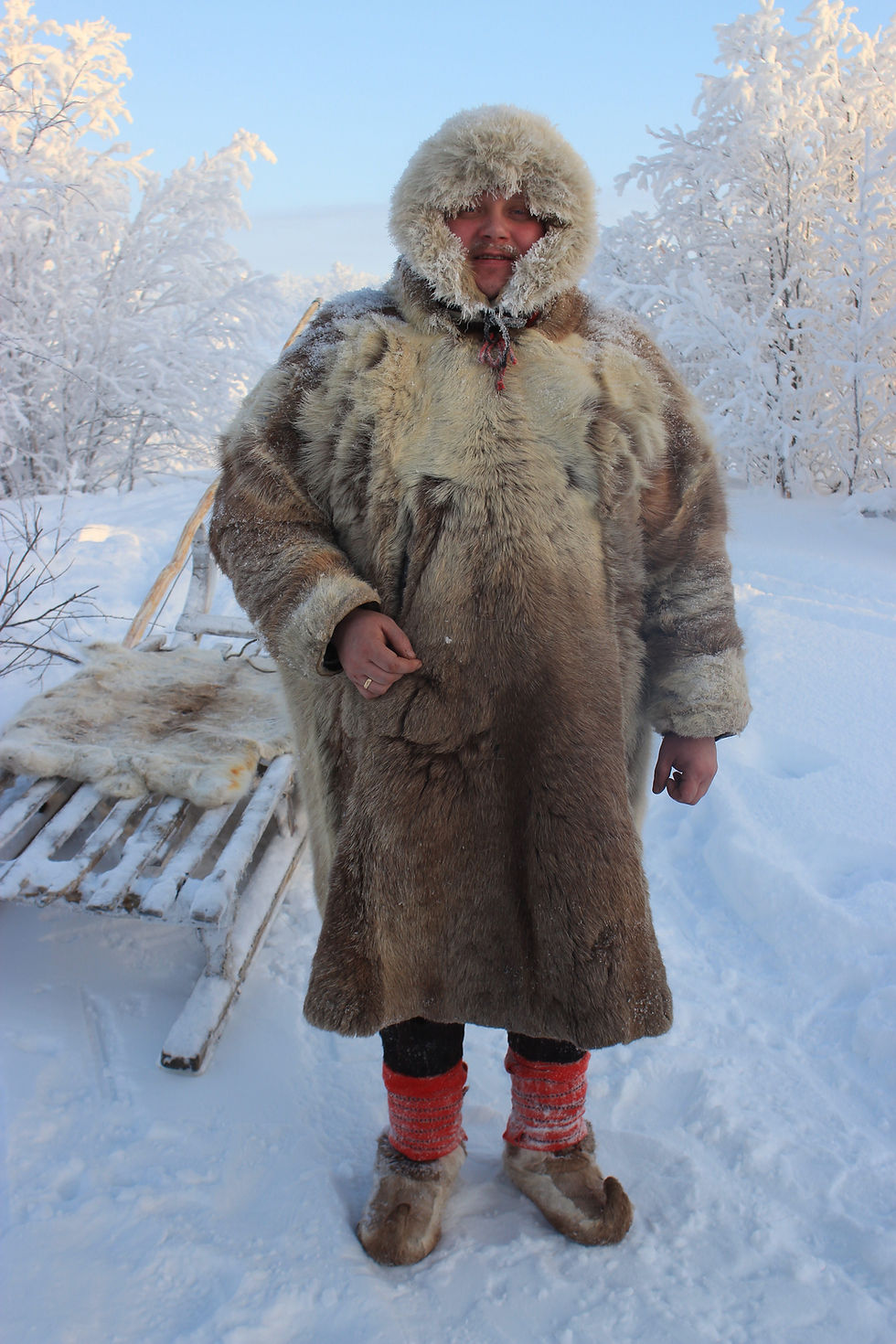
The Sami people have lived in the Arctic for a long time and their traditional outwear clothing is probably the most warmest as they use reindeer skin and fur for winter clothing. The Sami people develop a very close relationship to their reindeer and always use as much of it as they can. All parts of the animal is used. The reindeer fur is uniquely thermal, keeping the body warm in subzero temperatures. A complete traditional Sami outfit is a considerable expense in terms of materials and time used by making them. The knowledge of reindeer skin preparation for clothing is passed down through the generations.
The Beaska is a traditional heavy coat made of reindeer fur. The Luhkka is a piece of clothing that is a poncho-like hooded cape with the hem coming down to the wearer's elbow or wrist. Luhkka are made from thick wadmal. Luhkka is traditionally worn on top of the beaska fur jacket. The luhkka protected the furcoat from getting wet from melting or falling snow.

Travelers helping each other to pull over the warm Sami luhkka when heading outdoors.
Do You Need Special Clothing to Stay With a Sami Reindeer Herding Family?
Staying with a Sami reindeer herding family is very different from joining a short winter activity or guided excursion. Guests live alongside the family and take part in everyday life, which often means spending several hours outdoors each day in open Arctic landscapes.
For this reason, proper clothing is essential. During our Sami Reindeer Herding Winter Stay, we make sure that guests are equipped for real Arctic conditions. Depending on the experience and season, we provide or arrange suitable winter clothing, including traditional Sami garments when appropriate.
Traditional reindeer fur clothing is not worn as a costume, but as functional outerwear developed over generations for extreme cold. These garments are exceptionally warm and breathable, and they allow guests to remain comfortable even during long periods of stillness outdoors.
This experience is not designed as a brief outdoor activity followed by a warm hotel. It is daily life in the Arctic, shared with a reindeer herding family. Being properly dressed allows guests to focus on learning, observing, and connecting, rather than on the cold.
If you would like to learn more about the experience itself, you can read the full details of our Sami Reindeer Herding Winter Stay here.
How to Prevent Frostbite in Arctic Winter
When temperatures drop and wind increases, proper clothing becomes essential for avoiding frostbite. Frostbite occurs when skin and underlying tissue freeze due to prolonged exposure to cold, especially in windy conditions.
Early signs of frostbite include skin that feels very cold and appears red. As exposure continues, the skin may become numb, hard, and pale. Frostbite most commonly affects fingers, toes, nose, ears, cheeks, and the chin. Any exposed skin is particularly vulnerable when temperatures are low and wind is present.
Covering the face fully is especially important in extreme cold. A thick wool scarf or balaclava helps protect the nose, cheeks, and chin from wind and freezing temperatures. When traveling by snowmobile, snow goggles are essential, as they protect both the eyes and facial skin from wind chill and frostbite.
Light conditions are also part of Arctic winter safety. During the darkest months, especially in January and February, daylight hours are limited. A headlamp or flashlight worn on the head makes it easier to move safely outdoors and keeps your hands free.
With proper preparation and awareness, Arctic winter can be both safe and deeply enjoyable. Staying warm allows you to focus on the experience of living alongside Sami reindeer herders rather than on the cold.
You can also read our detailed guide on the best time to visit Sami reindeer herders in Norway and what to expect in different seasons.
Frequently Asked Questions About Arctic Winter Clothing
How cold does it get in Arctic winter?
Winter temperatures in Northern Norway can range from around zero degrees Celsius down to minus 40 degrees Celsius. Conditions vary depending on wind, humidity, and location. What matters most is not the exact temperature, but how long you are outdoors and whether you are properly dressed for stillness and wind.
Can beginners handle Arctic winter conditions?
Yes. You do not need prior Arctic experience to join a Sami reindeer herding stay. What matters is preparation rather than physical toughness. With proper clothing, guidance, and a calm pace, most guests adapt quickly and are surprised by how comfortable they feel outdoors.
Is reindeer fur clothing ethical?
Yes. In Sami culture, reindeer fur clothing is part of a traditional livelihood where the whole animal is used respectfully. The fur is not produced for fashion or mass markets, but for practical survival in Arctic conditions. Using reindeer fur is closely tied to sustainability, cultural continuity, and respect for the animal.
What happens if I feel cold during the stay?
If a guest feels cold, adjustments are made immediately. Layers can be added or removed, traditional garments can be used, and time outdoors can be adapted. Hosts and guides are attentive to comfort and safety, and no one is expected to endure cold unnecessarily.
Can children be outdoors in Arctic winter?
Yes. Children who grow up in the Arctic spend time outdoors throughout winter. The key is proper clothing, protection from wind, and regular movement or warm breaks. When children visit with families, time outdoors is always adjusted to their needs and comfort.
How long can you stay outdoors when it is extremely cold?
With proper Arctic clothing, it is possible to spend several hours outdoors even in very low temperatures. The Sami regularly work outside for long periods, adjusting layers and taking breaks as needed. Time outdoors is always adapted to conditions, and comfort and safety come first.


