.png)


Is Papua New Guinea Safe? An Honest Guide for Travelers (2026–2027)

Updated: Jun 3

Is Papua New Guinea safe for travel?
Before travelling to Papua New Guinea, I read the same travel warnings many people find online: crime, tribal fighting, unrest, poor infrastructure and security concerns. Those risks are real, and I would never suggest ignoring them. But after travelling in the Highlands in 2026, including as a woman, I also know that these warnings do not describe the whole country or the whole experience of travelling there.
Papua New Guinea is not a destination where I would recommend arriving without preparation, trusted local guides or a clear plan. It is not a normal backpacking destination, and independent travel can be difficult in ways many travellers underestimate. At the same time, my experience on the ground was not defined by fear, but by local hospitality, careful guiding, remote communities, powerful cultural encounters and landscapes that felt unlike anywhere else I have travelled.
This article is written for travellers considering Papua New Guinea in 2026 or 2027, especially those wondering whether Papua New Guinea is safe for tourists, safe for women, safe in the Highlands, or possible to visit responsibly through tribal and Indigenous community experiences. I will look at the real safety concerns, Port Moresby, local guides, remote villages, cultural visits and the difference between careless independent travel and a carefully arranged cultural journey.

Why Does Papua New Guinea Have a Reputation for Being Dangerous?
Papua New Guinea has a reputation for being dangerous because some parts of the country face real and serious security challenges. International headlines often focus on violent crime in Port Moresby and Lae, while travel advisories frequently mention tribal fighting and armed clashes in parts of the Highlands, particularly Enga, Hela, Southern Highlands and the Porgera Valley. Bougainville is also sometimes mentioned because of its history of civil conflict, autonomous political status and ongoing political sensitivities.
What Do Government Travel Advisories Actually Say About safety in Papua New Guinea?
Canada's travel advice for Papua New Guinea warns travellers about crime, civil unrest and inter-tribal violence, and specifically highlights armed clashes in the Porgera Valley in Enga Province that intensified in 2024 and spread into neighbouring provinces including Hela, Southern Highlands and Western Highlands. The United States travel advisory for Papua New Guinea also advises travellers to reconsider travel because of crime and civil unrest. These warnings should not be dismissed. They are based on real events and real security concerns. However, one important factor that is often overlooked is geography. Papua New Guinea is an extremely diverse country, and security situations can vary dramatically between regions.
Why Do These Conflicts Happen?
Land is one of the main reasons these conflicts can become so serious. In Papua New Guinea, around 97 percent of land remains under customary ownership, meaning it belongs to clans and communities rather than private individuals or the state.
Land is closely connected to ancestry, identity, food security, political influence, compensation and belonging. As a result, disputes over land boundaries, resources, elections or long-standing grievances can escalate into conflicts that are often difficult for outsiders to understand.
This is important context for travellers because these conflicts are usually not random violence directed at visitors. They are most often disputes between specific clans, families or communities and tend to be concentrated in particular locations.
A conflict in Enga, Hela or the Porgera Valley does not automatically mean that other parts of Papua New Guinea face the same level of risk.
The conflicts and security concerns mentioned in travel advisories are real and should be taken seriously when planning a trip. But they are not happening everywhere. A tribal conflict in Enga does not mean there is conflict in East New Britain, and crime in Port Moresby does not automatically reflect conditions in remote Highlands villages.
To understand travel safety in Papua New Guinea, it helps to look at specific regions rather than the country as a whole. The experience of a traveller visiting a Highlands cultural festival, a remote village or a dive resort can be very different from the areas most often mentioned in international headlines.

Is Papua New Guinea Safe Compared to South Africa or Colombia?
I have travelled in countries such as South Africa and Colombia, and Papua New Guinea felt different from both. In some ways, I felt safer in Papua New Guinea than I have felt in parts of South Africa, mainly because the travel routes were more controlled and visitors are rarely the target of local conflicts. At the same time, Papua New Guinea required much more planning than Colombia and far more local support than most mainstream travel destinations.
South Africa and Colombia both have areas where crime, armed robbery, kidnapping or civil unrest are real concerns. Yet many travellers visit them safely every year because they know where to go, how to move around and when local guidance matters.
The biggest difference is infrastructure. In South Africa or Colombia, it is often possible to move between tourist areas independently, use transport apps, book services online and choose from a wide range of accommodation. In Papua New Guinea, that kind of travel is much more limited. Safety depends less on public systems around you and more on local relationships, careful routing and knowing what is happening on the ground.
I would not describe Papua New Guinea as automatically more dangerous than South Africa or Colombia. I would describe it as less forgiving if you travel carelessly. It is not a normal backpacking route or a country where you can assume things will work out just because they usually do elsewhere. Papua New Guinea is closer to expedition-style travel, where local knowledge is part of the journey itself.

Is Papua New Guinea Safe for Tourists?
To understand tourist safety in Papua New Guinea, do not only read the warning. Look at the map. Mark the conflict-affected areas, such as parts of Enga, Hela, Southern Highlands and the Porgera Valley, and then compare them with where your own journey is actually going.
The same logic applies in other countries with a difficult safety profile, such as South Africa or Colombia. You do not treat the whole country as one risk zone. You look at where the problems are, where tourism actually takes place and how people move between those areas safely.
In Papua New Guinea, many warnings are connected to particular districts, roads or local conflicts. In the Highlands, the concern is often not that local communities are targeting tourists, but that inter-tribal fighting, land disputes or local tensions can escalate quickly and make certain roads or areas unsafe to travel through.
Tourism in the Highlands is usually focused around places with existing local contacts, guesthouses, airports, roads and experience in receiving visitors, especially Goroka and Mount Hagen. The Sepik River is another important cultural tourism region, usually visited with local guides and pre-arranged logistics.
These journeys are not about wandering randomly into unknown areas, but following routes where people know how to host travellers. If you are planning a cultural journey specifically in the Highlands, I also recommend reading our guide to Papua New Guinea Highlands tribes, where I explain how cultural visits work, what to expect and how to approach them respectfully.
Normal safety precautions still matter. In larger towns such as Goroka, Mount Hagen and especially Port Moresby, travellers need to be careful with transport, money, walking around, timing and local advice. Port Moresby deserves special attention, so I discuss it separately below.
Papua New Guinea is not safe for travellers who ignore local advice, avoid guides, improvise routes into sensitive areas or try to go where even local people would not go. For travellers who use local guides, community contacts and current local information, the experience can look very different from the headlines.

Is Port Moresby Safe for Visitors?
Port Moresby requires more caution than most cities travellers may be used to. It is the capital of Papua New Guinea, the country's main international gateway and one of the places most frequently mentioned in government travel advisories because of crime, robberies, carjackings and periods of civil unrest.
I would not treat Port Moresby as a city for casual independent exploring. Walking around alone, using random transport or moving around after dark without trusted local arrangements is not something I recommend. Most travellers pass through the city on their way to the Highlands, Sepik River, New Britain or other parts of Papua New Guinea rather than staying for extended periods.
The safest approach is to plan the stay in advance. Arrange airport transfers before arrival, choose accommodation carefully and use reliable drivers or trusted local contacts when moving around the city. For overnight stays, hotels such as Hilton Port Moresby and Airways Hotel are popular with international travellers because they offer organised airport transfers, strong security and a straightforward arrival experience. You can find more information on the official websites of Hilton Port Moresby and Airways Hotel.
Recent events help explain why Port Moresby appears so often in travel warnings. In January 2024, a pay dispute involving police and public sector workers escalated into looting and rioting in the capital, and Papua New Guinea later declared a state of emergency. The unrest also affected Lae and received international attention, including coverage by Reuters.
Around Papua New Guinea’s 50th Independence Anniversary celebrations in 2025, additional security measures were introduced in Port Moresby and other event areas. During major national events, parts of the city can feel more controlled because of the increased security presence. However, I would not take that as evidence that the city has fundamentally changed. The same precautions still apply for travellers.
If you have extra time before or after your trip, Loloata Island Resort can be a completely different experience from staying in the city itself. Located on a small island off the coast near Port Moresby, it offers snorkelling, diving, ocean views and a much more relaxed atmosphere. More information is available through Loloata Island Resort.
Many travellers pass through Port Moresby without any problems. The key is not to treat it like an ordinary city break. Keep transfers organised, avoid unnecessary movement after dark and follow current local advice.
Is the Papua New Guinea Highlands Region Safe?
For many travellers, the Highlands are the main reason to visit Papua New Guinea. This is where some of the country’s best-known cultural experiences take place, especially around Goroka, Mount Hagen and the surrounding village communities. The region is also home to the Asaro Mudmen, one of Papua New Guinea’s most recognisable cultural traditions, and you can read more about their history in our guide to the Asaro Mudmen of Papua New Guinea.
Goroka and Mount Hagen matter because they are established entry points into the Highlands. Both towns have airports, accommodation, local guides and tourism connections, which makes them very different from remote areas where there is no visitor infrastructure. Goroka, in the Eastern Highlands, is one of the most accessible bases for cultural travel, while Mount Hagen is commonly used for nearby village visits, cultural events and connections deeper into the region.
The Highlands still require caution. Some parts of the region have been affected by tribal fighting, road insecurity and local tensions, and these situations can change quickly. For travellers, one of the main safety risks is often not the village visit itself, but the journey between places. Road transfers between towns, lodges and communities should always be planned with current local advice and organised by trusted local guides who understand the route, the clan areas and the situation on the ground. As in many remote destinations, road conditions and traffic are also part of the risk.
What stood out to me during our 2026 journey was the amount of local coordination behind the scenes. Before moving between locations, routes were discussed with local contacts and people knew when we were arriving. Within the Highlands, we were always escorted by a larger group of local people during transfers. In some areas, vehicles even had protective mesh fitted over the windscreen, and when we passed through larger towns, we were told to keep the windows closed. You quickly realise that experienced local operators pay close attention to security and changing conditions on the ground.
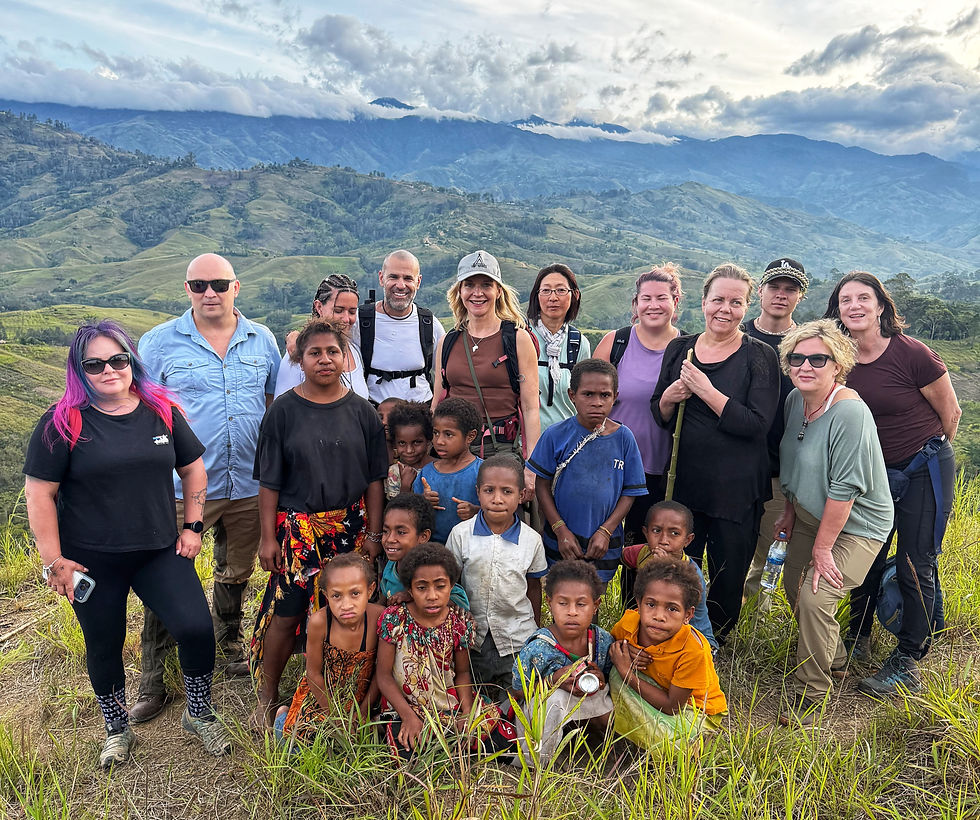
My own experience in the Highlands was overwhelmingly positive. In the communities we visited, people were welcoming, curious and proud to share their culture. In Korex, one of the villages we stayed in, our arrival was announced over the community loudspeaker, and later we joined a local football tournament. That kind of welcome is difficult to imagine if you only know Papua New Guinea through travel warnings.
The risks are real, but they do not affect every part of the Highlands equally. They can be safe when the route is chosen carefully, the timing is right, local contacts are involved and village visits are arranged in advance. For travellers who want cultural depth rather than easy travel, the Highlands are one of the most powerful regions in Papua New Guinea.
The Highlands are only one part of Papua New Guinea's cultural diversity. Along the Sepik River, some communities are known for the famous crocodile scarification tradition, one of the country's most remarkable cultural practices. You can read more in our guide to Papua New Guinea's crocodile scarification ritual.

Is Papua New Guinea Safe for Solo Travel?
Papua New Guinea is not the easiest country for solo travellers who want to move around completely on their own. There is no strong backpacker trail where transport, accommodation and local information are easy to arrange day by day.
Solo travellers do visit Papua New Guinea, especially photographers, birdwatchers and people interested in culture. The ones we met were not simply wandering around without a plan. Most had already arranged guides, transport or at least the most important parts of their journey before arriving.
The important distinction is between travelling alone and travelling independently. A person can arrive alone in Papua New Guinea and still travel safely with local support. The problems usually start when travellers try to organise transport, accommodation and local logistics entirely on their own in a country where conditions can change quickly.

Is Papua New Guinea Safe for Women Travellers?
As a woman travelling in the Highlands, I did not feel that being female was the main safety issue. What I noticed more was visibility. People were curious about me, where I came from and why I had travelled to Papua New Guinea, but in the communities we visited that curiosity usually felt warm rather than threatening.
I did not feel invisible or unsafe. I felt noticed in the way you often are in places where very few foreign visitors come through. People greeted me, asked questions, laughed, wanted photos and treated me as a guest.
Women should still be careful in crowded public places such as markets, supermarkets, busy streets and town centres in places like Goroka, Mount Hagen and Port Moresby. Crowds can make petty theft, unwanted attention and confusion more likely, especially when you already stand out as a visitor. I would also avoid walking alone after dark, sharing accommodation details with strangers or using unarranged transport.

The Biggest Risks Travellers Should Know About
By this point, the main message should be clear: Papua New Guinea is not unsafe everywhere, but it is not a country where travellers should be careless. The biggest risks are usually practical ones, including crime in urban areas, road travel, domestic flight disruptions, health issues and natural hazards.
Crime is most relevant in cities and larger towns, particularly Port Moresby and Lae. Robbery, carjacking, pickpocketing and opportunistic theft can occur, especially after dark or in crowded public places. Travellers should keep valuables out of sight, avoid unnecessary movement at night and use arranged transport whenever possible.
Road travel is another important consideration. Roads can be in poor condition, journeys often take much longer than expected and local conditions can change because of weather, roadblocks or local tensions. In Papua New Guinea, a good driver is not simply driving the vehicle. They understand communities, road conditions, timing and when a route should be avoided.
Domestic flights are another thing travellers should prepare for. Weather, operational issues and limited infrastructure can occasionally cause delays or cancellations, particularly when flying to the Highlands or more remote regions. One piece of advice I always give is to leave at least one buffer day between your final domestic flight and your international departure. That extra day can save a great deal of stress if schedules change unexpectedly.
The good news is that airlines such as Air Niugini and PNG Air will usually rebook passengers on the next available flight when cancellations occur. Delays can certainly be frustrating, but they are usually more of a logistical inconvenience than a serious problem. One of the best attitudes to bring to Papua New Guinea is flexibility.
Things do not always happen exactly according to schedule, but they usually work out in the end. Travellers who build a little extra time into their itinerary tend to have a much smoother experience than those trying to follow a very tight schedule. If every flight delay, road closure or change of plan becomes a source of stress, the journey can quickly start to feel overwhelming.
Travellers should also prepare carefully for health risks. Malaria exists in many parts of the country, and medical facilities can be limited outside major towns. Before travelling, consult a travel clinic regarding vaccinations, malaria prevention and any recommended medication. Travel insurance that includes medical evacuation coverage is strongly recommended.
Papua New Guinea's dramatic landscapes are part of what makes the country so extraordinary, but they also bring natural risks. The country experiences earthquakes, volcanic activity, flooding, landslides and periods of heavy rainfall that can affect both road travel and domestic flights.
Finally, I strongly recommend submitting a travel notification to your country's foreign ministry before travelling to Papua New Guinea. It only takes a few minutes and can make it easier for authorities to contact and assist you in the unlikely event of a natural disaster, civil unrest or another emergency.

What Is Not Dangerous in Papua New Guinea?
One thing that is often missing from safety articles about Papua New Guinea is this: not everything is dangerous. When people read travel warnings, they can easily start to imagine that every road, every village and every encounter is unsafe. That is not true.
Papua New Guinea is one of the most extraordinary places I have ever been. It has huge tourism potential, precisely because so much of it remains little known to the outside world. There are islands where you can snorkel without crowds, rainforest trails filled with orchids and tropical plants, birding safaris in search of birds of paradise, and cultural regions where traditions are still deeply alive. In that sense, Papua New Guinea is not only a challenging destination. It is also a hidden gem.
In my own experience, the cultural side of Papua New Guinea was often the most welcoming part of the journey. During my travels in the Highlands, I was invited into people's homes, greeted by strangers, given small gifts without anyone expecting anything in return, and welcomed with traditional singing ceremonies that felt genuinely warm and heartfelt. Some of the hospitality I experienced in Papua New Guinea was among the most memorable I have encountered anywhere in the world.
Visiting a village with trusted local guides is very different from wandering alone in an unfamiliar urban area. Sitting with a host community, watching a ceremony, walking with village guides or staying in a locally run lodge is not the same risk profile as moving around Port Moresby at night.
The danger in Papua New Guinea is not "the tribes." The real risks are usually poor planning, weak local contacts, urban crime, difficult road travel, alcohol-related violence, local tensions, and simply not understanding the context of where you are.
Papua New Guinea's communities are not attractions to consume, and they are not the danger. In many cases, they are the very reason a journey becomes safe, meaningful and possible in the first place.
Can Tourists Visit Tribes Safely in Papua New Guinea?
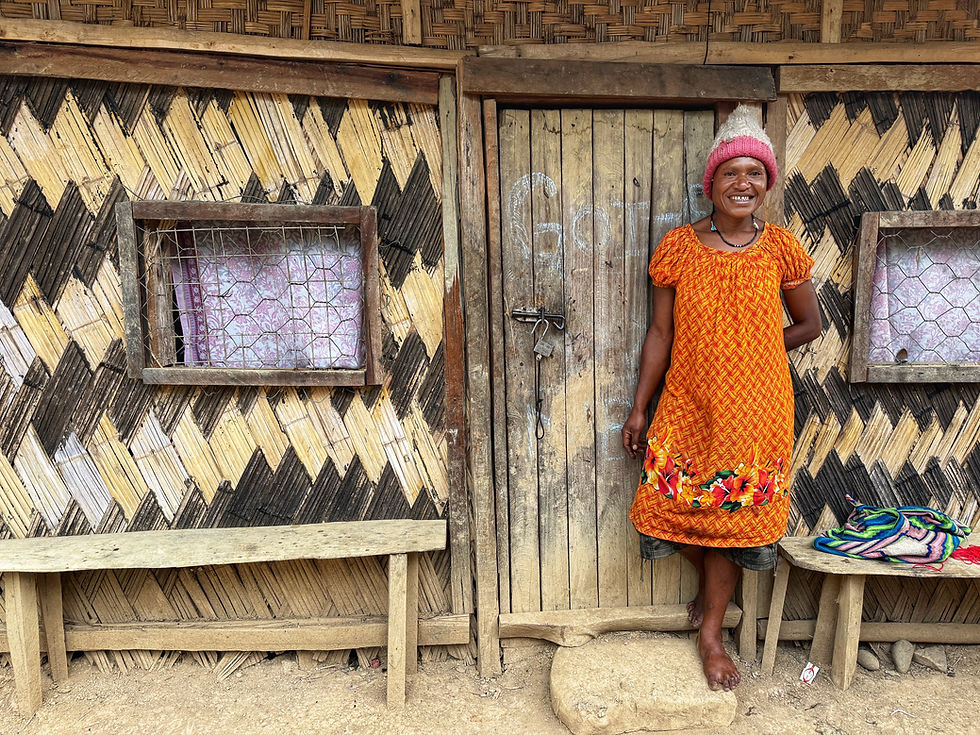
One of the biggest misconceptions about Papua New Guinea is that tribal communities are dangerous places to visit. In reality, some of the warmest welcomes I received anywhere in the country came from remote villages in the Highlands.
Many travellers arrive with images already in their minds. They have seen photographs of Huli Wigmen, Asaro Mudmen, Skeleton Men and other cultural groups online. What those photographs rarely show is everyday life. In the villages I visited, people were gardening, carrying firewood, feeding pigs, washing clothes, looking after children and chatting with neighbours. Most people were dressed in exactly the same kinds of clothes you would see anywhere else in the world.
Traditional dress, body paint and ceremonial performances are usually reserved for festivals, celebrations and other important occasions. These traditions existed long before tourism and remain an important way for communities to maintain cultural knowledge, identity and connections between generations. People can wear a football shirt on Monday, attend church on Sunday and still take pride in traditions that have been passed down for centuries.
Visiting tribal communities is not something that can be done by simply showing up in a remote village. Communities should know who is coming and agree to receive visitors beforehand. In many places, local leaders help organise visits, introductions are made in advance and expectations are clear on both sides before anyone arrives.
Visitors should also remember that people have farms to tend, families to support and daily responsibilities. It is unrealistic to expect strangers to stop what they are doing and spend hours sharing their lives without any prior arrangement. Fair compensation for time, hospitality and cultural knowledge is common practice in responsible Indigenous tourism around the world, and Papua New Guinea is no different. For travellers who want to understand local etiquette, expectations and responsible cultural travel in more depth, I also recommend reading our guide on how to prepare for Indigenous travel in Papua New Guinea.
Personally, I have never understood the idea that an experience becomes less authentic the moment local people are compensated for their time. Most international travellers have spent thousands of dollars reaching Papua New Guinea. Many rural communities have very limited access to cash income. When visitors contribute fairly, it helps create an exchange that benefits both sides rather than one. What I remember most from my time in Papua New Guinea is not danger, but hospitality: being invited into homes, sitting with families, sharing food, receiving small gifts I never expected, and feeling a kind of warmth that stayed with me long after I left. Those moments did not happen because I arrived unannounced or expected people to perform their lives for me. They happened because there were local relationships, introductions and trust already in place before I arrived.

How to Stay Safe in Papua New Guinea
One mistake is to judge Papua New Guinea only through travel warnings. Another is to ignore those warnings completely. They matter, and they should be taken seriously, but they are not the whole story.
This is also the country of birds of paradise, rainforest trails, remote islands, strong cultural traditions and places where you can still travel without crowds.
Papua New Guinea is not a destination for everyone. It requires patience, flexibility and a willingness to step outside familiar travel patterns. Things do not always happen exactly according to schedule, and journeys sometimes take longer than expected. Travellers who arrive expecting perfect infrastructure and predictable logistics may find the experience frustrating.
For others, those same qualities are part of the appeal. Travelled wisely, Papua New Guinea can feel like a hidden gem: a place for snorkelling far from crowded beaches, searching for birds of paradise, walking through rainforest and experiencing cultures that remain deeply rooted in daily life. Many of my strongest memories from the country have nothing to do with safety at all. They are memories of generosity, curiosity, laughter and encounters that could never have been planned in advance.

Frequently Asked Questions About Safety in Papua New Guinea
Is Papua New Guinea safe for tourists?
Yes. Most tourists who visit Papua New Guinea with trusted local guides, organised transport and realistic expectations travel without serious problems. While the country requires more planning than many mainstream destinations, it can be visited safely and offers some of the world's most unique cultural experiences.
Is Papua New Guinea safe for women?
Yes. In my experience, being a woman was not what made Papua New Guinea feel safe or unsafe. The most important factors were local knowledge, trusted guides and careful planning. Women should follow the same common-sense precautions they would use in many destinations around the world, including avoiding walking alone at night and using organised transport.
Is Port Moresby dangerous?
Port Moresby requires more caution than most tourist destinations. Crime does occur, and government travel advisories highlight the risks. However, many visitors pass through the city without problems by staying in reputable hotels, arranging airport transfers in advance and avoiding unnecessary movement after dark.
Is the Highlands region safe?
The Highlands can be visited safely, but conditions vary by location and current circumstances. While tribal conflict does occur in some areas, most cultural tourism takes place through established local networks in communities that regularly welcome visitors. Travelling with experienced local guides is strongly recommended.
What vaccinations do I need for Papua New Guinea?
Vaccination recommendations depend on your country of residence, medical history and travel plans. Common recommendations may include Hepatitis A, Hepatitis B, Typhoid and routine vaccinations. Malaria prevention is also commonly advised for many regions. Consult a travel clinic or healthcare professional before your trip for the latest recommendations.
Is Papua New Guinea safe to visit in 2027?
Based on current conditions, Papua New Guinea can be visited in 2027. As with any destination, travellers should check current travel advice before departure and stay informed about local conditions.
Are flight cancellations common in Papua New Guinea?
Flight delays and occasional cancellations are a normal part of travel in Papua New Guinea, particularly on domestic routes. Weather, operational changes and limited infrastructure can sometimes affect schedules. I strongly recommend leaving at least one buffer day between your final domestic flight and your international departure.
The good news is that airlines such as Air Niugini and PNG Air will usually rebook passengers on the next available flight if cancellations occur. Travellers who build flexibility into their itinerary generally find these disruptions manageable and far less stressful.
Is Papua New Guinea safe for solo travel?
Yes, Papua New Guinea can be safe for solo travellers, but most people have a much smoother experience when at least some parts of the journey are arranged in advance. Travelling alone is very different from travelling independently in Papua New Guinea.
Can tourists visit tribes safely in Papua New Guinea?
Yes, but visits should be arranged in advance through local contacts and with the agreement of the community. Tourists should not simply arrive in a remote village and expect people to stop their daily work for visitors. When planned respectfully, community visits can be among the safest and most meaningful parts of travelling in Papua New Guinea.
Is Papua New Guinea worth visiting despite the risks?
Yes, if you understand what kind of destination it is. Papua New Guinea is not easy travel, but that is also why it remains so special. For travellers who come prepared, listen to local advice and travel with the right support, it can offer rare cultural encounters, rainforest, birds of paradise, remote islands and experiences far from mass tourism.
Visit Papua New Guinea with Visit Natives
At Visit Natives, we specialise in small-group cultural journeys that connect travellers with Indigenous communities across Papua New Guinea through trusted local partnerships and experienced guides.
Our Papua New Guinea expeditions focus on meaningful cultural encounters, not simply sightseeing. We work closely with local communities, guides and cultural leaders to create experiences that are respectful, responsible and deeply immersive.
Throughout the journey, safety is supported through local knowledge, established community relationships and careful planning. From airport arrivals and domestic flights to village visits and road travel in the Highlands, every part of the itinerary is organised with local expertise.
If Papua New Guinea has been on your travel wish list but concerns about safety have held you back, I hope this guide has helped separate perception from reality.
Papua New Guinea is not a destination for everyone. It requires flexibility, curiosity and an openness to travel differently. But for those willing to embrace it, it can be one of the most extraordinary cultural travel experiences in the world.
Interested in joining our next Papua New Guinea Highlands expedition?
Experience Papua New Guinea with trusted local guides, long-standing community partnerships and a small group of culturally curious travellers.
|

About the Author
Anniina Sandberg is the founder of Visit Natives, a cultural anthropologist and Africa researcher with a Master's degree in African Studies. She has spent years working with Indigenous communities, cultural tourism and community-based travel in different parts of the world.
Since 2018, Visit Natives has organised ethical and sustainable journeys with Indigenous communities in Norway, Tanzania, Morocco and Papua New Guinea. The company's approach focuses on long-term relationships, community partnerships and cultural exchange that benefits local people while providing travellers with meaningful and respectful experiences.
Anniina regularly travels to Papua New Guinea and works closely with local guides and communities across the Highlands. Her work combines academic knowledge, field experience and a commitment to responsible Indigenous tourism.
Through Visit Natives, she organises small-group Papua New Guinea expeditions that connect travellers with some of the country's most fascinating Indigenous cultures while prioritising safety, ethics and community collaboration.
This guide is based on my most recent field visit to the Papua New Guinea Highlands and is updated regularly to reflect current travel conditions.


