.png)


Exploring the Enigmatic Asaro Mudmen of Papua New Guinea


🔍 Quick Insight The Asaro Mudmen of Papua New Guinea are famous for their haunting white clay masks, mud-covered bodies, and dramatic bamboo “spirit fingers.” Rooted in ancient legend, these rituals began as a clever act of survival and evolved into a powerful spiritual tradition honoring ancestors and the natural world. Today, the Mudmen remain one of PNG’s most iconic tribes, blending artistry, mythology, and cultural resilience in a way found nowhere else on Earth. |
Have you ever heard of the Asaro Mudmen of Papua New Guinea? This island nation is a vibrant tapestry of over 300 diverse tribes, each with its own rich culture and traditions. The immense cultural diversity makes Papua New Guinea one of the most fascinating places to explore. Every tribe presents a unique experience, with different languages, rituals, and lifestyles. Whether you seek adventure or a deeper connection to humanity, Papua New Guinea promises an enriching journey.
If you want a broader look at the cultural groups, rituals, and village visits that travelers can experience in the Highlands, you can also read Papua New Guinea Highlands Tribes: A Complete Guide to Cultural Visits.
The Asaro Mudmen: A Unique Tribe
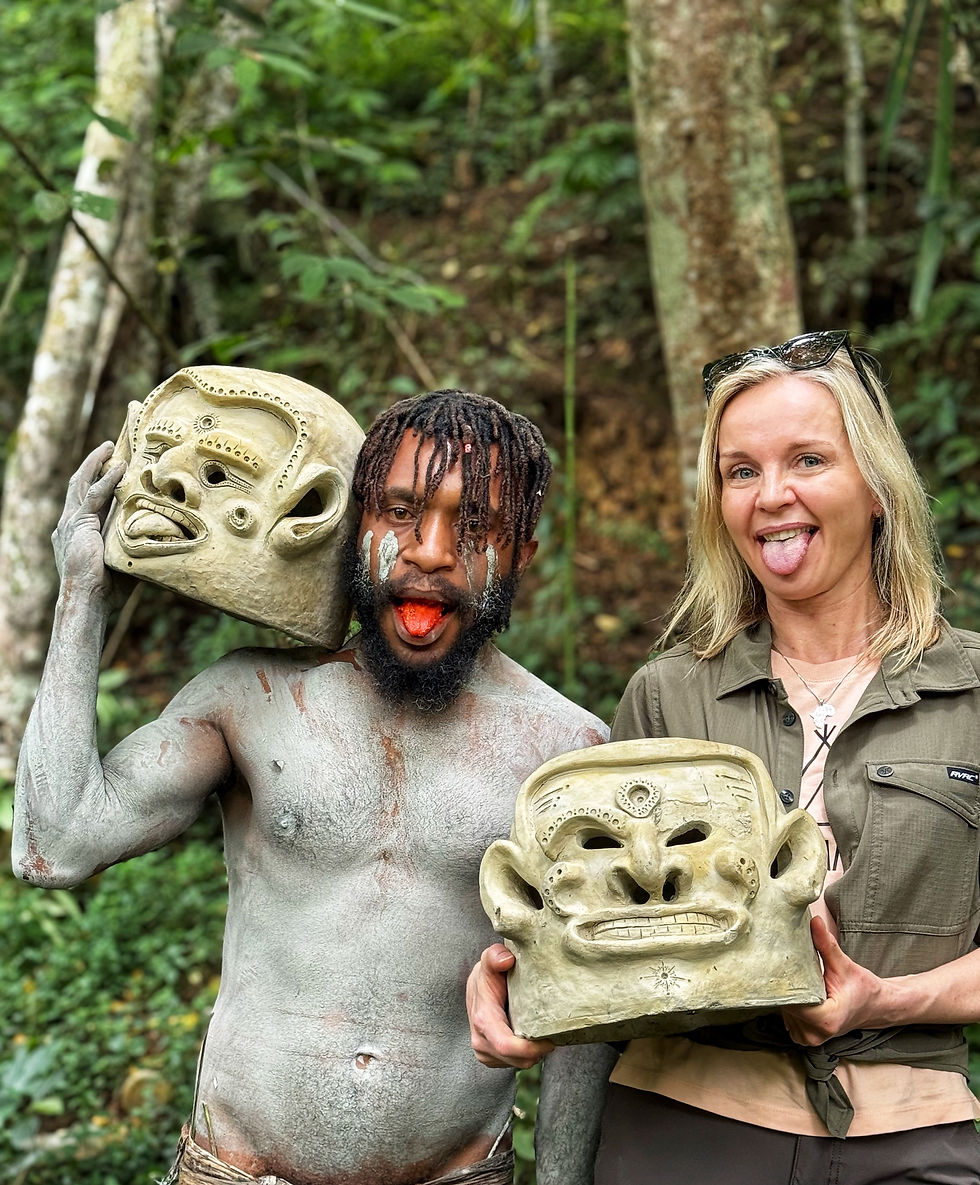
The Asaro Mudmen are known for their striking customs. They wear large, intimidating masks and cover their bodies in mud, enhancing their fearsome appearance with bamboo sticks on their fingers.
Legend has it that a peaceful group of Asaro tribespeople were attacked by a larger and hostile faction. To escape, they hid in river mud. When they emerged, their bodies covered in striking white clay and gray mud, the attackers mistook them for spirits. In panic, they fled. Since then, the Asaro have crafted their iconic mud masks as a form of protection.

The Spiritual Significance of Asaro Mudmen Masks and Body Paint in Papua New Guinea
The masks and body paintings of the Asaro Mudmen carry profound spiritual significance. They symbolize a connection to both the natural and spiritual worlds. These practices go beyond mere display; they allow the tribe to communicate with the spirit realm and pay homage to their ancestors.
The Mudmen masks represent ancestral spirits, designed to invoke both fear and awe. These large masks feature exaggerated facial traits like wide eyes and sharp teeth, which contribute to their terrifying appearance. This design symbolizes the power of ancestors to protect the tribe and ward off enemies.
To learn the best practices of ethical travel and responsible cultural encounters, explore my article How to Visit Indigenous Communities with Respect: A Guide to Ethical Indigenous Tourism.
The Role of Masks in Rituals
In Asaro tradition, masks are believed to house ancestral spirits. During ceremonial dances and rituals, wearers embody these spirits, seeking guidance and protection. The mud, especially the white clay and gray river mud, serves as a medium between the physical and spiritual realms. This muddy coating helps the Mudmen connect with spirits, transforming them into beings that transcend the physical world.
The tribe’s rituals often call upon the spirits for protection, blessings, and strength. These practices pass down through generations, preserving the tribe's history and beliefs. The Mudmen are spiritual intermediaries, channeling the energy of ancestors. This connection allows the tribe to maintain traditions and strengthen its identity.
For the Asaro, wearing masks during rituals serves as a way to stay grounded in their culture, ensuring their customs live on. It is a fascinating fusion of artistry, spirituality, and survival—a powerful reminder of their resilience and respect for ancestors.
Our next small group trip Papua New Guinea Highlands Tribes 11 to 19 February 2027 9 days, 8 nights €5,500 per person This is the exact journey these experiences are based on. We travel in a small group, stay in local villages, and move through the Highlands with people I personally work with on the ground. Nothing here is random or something you could just organize on your own. If Papua New Guinea has been on your mind, our February 2027 Papua New Guinea group expedition is now open for bookings. |

Traditional Clothing and Body Art of Asaro Women
Like many tribes in Papua New Guinea, the Asaro have preserved traditional practices that link to their spiritual beliefs and social structures. Women in the Asaro tribe wear clothing that differs from the elaborate costumes of men. While men don fearsome mud masks during ceremonies, women's attire is more modest and practical.
Traditional clothing for women often includes skirts made from natural materials like grass, leaves, or other plant fibers. They may wear accessories like armbands, headpieces, and necklaces crafted from shells, beads, or natural materials. The styles vary depending on the occasion, whether it’s a ritual, festival, or daily life.
Women also adorn their bodies with body paint made from natural dyes and pigments derived from plants or clay. Body art can hold cultural and spiritual significance. It represents beauty, status, or participation in specific ceremonies.

Challenging Cannibalism Stereotypes of Papua New Guinea
Contrary to popular belief, the Asaro Mudmen of Papua New Guinea were not known for cannibalism. Many tribes historically practiced cannibalism, especially in specific rituals. However, the Asaro's identity and rituals are closely tied to their unique customs, particularly those surrounding their iconic mud masks and body painting.
The legend of the Asaro Mudmen masks highlights their use of appearance: mud-covered bodies and frightening masks to intimidate enemies rather than for cannibalistic purposes. Their masks were primarily a form of self-defense against more hostile tribes rather than part of violent rituals.
Cannibalism among some tribes was linked to particular rituals of revenge or religious beliefs, but it was not universal. Each tribe had its customs and cultural practices. In the case of the Asaro, their focus remains on spiritual beliefs and the defense embodied in their unique appearance.

Is Tourism Impacting the Cultural Survival of the Asaro Mudmen?
Tourism in Papua New Guinea can negatively affect indigenous tribes. It risks eroding culture as traditions become commercialized and performed merely for entertainment, losing their original spiritual significance.
To minimize such negative impacts, tourism must be managed sustainably and respectfully, focusing on preserving culture and the well-being of indigenous communities. Community-led tourism models, like those offered by Visit Natives, ensure local tribes maintain control over their cultural heritage while benefiting economically.
When tours are organized by the Asaro Mudmen themselves, visitors can experience, observe, and appreciate their culture authentically. Cultural shows play a vital role in keeping ancient traditions alive, teaching younger generations rites and songs that may fade from everyday life. By participating in cultural tours, visitors contribute to the economic well-being of the local community, helping to preserve their culture for future generations.
Traveling solo in Papua New Guinea can be costly, as you’ll need to cover all expenses. Moreover, tourism remains relatively rare on the island. Simply showing up in a village to meet indigenous tribes is often inappropriate. It's essential to book a tour in advance, allowing the Mudmen to prepare for your visit. For a more affordable experience, consider joining guided group tours that align with your values and support local communities.
Visit Natives arranges cultural tours with the Asaro Mudmen in cooperation with local communities. You can choose between a private expedition or join an annual group trip, guaranteeing an authentic, respectful, and enriching experience.
In conclusion, exploring the Asaro Mudmen of Papua New Guinea provides a glimpse into an extraordinary culture. With their striking practices, rich traditions, and spiritual significance, they represent a unique aspect of humanity that deserves appreciation and respect.
Conclusion: Understanding the Asaro Mudmen of Papua New Guinea
The Asaro Mudmen of Papua New Guinea offer a rare window into one of the world’s most distinctive Indigenous traditions, where clay masks, spiritual rituals, and ancestral storytelling come together in a culture found nowhere else on earth. Understanding their history, legends, and ceremonies not only enriches your journey but also supports the preservation of a fragile heritage in the Eastern Highlands. If you’re drawn to authentic cultural encounters, visiting the Asaro Mudmen through community-led, ethical tourism is one of the most meaningful ways to connect with Papua New Guinea’s living traditions.
FAQ: Asaro Mudmen & Travel in Papua New Guinea
Why do the Asaro Mudmen wear masks?
Their masks originate from a legend in which they scared away enemies by emerging from a river covered in white clay; the tradition evolved into a spiritual and cultural practice symbolizing ancestral protection.
What are Asaro Mudmen masks made of?
The masks are hand-crafted from local clay and decorated with natural pigments, shells, and sometimes bamboo “spirit fingers,” each design carrying symbolic meaning.
Do the Asaro Mudmen still practice these rituals today?
Yes, but mainly during cultural performances, ceremonies, and community-led tourism events that help preserve their traditions.
Is it ethical to visit the Asaro Mudmen?
Yes, when done through community-led tourism, where the tribe controls the experience and receives the economic benefit. Avoid random village visits without permission.
Is Papua New Guinea safe for travelers?
Many people are surprised to learn that most tourism in Papua New Guinea takes place through established local networks, guides and community contacts rather than independent travel. While some regions require caution, many travellers visit the Highlands safely every year. For a detailed look at Port Moresby, the Highlands, solo travel, women travellers and practical safety advice, read our guide: Is Papua New Guinea Safe? An Honest Guide for Travelers (2026–2027).
Can I take photos of the Asaro Mudmen?
Photography is usually welcome during cultural shows, but always ask permission and avoid taking photos of individuals outside performances unless invited.
How can I visit the Asaro Mudmen?
Join a Visit Natives community-led tour or annual group expedition in cooperation with local tribes, which ensures authenticity, safety, and direct support to the Mudmen community.

About the Author
Annina Sandberg is the founder of Visit Natives, a travel company specializing in small group journeys to Indigenous communities around the world. Her work focuses on creating access to places and cultures that are rarely experienced through conventional travel.
She has spent time working on the ground in Papua New Guinea Highlands, building relationships with local families and community leaders, and organizing expeditions in regions where travel depends on trust and local knowledge rather than infrastructure.
Her writing is shaped by direct experience, but also by a broader interest in how culture is represented, shared, and often misunderstood. Through Visit Natives, she aims to offer a more grounded and respectful way of experiencing Indigenous cultures beyond simplified narratives.


