.png)


Best Indigenous Travel Experiences in the World (Ethical Cultural Tours & Community Visits 2026)


The best Indigenous travel experiences in the world take you far beyond conventional tourism into authentic cultural encounters shaped by land, tradition, and community.
From Papua New Guinea tribal experiences and Hadzabe visits in Tanzania to Sami reindeer herding, Maasai village stays, and Tuareg journeys in the Sahara, these are some of the most meaningful ways to experience living cultures today.
For travelers who want to visit Indigenous communities in a respectful and immersive way, these journeys offer something far deeper than ordinary sightseeing. If you want to understand the ethics behind this more fully, you can also read our guide to how to visit Indigenous communities respectfully.
If you are dreaming of something wild and deeply human, this kind of travel opens a door into ways of living that most of us in the modern world have almost forgotten. It brings you closer to nature, to people who still live with the land, the seasons, animals, and community in a way that feels radically different from the speed and consumption that shape so much of modern life.
Indigenous travel experiences are journeys that allow travelers to spend time with local communities, learning directly from their way of life, traditions, and relationship with the land.
These are not ordinary trips, and that is exactly the point. They are for travelers who want to step outside the familiar, leave the beaten path behind, and experience something that does not feel manufactured.
This guide draws on fieldwork and expeditions led by cultural anthropologist Anniina Sandberg, and on long-term relationships with Indigenous communities that make these journeys possible.
Quick Overview
Jungle → Papua New Guinea Highlands Remote clan-based societies and some of the most culturally diverse highland communities on Earth
Desert → Tuareg and Berber cultures in the Sahara
Nomadic traditions shaped by movement, hospitality, and survival in harsh landscapes
Savanna → Hadzabe hunter-gatherers and Maasai pastoralists
Two radically different ways of living in East Africa, from foraging to cattle herding
Arctic → Sami reindeer herders
Seasonal migration, tundra life, and one of Europe’s last Indigenous reindeer herding cultures
Each offers something entirely different. The question is not which is best, but which world you are ready to step into. |

Jungle — Papua New Guinea Indigenous Travel Experiences (Highlands Tribal Tours)
There are very few places left in the world where cultural diversity exists at the level it does in the Papua New Guinea Highlands. Within a relatively small area, hundreds of different groups maintain their own languages, rituals, and identities, shaped by land, clan systems, and long relationships between communities.
This is not a place you simply arrive and observe. It is a place you enter through people, slowly and with the right guidance.
Papua New Guinea is often misunderstood. Many travelers imagine they will meet tribes living completely outside the modern world. That is not really the point, and it is not the reality either. Culture here is still strong, but it is not something put on display every moment of the day. It comes alive in ceremonies, performances, gatherings, and in the stories people carry with them.
You may encounter groups like the Asaro Mudmen, known for their clay masks and stories rooted in conflict, strategy, and survival. But this is only one part of a much wider cultural world. The Highlands are not just about dramatic performances. They are also about village life, music, kinship, memory, and the ways people continue to live within traditions that still matter. If you want a deeper look at how these cultural visits work in practice, you can read our guide, Papua New Guinea Highlands Tribes: How to Visit, What to Expect, and Best Cultural Tours.
You will not walk into a village and find Mudmen casually wearing their masks in everyday life. What you are being introduced to is the cultural history behind these traditions, and the meanings they still hold today.
That is also why Papua New Guinea is not a destination to do casually or without the right local connections. Travel in the Highlands works best through trusted Indigenous-led networks, and it remains one of the few places where authentic Indigenous tours still depend entirely on local relationships and access.
It is also not a destination for travelers looking for comfort or polished tourism infrastructure. Local guesthouses are very basic, hot water is often unavailable, power cuts happen, and travel requires flexibility. But for the right traveler, that is part of what makes Papua New Guinea so rewarding. There are still places here where you may spend days without seeing another tourist at all, and that kind of rarity has almost disappeared elsewhere.
For travelers looking for the rawest and least mediated Indigenous cultural experience in the world, Papua New Guinea stands in a category of its own.
Ready for Papua New Guinea?
If Papua New Guinea is the experience you feel drawn to, we run small, Indigenous-led expeditions in the Highlands with very limited access through local clans. Our next small group departure is in February 2027, or you can join as a private journey at any time.
|

Desert — Tuareg and Berber Cultures in the Sahara
There is a different kind of rhythm in the Sahara Desert. Space, silence, and distance shape everything. Life here is not built around fixed places, but around movement.
For centuries, nomadic groups like the Tuareg people have crossed these landscapes, following routes shaped by water, seasons, and memory rather than roads. Travel is not about getting somewhere quickly. It is about knowing how to move through a place that offers very little if you do not understand it.
Today, many travelers first encounter the Sahara through popular areas like Merzouga, where desert camps and camel treks are more accessible. These can offer a first glimpse into the landscape, but they are often built around comfort and short stays designed for tourism. Moving beyond these well-known routes is where the experience begins to change.
Time in the Sahara with local hosts is quieter and more stripped back. Days are simple. Walking, resting, preparing food, taking care of animals, adjusting to heat and distance. There is very little distraction, and that is exactly what makes the experience stay with you.
The Berber people represent a broader cultural identity across North Africa, including both settled and nomadic communities. In the desert, traditions are shaped by resilience, hospitality, and the ability to live in an environment where conditions are constantly shifting.
Where Papua New Guinea is dense and layered, the Sahara is open and minimal. In the jungle Highlands, movement is shaped by clans and territory. In the desert, it is shaped by distance, weather, and the need to adapt. That contrast is part of what makes these experiences so different from each other.
Conditions in the Sahara are simple. Toilets are in nature, nights can be surprisingly cold, and daily life is basic. But that simplicity is part of what makes the experience so special. Hot mint tea is shared throughout the day to stay warm, evenings are spent under an expansive night sky, and the stillness of the desert creates a kind of calm that is difficult to find anywhere else.
This is not a journey for travelers looking for convenience. It is for those seeking peace, slowness, and connection. The Sahara does not overwhelm you. It quiets you.
Step into the silence of the Sahara
Most desert trips stay close to camps and comfort. We travel deeper with Tuareg hosts, moving slowly through the landscape, where days are shaped by rhythm, not schedule.
|

Savanna — Hadzabe and Maasai Indigenous Travel Experiences in Tanzania
The savanna of northern Tanzania offers something unique: two completely different ways of living, existing side by side.
On one hand, there are the Hadzabe people, one of the last remaining hunter-gatherer communities in the world. On the other, the Maasai people, whose lives are built around cattle, land, and long-standing pastoral traditions.
These are not variations of the same culture. They represent fundamentally different relationships with nature, work, and community.
Life with the Maasai
Life with the Maasai is different. Villages are more structured, daily life is centered around cattle, and traditions are visible in clothing, rituals, and social roles.
You might take part in daily routines, learn about livestock, walk across the savanna, or sit with community members hearing stories about land, identity, and change.
Compared to the Hadzabe, this experience is easier to access and may feel more familiar, but it still offers a deep insight into a way of life shaped by land and community rather than modern systems.
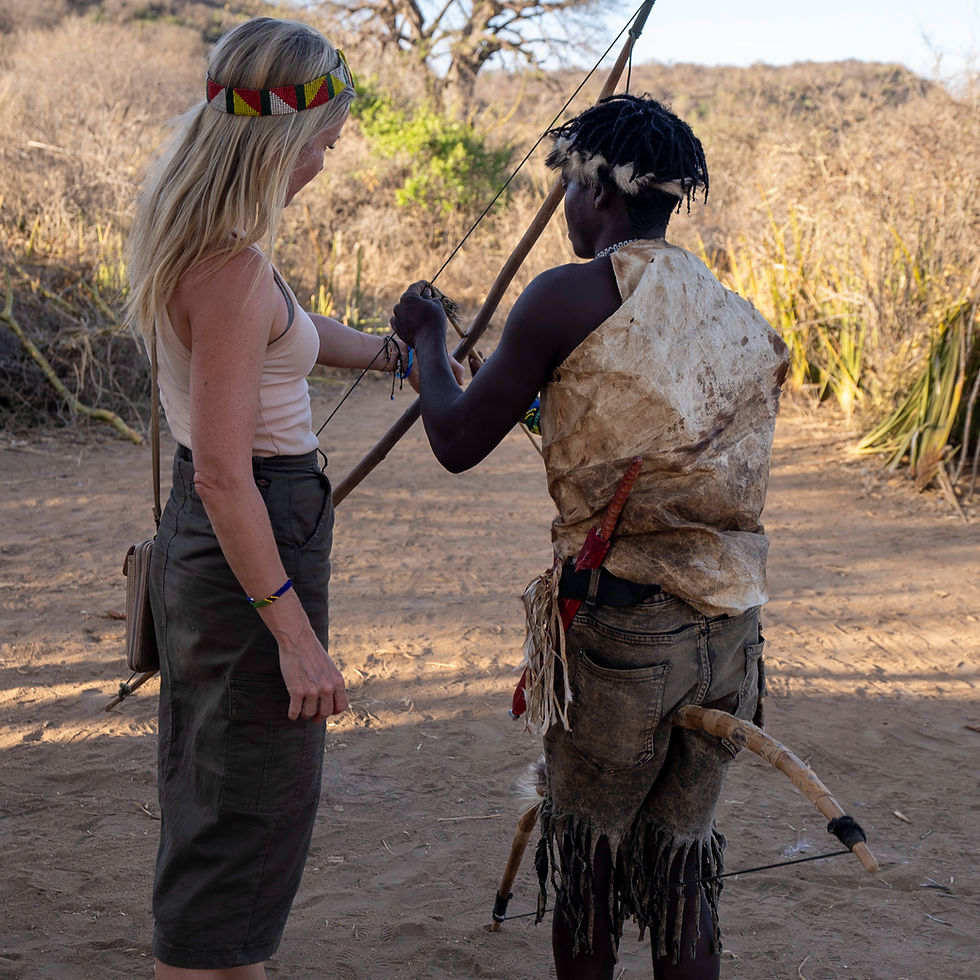
Life with the Hadzabe
Time with the Hadzabe is active and immediate. Days often begin early, walking into the bush to track animals, gather wild foods, or simply move through the landscape in the way they have for generations.
There is no fixed schedule and no performance. What you experience depends on the day, the season, and what the environment offers. It is unpredictable, physical, and at times challenging, but also deeply grounding.
What makes time with the Hadzabe especially rare is that, unlike many hunter-gatherer peoples elsewhere in the world, they have not been entirely cut off from their ancestral way of life. In many regions, the last foraging communities have been displaced from their lands or prevented from continuing their traditions. The Batwa of Central Africa are one well-known example. In Tanzania, however, the Hadzabe still maintain a living relationship with the land, and that makes meeting them and staying with them a real privilege.
Life here is stripped back to essentials. Fire, food, movement, and group dynamics shape everything. If you want to understand this way of life more deeply, our article on the Hadza diet and what hunter-gatherers can teach us offers another window into their relationship with food, land, and survival.
Two ways of living
What makes this region so compelling is the contrast. With the Hadzabe, you move through the landscape. With the Maasai, you live within a community tied to land and livestock.
Both offer a different perspective on time, ownership, work, and what it means to live well.
Conditions vary depending on where you stay. Time with the Hadzabe is often spent in simple bush camps, while Maasai stays may include basic village accommodation or tented setups. Comfort is limited, but access is far more straightforward than in places like Papua New Guinea.
That makes Tanzania one of the most accessible ways to experience Indigenous cultures in a meaningful way, without going to the most extreme environments.
Go deeper with the Hadzabe and Maasai in Tanzania
Most visits to the Hadzabe are short day trips near the road. We arrange multi-day expeditions in the bush with Hadzabe hosts, and longer stays with Maasai communities, giving you time to experience daily life beyond a quick visit.
|

Arctic — Sami Reindeer Herding in Northern Norway
In the far north of Europe, life follows a different rhythm again. In the Arctic tundra, seasons are not just a backdrop, they define everything.
For the Sami people, reindeer herding is not simply a livelihood. It is a way of life built around movement, weather, and a deep understanding of the land. Herds are moved across vast distances between seasonal grazing areas, and daily life adjusts constantly to snow conditions, light, and the needs of the animals.
Time with Sami herders means stepping into this seasonal rhythm. Travel often happens by snowmobile or on foot across open tundra, following the herd as it moves between winter and spring grazing grounds.
There is no fixed “program” in the usual sense. Plans change depending on weather, snow, and the behavior of the reindeer. Some days are long and physical, others are quiet, spent waiting, observing, or simply being part of the camp.
Conditions are simple but well adapted to the environment. Nights are spent in tents or small cabins, warmth comes from fire and layered clothing, and daily life revolves around keeping both people and animals safe in a harsh climate.
Cold here is constant, but it becomes part of the experience rather than something to fight. There is a clarity to Arctic life, shaped by necessity and routine.
Unlike many Indigenous experiences that are tied to a single place, Sami life is built around movement and migration. You are not just visiting a community, you are following a way of life that shifts with the seasons. There is also a strong spiritual and cultural dimension to this world, and if you want to understand that more deeply, you can read our guide to the shamanistic beliefs of the Sami reindeer herding people in Norway.
There is also a strong sense of continuity. Despite modern pressures, reindeer herding remains central to Sami identity, and being invited into that world, even briefly, offers insight into a relationship with land that is both practical and deeply cultural.
Where the Sahara is defined by heat and openness, the Arctic is defined by cold and light.
Where the Hadzabe move through the bush daily, Sami herders move seasonally across vast landscapes.
Where Papua New Guinea is dense and layered, the tundra is wide, quiet, and exposed.
Each environment shapes not just how people live, but how they think, move, and relate to the world around them.
Life here moves with the reindeer
Join Sami herders on the tundra, where each day follows the rhythm of the herd, the weather, and the Arctic seasons.
|

Which Indigenous Experience Is Right for You?
Each of these journeys offers something completely different. The question is not which one is “better,” but which kind of environment and way of life you feel drawn to.
If you are looking for something raw, complex, and truly off the map, Papua New Guinea stands apart. It requires more effort, more flexibility, and the right local connections, but in return offers one of the most intense and least mediated cultural experiences in the world.
If you are drawn to silence, space, and slow movement, the Sahara offers a very different kind of journey. Life in the desert is simple, stripped back, and deeply calming, shaped by rhythm rather than schedule.
If you want a more accessible entry point into Indigenous travel, Tanzania offers a unique combination. With the Hadzabe and the Maasai, you experience two completely different ways of living in one region, without the same level of logistical complexity as more remote destinations.
If the Arctic calls to you, Sami reindeer herding offers something else again. A life shaped by seasons, movement, and cold, where daily decisions follow the needs of the herd and the changing landscape.
None of these experiences are about comfort or convenience. They are about stepping into a different rhythm, even if only for a short time. What matters is not how far you travel, but how deeply you are willing to experience a different way of living.
Destination | Best for | Difficulty |
Papua New Guinea | Raw, remote cultural immersion | high |
Tanzania | First-time Indigenous travel | medium |
Sahara | Silence, slowness, nomadic desert life | medium |
Arctic | Reindeer migration and seasonal life | medium |

Not sure which journey is right for you?
We design small, Indigenous-led expeditions based on your experience level, comfort, and curiosity. If you're considering one of these destinations, we’re happy to help you think through what is realistically possible. → Explore our journeys and request your itinerary |

Frequently Asked Questions About Indigenous Travel
Is it ethical to visit Indigenous communities?
It depends entirely on how the experience is structured. Ethical Indigenous travel is community-led, respects local protocols, and ensures that benefits stay within the community. Experiences built purely for tourism, without local control, often do more harm than good.
Can I visit Indigenous communities independently?
In most cases, not in a meaningful way. In places like Papua New Guinea, access depends on local relationships and clan permissions. Even in more accessible destinations, traveling with the right local hosts makes a significant difference in both experience and respect.
Which destination is best for a first-time experience?
Tanzania is often the easiest starting point. Experiences with the Hadzabe and Maasai are more accessible while still offering a deep cultural perspective. Papua New Guinea is better suited for more experienced travelers.
How physically demanding are these journeys?
It varies by destination. Time with the Hadzabe involves walking and being active in the bush, while Papua New Guinea can include long drives, basic conditions, and uneven terrain. The Sahara is slower but requires comfort with heat and simple living, and Sami experiences involve cold environments and seasonal movement.
What level of comfort should I expect?
These are not luxury trips. Accommodation is often simple, from village guesthouses to bush camps or tents. Comfort is basic, but the experiences are structured and supported. The value comes from access, not amenities.
Are these trips safe?
With the right local networks and planning, yes. Safety in these environments is not about infrastructure, but about relationships, local knowledge, and understanding how each place works. This is why choosing the right operator matters.
When is the best time to go?
Timing depends on the destination. Papua New Guinea is often best in the drier months, though other seasons can be equally rewarding. Tanzania changes with the rains and wildlife cycles, Sami experiences depend on migration timing, and the Sahara is best outside the hottest months.
Will I see “real” culture or staged performances?
Both exist, and understanding the difference is important. Many traditions are shared through ceremonies or performances, which still carry real cultural meaning. At the same time, much of daily life is quieter and less visible. The most meaningful experiences combine both context and lived reality.
Is Papua New Guinea safe for tourists?
Papua New Guinea can be safe for tourists when travel is carefully planned and done with trusted local networks. Safety in the Highlands depends much less on tourism infrastructure and much more on local relationships, regional knowledge, and understanding how access works. It is not a destination to approach casually or independently, which is why the right local hosts matter so much.
If safety is one of your biggest concerns, you can also read our detailed guide Is Papua New Guinea Safe? An Honest Guide for Travelers (2026–2027), where we look at the Highlands, Port Moresby, solo travel, women travellers and practical ways to reduce risk.
Can you visit the Hadzabe tribe in Tanzania?
Yes, it is possible to visit the Hadzabe in Tanzania, and for many travelers it is one of the most meaningful Indigenous travel experiences in Africa. What makes it especially rare is that the Hadzabe still maintain a living relationship with their land and traditional way of life. A respectful visit should always be community-based and guided by people who understand the context, not treated as a quick stop or spectacle.
What is it like to stay with Indigenous communities?
Staying with Indigenous communities is usually very different from conventional travel. Accommodation is often simple, daily life follows local rhythms rather than a fixed tourist schedule, and comfort is basic rather than polished. What you gain instead is closeness to people, place, and ways of living that are difficult to understand from the outside.
About the author
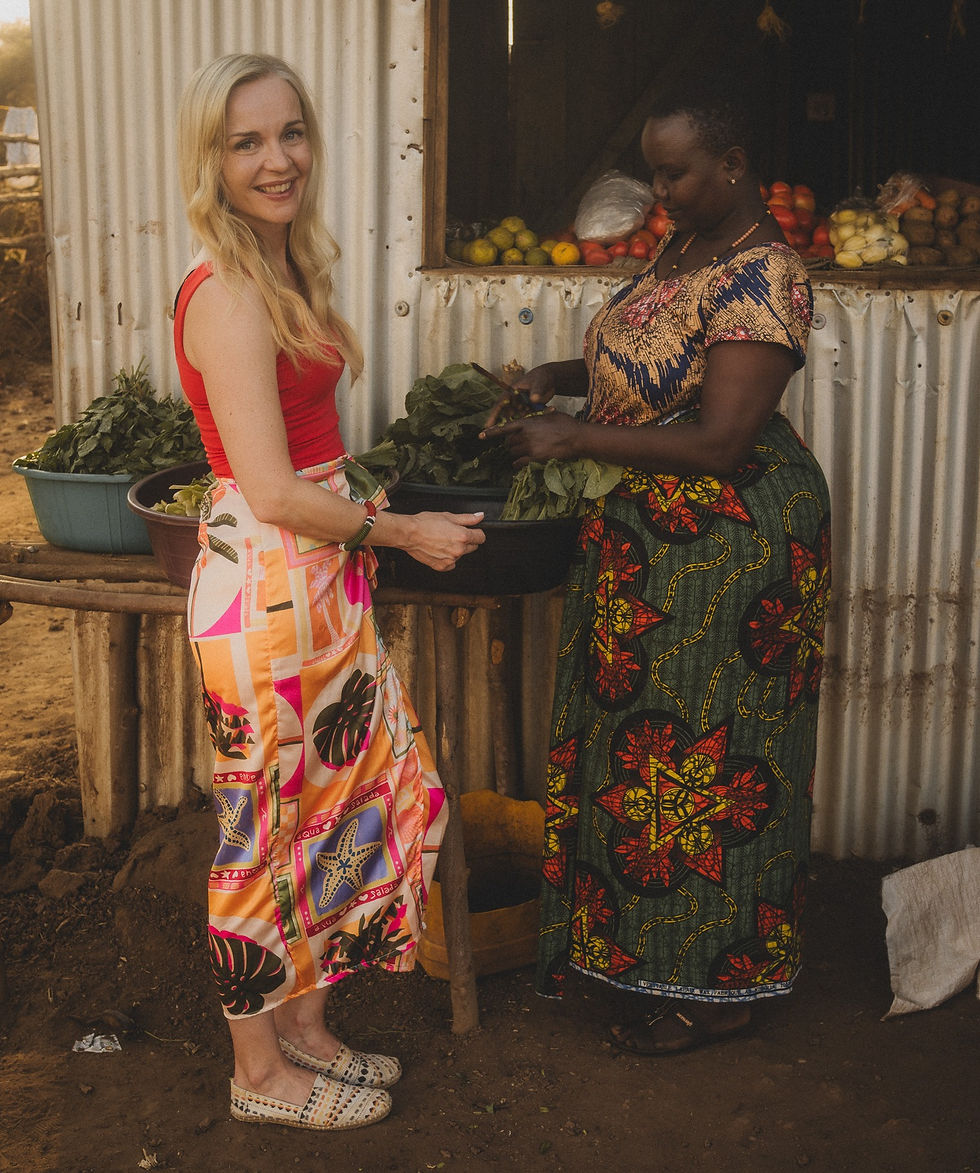
Anniina Sandberg is a cultural anthropologist and the founder of Visit Natives. Her work began in the field, living and traveling with Indigenous communities in places like Papua New Guinea and Tanzania, long before these journeys became part of a business.
What started as research gradually became a way of connecting travelers with communities that are often misunderstood, misrepresented, or difficult to access.
Today, she works closely with local partners to create Indigenous-led journeys that are small, personal, and rooted in real relationships rather than conventional tourism structures.


