.png)


Kilimanjaro Charity Climbs: Where Does the Money Actually Go?

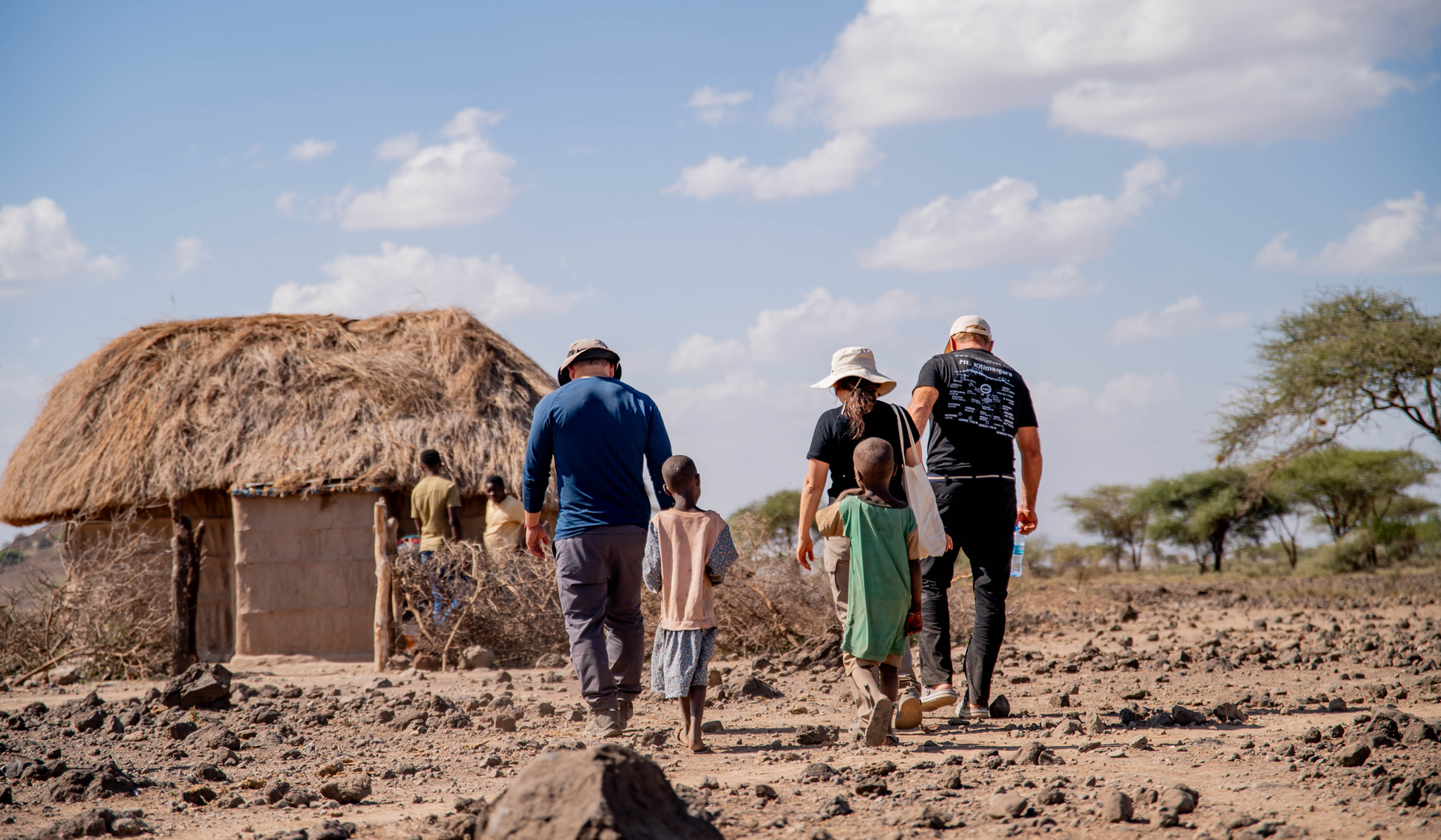
A Kilimanjaro charity climb combines a trek to Africa’s highest summit with support for a charitable cause, but not all charity climbs work the same way. You can pay for the expedition yourself and fundraise separately for a charity; join a sponsored challenge where part of the money you raise may be used to cover the cost of your climb; or choose an impact-led expedition where support for a specific cause or community project is built directly into the trip.
Before booking, it’s worth understanding which model you’re joining and exactly where your money goes.
In this article, we look closely at these three different approaches, how they work, what each does well, and where there may be room for improvement. We’ll also explore questions around transparency, fundraising and local impact, so you can understand what your money actually supports.
Whether you want to raise funds for a charity you already care about or are looking for a more responsible and locally meaningful way to climb Kilimanjaro, this guide will help you choose an approach that aligns with your values.

How Do Kilimanjaro Charity Climbs Work?
Kilimanjaro charity climbs can be structured in different ways depending on who pays for the expedition, how the fundraising is organised and where the money ultimately goes. The three approaches covered in this guide are self-funded charity climbs, sponsorship-funded charity challenges and impact-led expeditions.
Understanding these differences is important because two people can both say they are “climbing Kilimanjaro for charity” while using very different funding models and creating very different kinds of impact. For a broader look at what responsible climbing can mean beyond fundraising, see our guide to climbing Mount Kilimanjaro with purpose.
1. Self-Funded Kilimanjaro Charity Climb
In a self-funded Kilimanjaro charity climb, you pay the full cost of climbing Kilimanjaro yourself and fundraise separately for a charity or cause of your choice. Your expedition expenses, including accommodation, park fees, guides, porters and other climbing costs, are paid from your own funds. The donations you collect through your fundraising campaign remain separate from the cost of your trip.
For example, if your Kilimanjaro expedition costs €3,000 and you raise €5,000 for a cancer charity, you personally pay the €3,000 expedition cost. The €5,000 raised through your campaign is separate from your travel expenses. It can go towards the cause you support, subject to any fees or arrangements associated with the charity or the fundraising platform you use.
Pros of a Self-Funded Kilimanjaro Charity Climb
You choose the cause. You have complete freedom to support a charity, organisation or cause that is personally meaningful to you.
Travel costs and fundraising are clearly separated. Because you pay for your own Kilimanjaro expedition, it is easy to explain to donors that their contributions are not being used to fund your climb.
You are not tied to one partner charity. You can choose an organisation independently rather than being limited to the charity associated with a particular Kilimanjaro challenge provider.
You control your fundraising goal. You decide how much you want to raise, how you run the campaign and how ambitious you want your target to be.
Cons of a Self-Funded Kilimanjaro Charity Climb
It is the most labour-intensive of the three models. You are not only preparing and paying for a Kilimanjaro expedition; you are also effectively running a separate fundraising campaign. Choosing the cause, creating the campaign, promoting it, finding donors and maintaining momentum all require time and effort.
Fundraising can be much harder than it looks. Creating a fundraising page is easy. Getting people to donate is another matter. Even raising €1,000 can require repeated communication, creative fundraising and an engaged personal or professional network. There is also no guarantee that your campaign will gain traction or reach its target.
The financial impact is unpredictable. You might raise €5,000, €1,000 or very little at all. A compelling challenge does not automatically translate into donations, so the eventual impact depends heavily on the success of your individual campaign.
Fundraising rules vary between countries. Depending on where you live, who receives the money and how donations are collected, fundraising may be subject to national legislation, permits, registration requirements, tax rules or fundraising-platform policies. These should be checked before collecting donations.
You still pay the full cost of climbing Kilimanjaro. Fundraising for a cause does not reduce your own expedition costs under this model. You therefore need both the financial means to pay for the trip and the time and network required to fundraise successfully.
Who Is the Self-Funded Model Best For?
Of the three approaches, the self-funded model offers the greatest freedom but also the least predictable fundraising outcome.
It can work particularly well if you already have a charity or cause you care deeply about, have an established network to fundraise from and want a clear separation between the cost of your adventure and the money raised for the cause.
It may be less suitable if your priority is to know in advance that your Kilimanjaro expedition will create a defined financial impact, or if you do not have the time, audience or desire to run a separate fundraising campaign alongside preparing for the mountain.

2. Sponsorship-Funded Kilimanjaro Charity Challenge
In a sponsorship-funded Kilimanjaro charity challenge, you commit to raising a minimum amount of money, and part of that fundraising may be used to cover the cost of your Kilimanjaro expedition.
This is the key difference from a self-funded charity climb. Instead of paying the entire expedition cost yourself and keeping your fundraising completely separate, you typically pay a registration fee or personal contribution and commit to reaching a minimum fundraising target.
If the required amount is raised, part of the funds may be used to cover your expedition costs, while the remainder goes to the charity. Some organisations also offer mixed or flexible funding models, where you personally pay a larger share of the trip and therefore have a lower fundraising target.
For example, imagine that you commit to raising €6,000. Depending on the funding model, part of that €6,000 may be used to pay for your Kilimanjaro expedition, with the remaining amount benefiting the charity.
This means that raising €6,000 for a Kilimanjaro charity challenge does not necessarily mean that €6,000 goes to the charitable cause.
That is not inherently a bad thing. Kilimanjaro expeditions cost money to organise, and a well-run sponsorship model can enable charities to raise significant funds through adventure challenges. The important question is whether the financial structure is transparent and clearly understood by both the climber and the people donating.
Pros of a Sponsorship-Funded Kilimanjaro Charity Challenge
The fundraising structure is already organised. You join an established programme rather than having to create the entire fundraising concept yourself.
You have a clear fundraising target. You know how much you are expected to raise and usually have specific deadlines for reaching that amount.
Fundraising support may be provided. Established charity challenges often provide fundraising advice, campaign materials and other resources to help participants reach their targets.
It can encourage ambitious fundraising. A minimum sponsorship requirement can push participants to build a more structured campaign and potentially raise considerably more than they would through an informal personal fundraiser.
You may pay less of the expedition cost yourself. Because part of the money raised can contribute towards the cost of the challenge, your personal financial contribution may be lower than with a completely self-funded climb.
Cons of a Sponsorship-Funded Kilimanjaro Charity Challenge
Not all of the money raised necessarily goes to the cause. Depending on the funding model, part of your sponsorship may be used to cover the cost of your Kilimanjaro expedition.
Donors may not understand the funding structure. Someone sponsoring you may reasonably assume that their entire donation supports the charity unless it is made clear that some of the funds can contribute towards your expedition costs.
Fundraising targets can be substantial. Sponsorship-funded challenges can require participants to raise several thousand euros or pounds, so you still need a strong network and a realistic fundraising plan.
You are committing to a fundraising target. Unlike a personal fundraiser where raising less than expected may simply be disappointing, minimum sponsorship models can come with specific targets and deadlines that participants are expected to meet.
You may have less freedom over the cause or structure. Depending on the programme, the charity, fundraising conditions, expedition dates or other elements may already be determined.
Transparency Matters More Than the Funding Model
A sponsorship-funded charity challenge is not automatically less responsible than a self-funded one simply because some of the fundraising contributes towards expedition costs.
What matters is transparency.
If donors understand that part of their contribution helps make the challenge possible and are comfortable supporting that model, the arrangement is clear. The problem arises when people believe they are donating entirely to a charitable cause without understanding that some of the money may also fund the participant’s expedition.
Before joining a sponsorship-funded Kilimanjaro charity challenge, it is worth asking:
What is the minimum fundraising target?
How much of that target can be used to cover my expedition costs?
How much is expected to reach the charity or cause?
What happens to money raised above the minimum target?
What happens if I do not reach the fundraising target?
Will my donors be able to clearly understand how their money is being used?
These questions matter because the headline fundraising figure does not always tell the whole story. If someone says they “raised €6,000 for charity by climbing Kilimanjaro”, the amount that ultimately supports the charitable work may be different from the amount raised.
Who Is the Sponsorship-Funded Model Best For?
A sponsorship-funded Kilimanjaro charity challenge can work particularly well if you want the structure and support of an established fundraising programme, are confident that you can reach a substantial fundraising target, and are comfortable with part of the money raised potentially contributing towards the cost of your expedition.
Compared with organising everything independently, it can make the fundraising process more structured. However, it still requires considerable fundraising effort, and the eventual charitable contribution depends on both how much you raise and how the programme divides those funds.
It may be less suitable if you want every donation to remain completely separate from your travel costs, or if your priority is to know from the beginning exactly what tangible impact your Kilimanjaro expedition will create.

3. Impact-Led Kilimanjaro Expedition
An impact-led Kilimanjaro expedition turns the traditional charity climb model around.
Instead of asking each participant to organise a separate fundraising campaign, support for a specific cause or community-led project is built into the expedition itself. Participants know before they book what the expedition supports, how the contribution works and what the intended impact is.
The traveler pays for the Kilimanjaro expedition, which can follow established routes such as the Lemosho Route, while the impact component is structured as part of the overall concept. There is no requirement to persuade friends, family or colleagues to sponsor the climb, and the success of the project does not depend on whether an individual fundraising campaign gains traction.
Most importantly, the cause should not simply be selected because it sounds appealing to travelers. In a genuinely community-led model, the people who will be affected by the project have a meaningful role in identifying what is needed and how the support should be used.
This creates a fundamentally different relationship between the climb and the cause. Kilimanjaro is no longer simply the backdrop for raising money for something elsewhere. The journey itself can create a tangible impact in Tanzania, the country where the expedition actually takes place.
Pros of an Impact-Led Kilimanjaro Expedition
The impact is built into the expedition. You do not need to create and run a separate fundraising campaign for your climb to contribute to a cause.
The impact is more predictable. Because the contribution and project are defined in advance, the outcome does not depend on participants reaching individual fundraising targets.
You know what your contribution supports. A transparent impact-led expedition should clearly explain the project, how it was selected and how the allocated funds will be used.
The project can be locally identified. Rather than outsiders deciding what people need, priorities can come from the community or local partners involved.
The impact is connected to the destination. The expedition takes place in Tanzania, and the additional social impact can remain in Tanzania too.
The group works towards one shared goal. Instead of multiple climbers running separate fundraising campaigns, the expedition can collectively contribute towards one clearly defined outcome.
Your impact does not depend on your personal network. You do not need thousands of social media followers, wealthy friends or experience in fundraising for the project to happen.
Cons of an Impact-Led Kilimanjaro Expedition
You have less freedom to choose the cause yourself. The project is usually already connected to the expedition. If you have a particular charity you are passionate about supporting, a self-funded charity climb may offer more freedom.
The model depends heavily on the organiser. Travelers need to trust that the project is genuine, the finances are transparent and the local people involved have a meaningful role in decision-making.
Local does not automatically mean responsible. A poorly designed project can address priorities outsiders have chosen, create dependency or provide something that is difficult to maintain after the travelers leave.
Impact claims need evidence. An organiser should be able to explain what was funded, how decisions were made and, where appropriate, what happened after the expedition.
What Makes an Impact-Led Kilimanjaro Climb Responsible?
Responsible community impact should involve local participation in decision-making, a clearly defined purpose for the funds and transparency about what travelers are actually contributing towards.
The relationship should ideally extend beyond a single expedition. The people involved locally should not simply become recipients of a project designed around what visitors want to give. They should have agency in determining priorities, implementation and what happens after the travelers have gone home.
This moves the idea away from charity as something travelers do to a community and towards collaboration with people who have their own priorities, knowledge and agency.
Who Is the Impact-Led Model Best For?
An impact-led Kilimanjaro expedition can work particularly well if you want your climb to create a tangible and locally connected impact but do not want to organise a separate fundraising campaign yourself.
It is also particularly suited to travelers who value transparency and want to know before departure what their expedition supports, how the project was chosen and what their contribution is intended to achieve.
If you already have a specific charity you are passionate about, the self-funded model may offer greater freedom. If you prefer an established charity to organise the challenge and fundraising structure, a sponsorship-funded model may be a better fit.
But if you want the cause to be part of the journey from the beginning rather than something added around it, an impact-led expedition offers a different way to climb Kilimanjaro for a cause.
Our Approach: Summit for a Cause
Visit Natives is a mission-first travel company, and Summit for a Cause is our approach to impact-led Kilimanjaro expeditions.
Instead of asking each participant to run a separate fundraising campaign, every Summit for a Cause expedition is connected to one clearly defined, locally identified project in Tanzania. There is no individual minimum fundraising target and no requirement to ask friends, family or colleagues to help pay for your climb.
What makes Summit for a Cause different is what happens after Kilimanjaro.
The expedition does not end when you come down from the mountain. A day spent with the local community or project supported by the expedition is included in the journey. This gives participants the opportunity to see firsthand what their contribution has helped make possible, understand where the money has gone and meet the people connected to the project.
For us, this is an important part of transparency. Instead of simply being told that a portion of your trip supports a good cause, you can see the impact with your own eyes.
It also creates a deeper travel experience. After spending days focused on reaching the highest point in Africa, you step beyond the mountain and experience another side of Tanzania, sharing time with local people and learning about the place in which your journey has taken place.
We climb as one group and contribute towards one shared goal. Then we go and see what that shared goal has made possible.
Our first Summit for a Cause brought together 13 women to climb Kilimanjaro and helped make the installation of solar panels in a Maasai community possible. After the climb, the journey continued with the community itself.
Summit for a Cause is particularly suited to travelers who want more depth and meaning from their Kilimanjaro journey, want to understand the impact of their travel and are curious to experience Tanzania beyond the mountain.
|

A Real Kilimanjaro Charity Climb: Solar Power for a Maasai Family in Tanzania
Visit Natives’ Summit for a Cause expeditions are designed to connect the challenge of climbing Kilimanjaro with a tangible project in Tanzania. On one of our recent expeditions, a group of 13 women climbed Kilimanjaro together while their journey helped make a solar power project possible for Maasai families.
The summit was one part of the experience. After coming down from the mountain, the journey continued to the Maasai community itself, where the participants could see firsthand what their expedition had helped make possible. The project was based on something very practical: access to light and electricity can make a significant difference to everyday life in a Maasai boma.
Why Solar Power?
Traditional Maasai homes in the area have very limited natural light inside. After sunset, having a solar-powered light means families can illuminate their homes without relying on an open flame inside the house.
This matters particularly because traditional Maasai homes are enclosed structures with very limited ventilation. There are typically no windows or chimneys, so smoke from an indoor fire can accumulate and circulate inside the living space.
Repeated exposure to household smoke is associated with respiratory problems, including coughing and breathing difficulties, respiratory infections and chronic lung disease. Children and women can be particularly exposed because of the amount of time spent around indoor cooking fires.
A solar light therefore provides a simple but meaningful alternative: reliable light without having to burn fuel indoors, reducing smoke exposure while making the home easier to use after dark.
Electricity also has another very modern use: charging mobile phones. Yes, Maasai people use mobile phones. Pastoralism and modern technology are not opposites. Phones are an important part of contemporary life, including communication between family members and communities.
A solar system allows a household to charge its own phones, and it can also create a small source of income. Women can charge a small fee when other community members come to charge their phones.
Light Can Also Help Protect Livestock
For pastoralist Maasai families, livestock is central to both everyday life and the household economy.
Living on the savannah also means living alongside wildlife. Predators such as hyenas can attack goats and other livestock, particularly at night. Having access to reliable light around the homestead can make it easier to see what is happening outside after dark and respond when animals approach.
Solar power therefore does much more than simply switch on a light bulb. One relatively small installation can support household lighting, communication, income opportunities and everyday life in a pastoralist community.
From the Summit to the Community
What made this project particularly meaningful for the climbers was that they did not simply hear about the project afterwards. After Kilimanjaro, the group spent time in the Maasai community connected to the expedition and could see the solar project firsthand.
That is an important part of the Summit for a Cause model. Participants can understand what their journey supported, meet the people involved and experience Tanzania beyond the mountain.
The summit is an extraordinary achievement. But for us, the story does not have to end at 5,895 metres. A Kilimanjaro expedition can also become an opportunity to learn, connect and leave a tangible positive impact in the country that made the adventure possible.

Which Kilimanjaro Charity Climb Model Is Right for You?
There is no single Kilimanjaro charity climb model that is right for everyone. The best option depends on what you want to achieve, how much fundraising you are prepared to do, and how closely you want the impact to be connected to your journey in Tanzania.
Self-Funded Charity Climb | Sponsorship-Funded Challenge | Impact-Led Expedition | |
Who pays for the climb? | You | You and/or fundraising, depending on the model | You |
Is individual fundraising required? | Yes, to raise money for the cause | Usually yes | No |
Who chooses the cause? | You | Usually the charity or organiser | Connected to a locally identified project |
Do donations pay for the climb? | No | They may | No. The impact contribution is built into the expedition model |
Fundraising workload | High | High | None |
Predictability of impact | Depends on how much you raise | Depends on fundraising and funding structure | Higher when the contribution and project are defined in advance |
Connection to Tanzania | Not necessarily | Not necessarily | Direct |
Can you see what your contribution supports? | Depends on the charity | Depends on the programme | Ideally yes |
Best suited for | Someone with a specific charity and strong fundraising network | Someone who wants an organised charity challenge | Someone seeking direct, locally connected impact without running a separate fundraiser |
In Simple Terms
Choose a self-funded charity climb if you already have a cause you care deeply about and want complete freedom over what you support.
Choose a sponsorship-funded charity challenge if you want to join an established fundraising programme and are comfortable committing to a minimum fundraising target.
Choose an impact-led expedition if you want the social impact to be built into your Kilimanjaro journey, prefer not to run your own fundraising campaign and want a closer connection between your climb and the place where it happens.
The most important thing is not which label appears on the expedition. It is whether you understand who pays for what, where the money goes, who decides how it is used, and what impact your journey actually creates.

7 Questions to Ask Before Booking a Kilimanjaro Charity Climb
Where Exactly Does the Money Go?
Ask for a clear breakdown of how your money or fundraising is used.
Does it go directly to a charity or project? Does part of it cover your Kilimanjaro expedition? Are there administration or fundraising costs? Is a fixed amount included in the trip price?
You should be able to understand the financial model before you book, not after you have started asking people for donations.
2. Does Any of the Fundraising Pay for My Kilimanjaro Climb?
This is particularly important with sponsorship-funded charity challenges.
There is nothing inherently wrong with a funding model where part of the money raised covers expedition costs. But both you and your donors should know if that is how the programme works.
If you tell people you are “raising €5,000 for charity,” you should be able to explain whether €5,000 goes to the cause or whether part of that amount pays for the challenge itself.
3. Who Chooses the Cause or Project?
Find out who decided what your climb will support.
In a traditional charity challenge, the cause may be selected by the participant or charity. In a locally focused impact model, ask whether the people or community involved had a meaningful role in identifying the project.
A project being located in Tanzania does not automatically make it community-led.
4. What Happens If the Fundraising Target Is Not Reached?
If there is a minimum sponsorship requirement, understand the rules before committing.
Can you still climb if you fall short? Are you expected to personally cover the difference? Is your place cancelled? What happens to money that has already been donated?
This is especially important because fundraising results are never guaranteed.
5. How Will I Know What My Contribution Actually Achieved?
Look for more than general statements about “supporting local communities” or “giving back.”
Can the organiser tell you what is being funded? Will there be an update after the project? Can you see evidence of what was implemented? Is the intended outcome defined before the expedition?
The more specific the impact claim, the easier it is to understand what your participation actually supports.
6. What Happens After the Climbers Go Home?
Responsible impact should not end with a summit photo or a donation handover.
Ask who is responsible for the project afterwards, whether it can be maintained locally and whether the organiser has an ongoing relationship with the people or organisation involved.
This is particularly important with equipment, infrastructure or projects that require maintenance after installation.
7. Can I See the Impact for Myself?
If the project is based in Tanzania, is there an appropriate opportunity to learn about it, meet the people involved or see what the expedition has helped make possible?
Seeing the impact firsthand is not about turning a community project into a tourist attraction. When visits are wanted by the people involved and organised respectfully, they can create greater transparency and a much deeper understanding of the place you have travelled to.
Ultimately, a good Kilimanjaro charity climb should allow you to answer four questions confidently:
Where is the money going? Who decided how it should be used? What will it make possible? And how will we know?
If an organiser can answer those questions clearly, you are in a much better position to choose a Kilimanjaro charity climb that genuinely aligns with your values.

About the Author
Anniina Sandberg is an African Studies scholar and the founder of Visit Natives, a mission-first travel company working to make tourism more responsible, sustainable and meaningful for both travelers and the communities they visit.
Anniina has a particular passion for climbing mountains in Africa. She has climbed Mount Kilimanjaro several times, as well as Mount Meru, Mount Karisimbi and Mount Kenya. She believes the most meaningful mountain adventures can be about more than reaching the summit.


