.png)


Climbing Mount Kilimanjaro With Purpose: A Responsible Guide to Safety and Community Impact

Updated: Aug 17

Quick Answer: What Is Ethical Climbing on Mount Kilimanjaro?Ethical climbing on Mount Kilimanjaro means choosing a trek that prioritizes climber safety, fair wages and working conditions for guides and porters, responsible acclimatization, and meaningful local benefit beyond park fees. Responsible Kilimanjaro climbs avoid rushed itineraries, exploitative labor practices, and volume-driven tourism, and instead invest in experienced local leadership, transparency, and long-term community impact that continues after the summit, extending into the communities connected to the mountain rather than ending at the park gate. |
Why Responsibility Matters on Mount Kilimanjaro
An ethical Kilimanjaro climb begins long before the first step on the trail. Mount Kilimanjaro is Tanzania’s most visited natural attraction and one of the most climbed high-altitude mountains in the world. Every year, tens of thousands of people attempt the summit, generating millions of dollars in tourism revenue. The question is not whether climbing Kilimanjaro brings money into Tanzania. It clearly does. The question is where that money goes, who carries the risks, and whether the system behind the climb does more good than harm.
Every Kilimanjaro trek depends entirely on local labor. Guides, assistant guides, porters, cooks, drivers, and logistics teams make every ascent possible. Yet the economic benefits of climbing are unevenly distributed, and many of the most important decisions about safety, pacing, staffing, and group size are made far away from the mountain itself.
Watch what a Kilimanjaro summit trek looks like in real life: summit night, the summit, and the descent.
How you climb Kilimanjaro matters.
Route choice, itinerary length, group size, leadership, and post-summit engagement all shape whether your trek supports Tanzanian people and landscapes or quietly reinforces extractive, volume-driven tourism. Ethical climbing is not a feeling or a label. It is the outcome of concrete structural choices that directly affect safety on the mountain and livelihoods beyond it.
Climbing Mount Kilimanjaro responsibly means understanding these dynamics and choosing an approach that prioritizes human life, local expertise, and long-term impact, rather than speed, status, or the lowest possible price.

This Guide Explains What Ethical Kilimanjaro Climbing Really Means
This article goes beyond packing lists and summit statistics. It examines:
Where Kilimanjaro trek money actually goes
Who benefits from climbing the mountain and who is often left out
Why safety on Kilimanjaro is an ethical issue, not just a personal one
How tourism affects communities living around the mountain
What responsible climbing looks like in practice
Why what happens after the summit matters more than most climbers realize
If you are considering climbing Kilimanjaro and want to do it in a way that is safe, respectful, and genuinely responsible, this guide will help you understand the choices that matter.
Where Does the Money From Kilimanjaro Treks Actually Go
Climbing Kilimanjaro is an extraordinary adventure that generates substantial economic activity. Understanding where your money goes when you climb Kilimanjaro reveals who truly benefits, how tourism shapes local livelihoods, and whether the experience creates long-term positive impact or hidden costs. For climbers specifically interested in fundraising, our guide to Kilimanjaro charity climbs looks at the different funding models and how much of the money raised may actually reach the intended cause.
Park and Government Revenue
A significant portion of what climbers pay goes toward official park and government fees. Mount Kilimanjaro lies within Kilimanjaro National Park, which is managed by the Tanzania National Parks Authority (TANAPA). In recent years, the park has generated tens of millions of dollars in revenue, making it one of the highest-earning national parks in Tanzania.
These fees cover park entry and camping costs that support day-to-day park management, conservation efforts, trail maintenance, ecosystem protection, and infrastructure at entry points, as well as ranger operations across the mountain. Part of this revenue also flows into the wider Tanzanian economy through taxes and government services, helping fund public institutions beyond the park itself.
Direct Income for Local Guides and Porters
A large portion of trek costs goes directly to the people who make the climb possible. Guides, assistant guides, cooks, and porters are employed because of tourism on Kilimanjaro, and many thousands of local livelihoods depend on this work. Mountain guides are responsible for leading groups, managing safety, and navigating conditions on the mountain. Porters carry equipment, food, and supplies between camps, while kitchen staff prepare meals that keep climbers nourished and able to cope with the demands of altitude and long trekking days.
According to historical estimates, the Kilimanjaro trekking industry supports around 11,000 guides, porters, and cooks, and tourism connected to the mountain contributes a meaningful share to Tanzania’s national economy.
Operator and Logistics Costs
Tour operators use part of the price you pay to cover transport and accommodation before and after the trek, food and trekking provisions on the mountain, permits and park entry fees, as well as equipment and salaries for support staff. These operational costs vary widely depending on the operator, the route chosen, and the level of service provided. Cheaper packages often reduce prices by cutting corners, such as lowering staff pay or compromising working conditions and safety standards, while more ethical and responsible operators prioritize fair wages, proper equipment, and better conditions for their crews.
In addition, all legally operating trekking companies in Tanzania are required to charge and pay 18 percent Tanzanian value added tax, which is included in the trek price. This tax contributes to public revenue and helps ensure that tourism income supports national services and infrastructure.
International travel companies and platforms are also part of the Kilimanjaro tourism chain. Many treks are marketed and sold through overseas operators, agencies, and global booking platforms, which handle promotion, customer acquisition, and trip coordination for international travelers. This means that a portion of the total trek cost may remain outside Tanzania to cover marketing, administration, and sales commissions. These roles are part of the wider tourism economy and provide jobs as well, but they also influence how much of the final price stays locally versus how much is distributed internationally.
Tips and Wages
Tipping is not just a customary practice; it is an essential part of local crew income, often amounting to about 10–15% of the climb cost, reflecting the standards and expectations of the experience. Tips go directly to the dedicated guides, porters, and cooks, making a significant impact on their take-home earnings. Moreover, initiatives like the Kilimanjaro Porter Assistance Project (KPAP) passionately advocate for fair wages, safe loads, nourishing meals, and improved working conditions for porters. These efforts remind us that the contributions visitors make can be a powerful force for good when guided by fairness and oversight.
It is also important to understand that the crew guides, assistant guides, porters, cooks, and camp staff are not only providing a service, but carrying the greatest responsibility on the mountain: keeping you safe. From monitoring your health and pace, to managing altitude risks, weather changes, camp logistics, and emergency response, every member of the team plays a role in safeguarding your life in a demanding high-altitude environment. For many climbers, knowing that their payment supports skilled people who take this responsibility seriously makes it clear why paying fair wages and supporting well-run teams is not an extra cost, but an essential part of a safe and ethical Kilimanjaro climb.
Tourism’s Broader Economic Impact
Beyond the trek itself, tourism in Tanzania, with Kilimanjaro as one of the country’s top attractions, fuels tax revenues, supports the hospitality sector through hotels and restaurants, and contributes significantly to the national economy, often accounting for well over ten percent of national GDP. The revenue generated also indirectly supports local transport services, airport and regional infrastructure, and conservation and wildlife protection initiatives, extending the economic impact of Kilimanjaro far beyond the mountain itself.

Who Benefits From Climbing Kilimanjaro and Who Is Often Left Out
Climbing Mount Kilimanjaro generates income, opportunity, and global visibility, but the benefits are unevenly distributed. While the mountain is one of Tanzania’s most powerful tourism assets, who truly gains from each summit depends on ownership, structure, and seasonality.
At the top of the value chain are national institutions and licensed operators. Park authorities receive guaranteed revenue through fees, and tour companies control pricing, branding, and access to international markets. Operators with strong marketing reach, particularly those based outside Tanzania, often capture a significant share of the total value long before a climber sets foot on the trail. These companies play a real role in bringing visitors to the country, but they also shape where profits concentrate and where they do not.
Most mountain crews operate very differently. Aside from a small number of large companies with permanent staff, the majority of Kilimanjaro guides, assistant guides, porters, cooks, and camp staff work as freelancers. They are called when work is available and paid per climb, a system that is also common in Tanzania’s safari industry. Freelancing can offer flexibility and, in busy seasons, even better daily wages. At the same time, it comes with real uncertainty. During low season, weather disruptions, or global travel downturns, there may be long gaps with little or no income, and no formal safety net.
Despite this, these crews carry the greatest responsibility on the mountain. They manage safety, monitor health, respond to altitude illness, handle logistics, and make judgment calls in changing weather and emergency situations. Porters in particular take on heavy physical labor under demanding conditions, yet they remain largely invisible in summit photos, marketing materials, and personal achievement narratives. Their contribution is essential, but their economic security is often fragile.
Communities living around Kilimanjaro benefit even less directly than many travelers assume. While the mountain generates national revenue, villages near the park boundaries frequently see limited improvements in infrastructure, education, or energy access unless tourism is intentionally designed to include them. Many climbs pass through the region without leaving anything behind beyond temporary employment.
There are also those who benefit symbolically rather than materially. Kilimanjaro is often framed as a personal or corporate achievement, a backdrop for inspiration and storytelling. Yet the people who live alongside the mountain are rarely included as active partners in those stories, even though their land, labor, and knowledge make the experience possible.
These imbalances are not accidental. They are the result of how treks are structured, who owns the experience, and what happens after the descent. When climbs are designed purely around summiting, most value concentrates at the top of the system. When they are designed with intention, transparency, and community partnership, benefits can extend beyond the park gate and into everyday life.
Understanding who benefits, and who often does not, is not about guilt. It is about clarity. Every climber participates in an economic system the moment they book a trek. The real question is whether that system ends at the summit or continues in a way that creates lasting value for the people and places that make the climb possible.
Climb Kilimanjaro With Purpose
This private Kilimanjaro trek is led by professional Maasai guides and designed around safety, respect, and meaningful impact. After the summit, the journey continues into a Maasai community, where participants take part in installing solar power for a family living off the grid.
|

What an Ethical Kilimanjaro Climb Looks Like in Practice
Ethical climbing on Mount Kilimanjaro is not an abstract idea. It is the result of concrete decisions made long before anyone reaches the trailhead, and it becomes visible in how a trek is structured, who leads it, how safety is handled, and what happens after the descent.
In practice, an ethical Kilimanjaro climb begins with how the journey is designed, not how it is marketed.
Responsible climbs prioritize proper acclimatization and realistic pacing, even when that means longer itineraries and fewer summit statistics. Altitude illness is not a personal weakness or a badge of toughness. It is a predictable physiological risk that increases when itineraries are rushed or when group sizes are too large to manage safely. Ethical operators accept that turning back is sometimes the right decision and treat safety as a shared responsibility rather than an obstacle to success.
Leadership on the mountain matters just as much. Ethical climbs are led by experienced local mountain guides whose judgment is respected in real time, not overridden by external pressure to deliver summits at all costs. These guides are not treated as service providers executing a fixed script, but as professionals responsible for reading weather, monitoring health, managing logistics, and making decisions that protect lives under demanding conditions.
Working conditions for mountain crews are another defining factor. Fair wages, reasonable loads, adequate food, and proper equipment are not optional extras. They are the foundation of a safe climb. When porters and support staff are treated with dignity and stability, the entire expedition becomes safer for everyone involved. Ethical climbing recognizes that risk should never be transferred downward to those with the least power to refuse it.
Group size and structure also matter. Smaller, private or carefully limited groups allow for closer health monitoring, clearer communication, and better decision making at altitude. They reduce pressure on trails and camps, and they create space for trust to develop between climbers and crew. Volume-driven models may move more people up the mountain, but they rarely offer the same level of care, safety, or accountability.
Crucially, ethical Kilimanjaro climbing does not end at the summit or at the park gate.
A responsible climb acknowledges that the mountain exists within a wider human landscape. Communities live alongside Kilimanjaro and absorb the long-term effects of tourism long after visitors leave. When a trek ends without any connection beyond wages and park fees, the experience remains extractive, even if unintentionally so.
In practice, ethical climbing continues beyond the descent. It creates post-summit engagement that is practical, community-led, and integrated into local systems, rather than symbolic or charitable. Impact is designed to respond to real needs identified on the ground and carried out through local suppliers, technicians, and decision makers, so that benefits remain within the local economy and can be maintained long after visitors depart.
This approach changes the meaning of the climb itself. The physical challenge on the mountain becomes part of a wider, shared process rather than a private conquest. Achievement is no longer measured only by reaching the summit, but by what the climb leaves behind in terms of safety, dignity, and tangible benefit.
Ethical Kilimanjaro climbing, in practice, is slower, more deliberate, and more honest. It asks more from travelers than simply endurance. It asks for awareness, respect, and willingness to engage with the realities that make the climb possible. In return, it offers something deeper than a photograph at the top: a journey that is coherent from first step to final impact.
Climb Kilimanjaro With Purpose
For travelers who want their Kilimanjaro climb to reflect these principles in practice, there are expeditions designed around safety, local leadership, and responsibility beyond the summit.
This private Kilimanjaro trek is led by professional Maasai mountain guides and structured to prioritize proper acclimatization, fair working conditions, and careful decision making on the mountain. After the descent, the journey continues into a Maasai community, where climbers take part in installing solar power for a family living off the grid, supporting clean energy access and local livelihoods through practical, locally sourced solutions.
The climb does not end at the summit. It continues in a way that reflects the realities, responsibilities, and relationships connected to Mount Kilimanjaro.

Budget vs Ethical Kilimanjaro Climbs: What’s the Difference in Practice
Ethical Kilimanjaro climbing is not defined by intention alone, but by how a trek is structured from planning to post-summit responsibility.
Typical Budget Kilimanjaro Climb | Ethical, Responsibility-Led Kilimanjaro Climb |
Designed to minimize price | Designed to prioritize safety and responsibility |
Larger group sizes | Small or private groups |
Shorter itineraries with limited acclimatization | Longer itineraries that allow proper acclimatization |
Summit success emphasized | Safety and judgment prioritized over summits |
Fixed plans with little flexibility | Decisions adapted to conditions and health |
Porter welfare treated as a requirement | Porter dignity treated as foundational |
Limited transparency around wages and conditions | Transparent approach to labor and safety |
Focus ends at the summit or park gate | Responsibility continues beyond the descent |
No structured post-climb impact | Post-summit community-led impact |
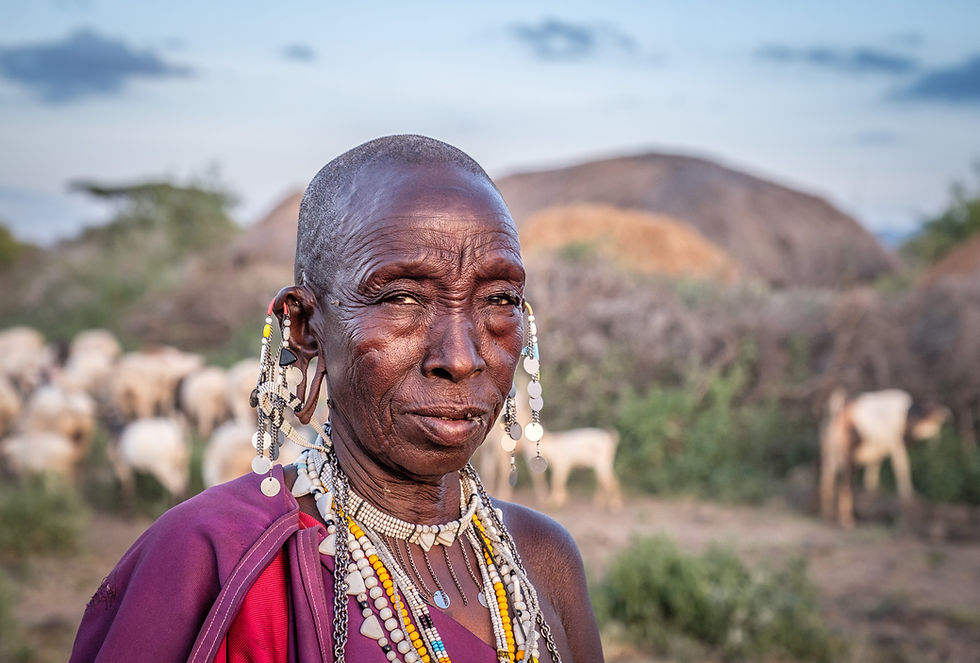
Who Lives on the Slopes of Mount Kilimanjaro
Long before Mount Kilimanjaro became a global trekking destination, it was and remains a lived landscape. The slopes of the mountain have been home to farming communities, pastoralists, traders, and ritual specialists for centuries. Understanding who lives here changes how the mountain itself is understood, not as an empty challenge, but as a cultural and social place shaped by human life.
The southern and eastern slopes of Kilimanjaro are traditionally inhabited by the Chagga people. For generations, Chagga communities have practiced intensive highland agriculture, developing complex irrigation systems that channel mountain water to banana gardens, coffee farms, and homesteads. Their relationship with Kilimanjaro is deeply practical and spiritual at once. The mountain provides fertile soil, water, and protection, but it is also a place of ancestral presence, stories, and moral order. Land here is inherited, cultivated, and remembered, not conquered.
On the northern slopes and surrounding plains live Maasai communities, whose relationship with Kilimanjaro is shaped by mobility rather than permanent settlement. Traditionally pastoralists, the Maasai have long moved seasonally with their cattle, navigating grazing lands, water sources, and shifting ecological conditions around the mountain. To understand the cultural, ritual, and belief systems of the Maasai people in depth, see The Famous Maasai People from East Africa: Their Culture, Rituals, Beliefs and More. While Kilimanjaro itself was not a place of farming for the Maasai, it has always been part of a wider cultural landscape tied to identity, weather, and ritual meaning. Today, many Maasai families live close to park boundaries, balancing pastoral life with tourism-related work on the mountain.
To the east and southeast of Kilimanjaro live Pare communities, who, like the Chagga, developed agricultural systems adapted to mountainous terrain. Trade routes historically connected these groups, linking Kilimanjaro to the wider region through exchange of crops, livestock, iron tools, and knowledge. The mountain was never isolated. It sat at the center of regional movement long before climbers arrived.
Colonial rule and later conservation policies reshaped access to the mountain. The creation of protected areas and park boundaries restricted farming, grazing, and movement that had once been fluid. While conservation has helped protect Kilimanjaro’s ecosystems, it also separated local communities from land they had historically used and managed. This history still shapes present-day relationships between residents, the park, and tourism.
Today, many people living on the slopes of Kilimanjaro are connected to the mountain through tourism rather than land use. Farming has become less predictable, landholdings smaller, and wage labor on the mountain more important. Guides, porters, cooks, drivers, and lodge staff often come from families whose grandparents never imagined Kilimanjaro as a workplace, but as part of everyday life.
When climbers walk the trails, they are moving through a landscape layered with memory, labor, and adaptation. The paths may feel wild and remote, but they exist because people have lived, worked, and negotiated life around this mountain for generations. Recognizing this does not diminish the climb. It deepens it.
Mount Kilimanjaro is not only Africa’s highest peak. It is a home, a livelihood, and a cultural anchor. Any responsible Kilimanjaro trek begins with understanding that the mountain’s story did not start with tourism and does not end at the summit.

Is Kilimanjaro Tourism Doing More Good or More Harm
This is not a question with a simple answer. Tourism on Mount Kilimanjaro has created income, jobs, and international visibility, but it has also introduced pressures that are easy to overlook when success is measured only in summit numbers.
Kilimanjaro tourism supports thousands of livelihoods. Guides, porters, cooks, drivers, hotel staff, and farmers all depend, directly or indirectly, on the steady flow of climbers. Park fees fund conservation and generate significant public revenue. For many families, tourism income has replaced less predictable livelihoods and made education, healthcare, and mobility more accessible than in previous generations.
At the same time, tourism reshapes life around the mountain in ways that are not always visible. Work is highly seasonal and increasingly uncertain as travel patterns shift. Most mountain crews work as freelancers, meaning income depends on bookings, weather, and global events far beyond their control. Communities living near the park have limited influence over how tourism is managed, even though they live with its consequences year-round.
Much of the harm linked to Kilimanjaro tourism is not deliberate. It grows from structure rather than intention. International marketing shapes expectations and pricing. Success is often measured by volume rather than by resilience. Labor is treated as replaceable, even though safety on the mountain depends entirely on experienced people making careful decisions under pressure.
Whether tourism does more good or harm depends on what happens beyond the summit. When the climb ends at the gate, value concentrates in a narrow moment of achievement. When the journey is connected to long-term relationships, fair labor, and community inclusion, tourism can become a stabilizing force rather than a extractive one.
Kilimanjaro is not a static backdrop. It is a changing landscape under environmental and social pressure. Responsible tourism begins by acknowledging that change and choosing to engage with the mountain in ways that protect not only the summit experience, but the people and ecosystems that make it possible.

Why Safety on Kilimanjaro Is a Matter of Ethics, Not Just Experience
Mount Kilimanjaro is often described as a “trekking peak,” a framing that can quietly minimize what the mountain actually is. At over 5,800 meters, Kilimanjaro is a high-altitude environment where bodies are pushed to their limits. Every year, climbers become seriously ill, and some do not survive. This is not because the mountain is unusually dangerous, but because it is frequently treated as simpler than it is.
Choosing the cheapest or fastest option on a mountain like this is not only a personal risk. It shifts responsibility downward, onto the local guides and porters who are expected to manage emergencies when things go wrong. When itineraries are rushed, acclimatization shortened, or group sizes increased to cut costs, the risk does not disappear. It is absorbed by the people who carry the loads, monitor clients at altitude, and make life-saving decisions under pressure.
This is why safety on Kilimanjaro cannot be separated from ethics. An unsafe climb is rarely an accident. It is usually the result of structural choices made long before anyone reaches the trailhead. Choices about pacing, staffing, summit strategy, and whether turning back is treated as responsibility or failure.
Experienced local guides are not an upgrade or a luxury. They are the mountain’s risk managers. They read weather patterns, recognize early signs of altitude illness, and know when conditions demand restraint rather than ambition. When their judgment is respected, safety improves for everyone. When it is overridden in pursuit of success statistics or cost savings, the consequences are rarely shared equally.
In serious mountaineering cultures around the world, one ethical principle is well understood: risk should never be outsourced to those with less power to refuse it. A responsible climber does not gamble with their own life in ways that require others to carry the consequences.
Kilimanjaro is not a place to rush, bargain, or test how cheaply a summit can be achieved. It is a place to slow down, respect the mountain, trust local expertise, and accept limits. Ethical climbing means recognizing that your life, the lives of those who work beside you, and the integrity of the mountain itself are inseparable.

Climate Change, Glaciers, and the Future of Climbing Kilimanjaro
Climate change has added a new and urgent layer to the reality of climbing Mount Kilimanjaro. Scientific research shows that more than eighty percent of the mountain’s glaciers have disappeared over the past century. This loss is not only symbolic of global warming but a material transformation of the mountain itself.
Kilimanjaro’s glaciers are sustained not only by cold temperatures but by specific cloud cover and moisture patterns. As these patterns shift, the mountain’s entire ecological system changes with them. Altered rainfall affects farming on the lower slopes, soil stability along trails, and the availability of water for both communities and camps. On the mountain, changing freeze and thaw cycles influence trail conditions, rock stability, and safety during summit attempts.
For the people who work on Kilimanjaro, climate change is not an abstract concept. Guides, porters, and cooks experience these shifts firsthand. More unpredictable weather increases physical strain, complicates logistics, and raises safety risks during long summit nights and descents. What was once a relatively stable climbing calendar is becoming less predictable, requiring deeper local knowledge and more conservative decision making on the mountain.
Tourism both responds to and contributes to this situation. Increased travel brings emissions, infrastructure pressure, and waste, while at the same time funding conservation, park management, and environmental protection. Kilimanjaro National Park depends heavily on tourism revenue, yet the very activity that supports conservation also adds pressure to a fragile ecosystem. This contradiction sits at the heart of Kilimanjaro tourism today.
In this context, the question is no longer whether people should climb Kilimanjaro, but how climbing is done in a time of ecological instability. Responsible trekking now means slower pacing, realistic itineraries, careful group sizes, and operators who are willing to turn back when conditions demand it. It means acknowledging that safety, environmental limits, and long term stewardship matter more than summit statistics.
Climbing Kilimanjaro today also invites a shift in mindset. The mountain is not a fixed monument to be consumed before it changes further. It is a living landscape shaped by global emissions, local livelihoods, and collective choices. How travelers engage with it now will influence whether tourism becomes another accelerating force of harm or a tool that supports adaptation, care, and resilience for those who live and work with the mountain every day.

What Happens After the Summit Matters More Than Most People Realize
For many climbers, the summit of Kilimanjaro is treated as the end of the story. Photos are taken, celebrations follow, certificates are collected, and attention quickly shifts to what comes next on the itinerary. Yet what happens after the descent often carries more weight than the moment spent at the top.The summit is a personal achievement. What follows is a choice.
Every Kilimanjaro climb relies on local labor, local land, and local knowledge. Guides pace your steps through altitude. Porters carry the weight that makes the climb possible. Communities live with the environmental and social consequences of tourism long after visitors leave the mountain gate. When a climb ends without acknowledgment of this wider context, the achievement remains isolated from the place that made it possible.
This is where many Kilimanjaro treks fall short. They extract effort, emotion, and meaning from the mountain, but return very little beyond wages and park fees. While employment and tourism revenue matter, they alone do not address the deeper imbalance between what is taken from the landscape and what is given back to the people who live alongside it.
A more complete journey asks a different question. Not only “Did I reach the summit?” but “What did this climb leave behind?”
When climbers continue beyond the mountain and engage with the communities connected to Kilimanjaro, the experience shifts. The physical challenge becomes part of a shared story rather than a private conquest. The sense of achievement expands from personal success to collective benefit. The climb stops being something consumed and starts becoming something that contributes.
This is not about charity or adding meaning after the fact. It is about recognizing that a mountain does not exist in isolation. Kilimanjaro is part of a lived environment shaped by people, history, and responsibility. A climb that ends at the gate misses that reality. A climb that continues beyond it begins to reflect it.
Seen this way, extending the journey after the summit is not an extra. It is the most coherent response to everything that precedes it: the labor, the land, the climate pressures, and the communities that make Kilimanjaro accessible at all. It is what turns a powerful personal achievement into a sustainable and ethically grounded way of being on the mountain.
From here, the question is no longer whether impact belongs in a Kilimanjaro trek, but why it was ever left out in the first place.
What “with purpose” means after the descent: delivering and installing solar power with our Maasai partners.
How to Turn the Climb Into Shared Impact on the Ground
Turning a Kilimanjaro climb into shared impact begins with recognizing that the mountain does not exist apart from the people who live alongside it. Every ascent relies on local labor, local land, and local knowledge, yet too often the journey ends the moment climbers pass through the gate after their descent. When that happens, the experience remains incomplete.
Shared impact is created when the climb continues beyond the summit and into the communities connected to the mountain. This does not require grand gestures or large-scale projects. It requires practical action that responds to real needs and is carried out through local systems. In the context of Kilimanjaro, clean energy access is one of those needs.

I have seen this impact firsthand in Maasai villages. I have watched how a single small solar panel can quietly change daily life. Leah, a Maasai widow living within her extended family in a remote part of the savanna, received a panel that allowed her not only to light her home, but to charge other people’s mobile phones. In a place where nearly everyone carries a phone but electricity does not exist, this shifted her position in the community. In a strongly patriarchal system where widows do not traditionally inherit property or resources, she gained a small income, greater independence, and a new role rooted in something practical rather than symbolic.
These solar panels are not brought in as donations from outside. They are purchased from Tanzanian suppliers and installed by local technicians who know the environment, the systems, and the realities of working in remote areas. The work supports local businesses, local skills, and local employment, while ensuring that the technology can be maintained and repaired without outside dependence.
Because of this, the impact does not sit on top of the community as charity. It is integrated into local systems and local decision making. Families receive something useful and durable, technicians earn their living, and the benefits remain within the local economy. What is created is not gratitude toward visitors, but mutual respect built through practical collaboration.
Preparing to engage with communities connected to Kilimanjaro requires a different mindset than preparing for the summit itself. Cultural awareness, respect, and practical preparation are explored further in our guide on traveling to Indigenous communities in Tanzania.
For travelers, this changes the experience in a profound way. The physical challenge of the mountain finds a tangible continuation on the ground. The sense of achievement expands from personal accomplishment to shared benefit. Instead of leaving with only memories and photographs, climbers leave knowing that their presence contributed to something that remains.
The climb opens something, but what follows gives it direction. The impact is not abstract, and the joy is not one sided. It lives in everyday improvements that remain long after the summit photos fade. This kind of engagement does not replace the climb; it completes it.

Why This Is the Most Responsible Way to Climb Kilimanjaro Today
Climbing Mount Kilimanjaro will always be a powerful personal achievement. The question this guide has explored is not whether the climb matters, but what kind of relationship that achievement creates with the land and people who make it possible.
Kilimanjaro sits at the intersection of global tourism, climate change, local livelihoods, and cultural history. Every trek draws on the labor of guides and porters, the protection of national parks, and the resilience of communities living alongside the mountain. Ignoring that context no longer feels neutral. It is simply incomplete.
A responsible Kilimanjaro trek does not rush the mountain, cut corners on safety, or treat impact as an optional add on. It follows the same principles outlined in How to Visit Indigenous Communities Respectfully: The Complete Guide to Ethical Indigenous Tourism. It takes time, respects local expertise, and continues beyond the summit into the realities shaped by tourism itself. Reaching the top is not the end of the journey, but the point where responsibility becomes visible. Understanding the deeper cultural differences between Indigenous communities such as the Hadzabe and the Maasai also shapes how travelers approach their time on the ground, as explored in Hadzabe vs Maasai Cultural Experiences: What’s the Difference?.
This is why the climb cannot stop at the gate. Continuing into community-led impact is not about charity or symbolism. It is about coherence. When effort on the mountain is matched with care on the ground, the experience gains depth, honesty, and meaning. The physical challenge becomes part of a shared story rather than a private conquest.
For travelers who value safety, depth, and respect, this approach does more than feel better. It creates a richer experience. One that connects achievement to people, adventure to accountability, and travel to something that lasts longer than a photograph.
This is not a different way to climb Kilimanjaro. It is the way that makes sense in the world as it is today. If you are going to stand on the roof of Africa, how you arrive there and what you leave behind matters.

Climb Kilimanjaro With Purpose
Climb Mount Kilimanjaro in a way that goes beyond the summit. This private expedition is led by professional Maasai mountain guides and designed around safety, respect, and depth rather than volume tourism.
After the descent, the journey continues into a Maasai community, where you take part in installing a solar panel for a family living off the grid. The project supports clean energy, local livelihoods, and practical change that remains long after the climb is over.
This is not an add-on. It is a continuation of the climb, turning personal achievement into shared impact.
|
Ethical Kilimanjaro Climbing: Frequently Asked Questions
Is it ethical to climb Mount Kilimanjaro at all?
Climbing Mount Kilimanjaro can be ethical, but it depends entirely on how the climb is structured. Kilimanjaro tourism provides income, employment, and conservation funding, yet it also creates pressure on labor, ecosystems, and surrounding communities. An ethical climb prioritizes safety, fair working conditions, realistic pacing, and responsibility beyond the summit, rather than focusing solely on reaching the top at the lowest possible cost.
What makes a Kilimanjaro climb unethical?
A Kilimanjaro climb becomes unethical when safety, labor conditions, and long-term impact are treated as secondary to price or summit statistics. This often includes rushed itineraries with poor acclimatization, underpaid or overloaded porters, large group sizes that limit individual care, and a lack of transparency around where money goes. When responsibility ends at the park gate, the climb remains extractive even if intentions are good.
Are cheaper Kilimanjaro climbs unethical?
Not all lower-cost climbs are unethical, but extremely cheap Kilimanjaro treks usually achieve their pricing by cutting costs where it matters most. This can mean shorter itineraries, reduced safety margins, lower crew wages, or unstable working conditions. Ethical climbing requires resources: time for acclimatization, experienced leadership, proper equipment, and fair compensation. When a price seems too low to support these elements, the risk is often shifted onto local crews.
Do Kilimanjaro porters and guides rely on tips?
Yes. Tipping is a significant and expected part of income for Kilimanjaro porters, guides, and cooks. While base wages are paid by operators, tips often make the difference between subsistence income and financial stability. Ethical operators provide clear tipping guidelines and ensure that tips are distributed fairly and transparently, rather than leaving climbers uncertain or placing the burden of fairness on individuals.
What is KPAP and does it matter when choosing a climb?
The Kilimanjaro Porter Assistance Project (KPAP) is an independent organization that advocates for fair treatment of porters on Mount Kilimanjaro. KPAP works to promote reasonable loads, adequate food and shelter, fair pay, and proper working conditions. Choosing an operator aligned with porter welfare standards helps reduce exploitation, but ethical responsibility also extends beyond compliance to how safety, pacing, and post-climb impact are handled.
Why is safety considered an ethical issue on Kilimanjaro?
Safety on Kilimanjaro is inseparable from ethics because risk does not affect everyone equally. When itineraries are rushed or group sizes are too large, the burden of managing emergencies falls most heavily on local guides and porters. Ethical climbing recognizes that risk should never be outsourced to those with less power to refuse it. Respecting local expertise and accepting that turning back is sometimes the right decision is a core ethical principle.
Does ethical climbing cost more?
Ethical Kilimanjaro climbing often costs more because it reflects the real costs of doing things responsibly. Longer itineraries, smaller groups, fair wages, proper equipment, and post-summit community engagement all require resources. What appears as a higher price is usually a more honest accounting of what a safe, responsible, and respectful climb actually involves.
What does “post-summit impact” mean in the context of Kilimanjaro?
Post-summit impact refers to what happens after climbers leave the mountain. Ethical climbing recognizes that responsibility does not end at the summit or the park gate. Post-summit impact can include community-led projects, local energy access, or other practical initiatives designed in partnership with communities connected to Kilimanjaro. The goal is not charity, but integration, ensuring that tourism contributes to lasting benefit rather than temporary extraction.
How can I choose an ethical Kilimanjaro tour operator?
An ethical Kilimanjaro operator is transparent about safety practices, itinerary design, crew treatment, and wages. They prioritize acclimatization over speed, empower experienced local guides to make decisions, keep group sizes manageable, and clearly explain how responsibility continues beyond the climb. Asking direct questions about labor conditions, tipping, and post-climb engagement is one of the most effective ways to assess whether ethics are embedded in practice rather than used as a label.
Is reaching the summit the most important part of climbing Kilimanjaro?
Reaching the summit is a meaningful personal achievement, but it is not the only measure of a successful climb. An ethical Kilimanjaro experience values safety, respect, and responsibility as much as altitude gained. A climb that protects human life, honors local expertise, and contributes positively beyond the mountain can be successful even if the summit is not reached.

About the Author

This guide was written by Anniina Sandberg, an anthropologist and the founder of Visit Natives. She has summited Mount Kilimanjaro twice, as well as Mount Meru in Tanzania, Mount Kenya and Mount Karisimbi in Rwanda, and has spent years working alongside mountain crews and Indigenous communities in East Africa.
With a long-standing engagement in high-altitude and remote outdoor environments, her work focuses on ethical travel design, fair labor practices, and community-led impact that continues beyond the summit. Through Visit Natives, she creates small-scale journeys grounded in field experience, safety, and responsibility rather than volume tourism.


