


Why Don’t the Maasai Know Their Age?


QUICK ANSWER
Traditionally, some Maasai people did not keep track of their exact birth dates because age was understood through life stages and the Maasai age-set system rather than calendar years. Social identity was closely connected to initiation ceremonies, warriorhood and elderhood. Today, many Maasai know their exact ages, but the traditional age-set system remains culturally significant. |
When I was a young anthropology student, I travelled to Tanzania to conduct my very first fieldwork among the Maasai, immersing myself in Maasai culture and everyday life. I was only 21 years old when I found myself living for almost a year in a traditional Maasai boma in rural Tanzania, without electricity, running water or any of the modern conveniences I had grown up with. During that year, I became familiar with many aspects of Maasai culture, traditions and daily life, but one thing in particular caught my attention.
One of the first things I noticed was that nobody seemed to know exactly how old they were. Coming from a Western society, where age is one of the first things we ask about a person, I found this fascinating. We use age to understand people, their life stages and even their place in society. Naturally, I was curious about how old the people around me were.
But I soon discovered that this was not such a simple question. Most people I met, including young adults around my own age, had no idea how many calendar years they had lived.
Eventually, asking someone's age became something of a running joke. Whenever I asked, the answer was almost always the same: "Forty!"
This made me laugh, especially when the person answering was clearly much younger. Even more amusingly, whenever the women tried to guess my age, they would confidently declare that I was forty too, despite being only in my early twenties.
It wasn't until later that I discovered the explanation. The women I had been speaking with only knew one number in Swahili: forty!
Swahili was our common language at the time, before I learned to speak Maa, the language of the Maasai. What I had initially interpreted as a completely different understanding of age turned out, at least in part, to be a rather funny language barrier.
Soon, however, I began to understand that the people around me were asking questions they considered far more important than my age. Was I married? Had I given birth to children? These questions helped them understand who I was and where I belonged in society. They wanted to know whether I was entito or shiangigi, distinctions that carried far more meaning in their social world than the number of years I had lived. While I was trying to understand people through their age in calendar years, they were trying to understand me through my stage of life, my relationships and my place within the community.
I soon realized that to understand Maasai society, I first needed to understand its traditional age-set system and how Maasai traditions shaped people's identities and stages of life. To understand the people I was living with, I first had to understand how they understood themselves.
And now, I invite you to join me on that journey.
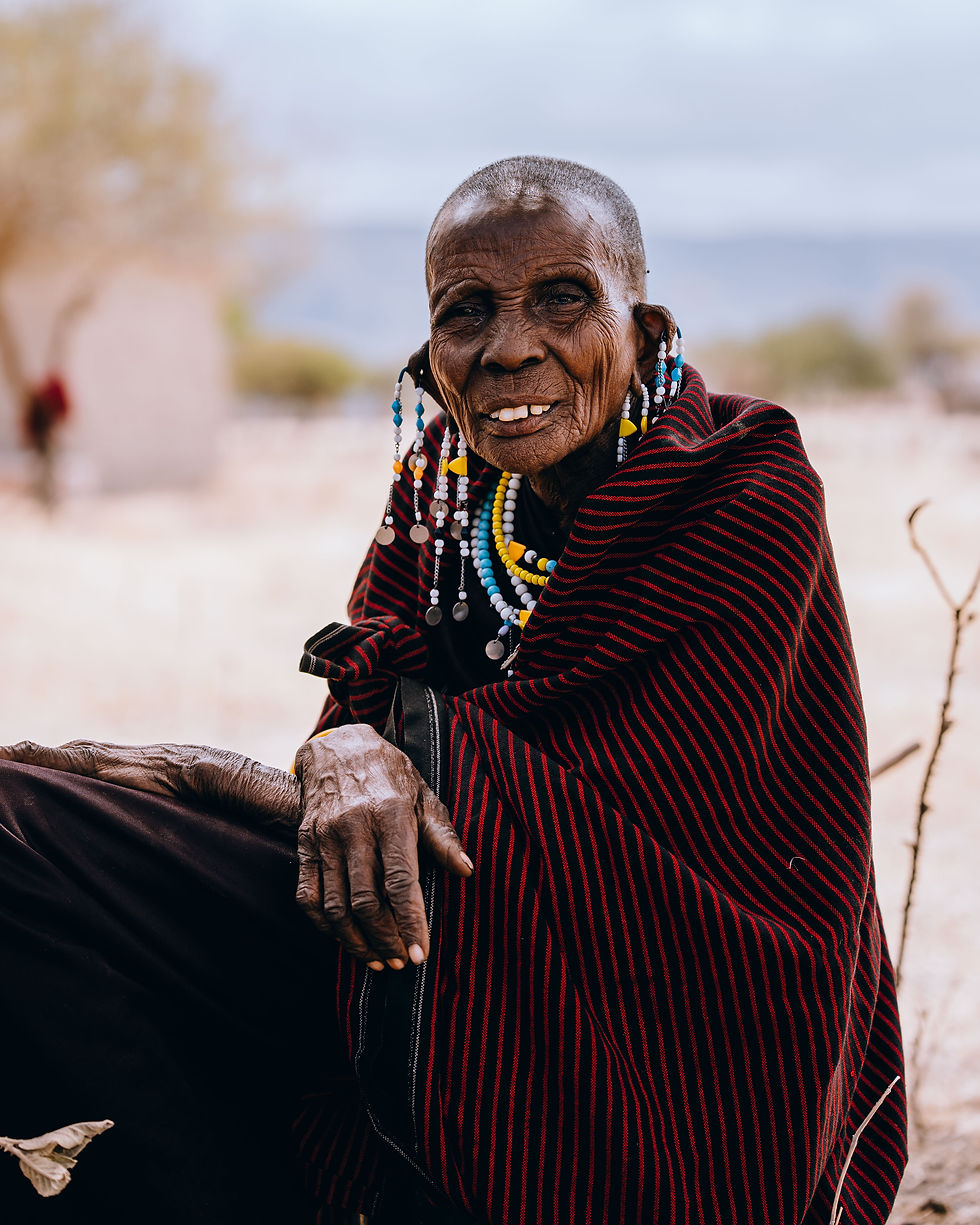
The Maasai Age-Set System: Age Is More Than a Number
In traditional Maasai society, knowing someone's exact age in calendar years has not always been as important as understanding which stage of life they belong to. Rather than defining people primarily by their birthdays, Maasai communities have traditionally organized social life through age sets, initiation ceremonies and family relationships.
The Maasai age-set system is particularly important for men. Boys are initiated into adulthood through circumcision and become members of an age set, a group of men who pass through major life stages together. These age sets remain important throughout their lives, shaping social relationships, responsibilities and the transition from warriorhood to elderhood.
But age sets are not simply groups of people who happen to be the same age. They are part of a wider social system that determines how individuals relate to one another, what responsibilities they hold and how their position within the community changes over time.
How Does the Maasai Age-Set System Work?
Let me give you an example. When a Maasai boy is still young and has not yet been circumcised, he is known as olayioni, simply meaning "boy". But at a certain point, a new generation of boys is ready to enter adulthood.
Traditionally, the opening of a new age set is determined through the community's ceremonial leadership, with the oloiboni, a Maasai spiritual leader and diviner, playing an important role in ritual life. Boys who may be several years apart in age undergo initiation during the same age-set period and become members of a named age set.
From that moment, they share a collective identity that will remain with them throughout their lives.
As they grow older, these men progress together through different stages of life, marked by important ceremonies and rites of passage. They move from junior warriors to senior warriors and eventually become elders, taking on new responsibilities and obligations within the community. One of the most important ceremonies is Eunoto, which marks a significant transition in a warrior's life. I have written more about this fascinating tradition in my article on the Maasai Eunoto ceremony and its cultural significance.
Each transition is a major social event. Becoming a warrior, for example, is not simply a matter of reaching a certain birthday. It involves initiation, ceremonies and recognition by the community. The same applies when warriors eventually move into elderhood.
This is why, in traditional Maasai society, the difference between being 17 or 25 years old may be far less important than belonging to a particular age set and stage of life. Two men of different calendar ages can share the same social status, responsibilities and identity because they belong to the same age set.
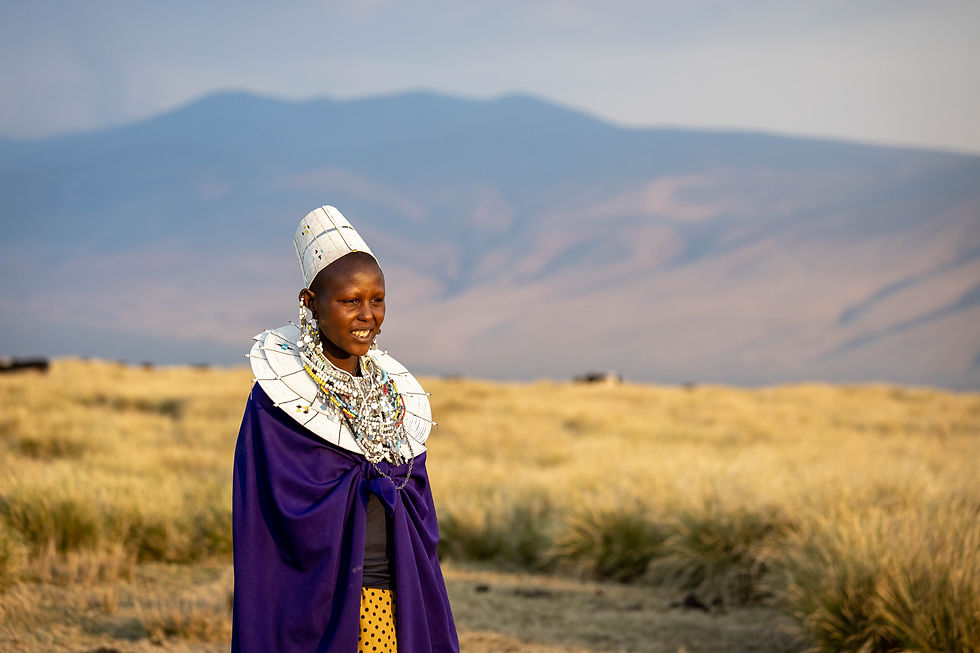
What About Maasai Women? Marriage, Age Sets and Sexual Relationships
Unlike Maasai men, women do not traditionally have their own formal age-set system in the same way. Instead, a married woman becomes socially associated with the age set of her husband. This means that the Maasai age-set system extends far beyond initiation ceremonies and warriorhood. It also influences marriage, relationships and the social rules surrounding sexuality.
One particularly fascinating aspect of traditional Maasai society is that marriage has not necessarily meant sexual exclusivity in the Western sense. Traditionally, married Maasai women could have sexual relationships with other men belonging to the same age set as their husbands, within culturally recognized rules and expectations.
You could also describe this arrangement from another perspective: the bonds between men of the same age set are traditionally so strong that they may even extend to relationships with one another's wives.
Both descriptions reflect aspects of the same social institution, but there is an important distinction. Maasai women are not simply possessions to be shared between men. Women have their own preferences and agency, and their willingness matters in these relationships.
Marriage itself is another fascinating aspect of Maasai social organization. To understand how polygamy works within Maasai society, read our article Why Do Maasai Men Have Multiple Wives?.
This illustrates just how deeply the Maasai age-set system is woven into social life. It is not simply a way of categorizing people by age. It helps organize relationships, responsibilities and expectations within the community, including aspects of life that Western societies tend to understand very differently.

Why Exact Birth Dates Were Never Important in Traditional Maasai Life
One of the main reasons why many Maasai traditionally did not know their exact age is actually quite simple. Nobody recorded their birth dates. In the traditional Maasai communities where I conducted my fieldwork, women gave birth at home, usually assisted by other women. There were no hospital records or birth certificates documenting the exact date when a child was born. Similarly, marriages and deaths were not necessarily recorded in official documents as we are accustomed to in modern Western societies. Without written records, there was often little reason to remember the exact day, month or year of someone's birth.
Instead, the birth of a child might be remembered through the seasons or an important event that happened around the same time. For example, a mother might name her child Olopiro, referring to the rains during which the child was born. Years later, when recalling the birth, she might simply say that he was born during the great rains. A child's birth might also be remembered in connection with a severe drought, an unusual natural event or an important ceremony that took place in the community. These events provided meaningful reference points in people's memories, even when nobody knew the exact date.
Traditional Maasai life has always been closely connected to cattle, rainfall and the availability of grazing land. People needed to know when the rains were expected, when the dry season would begin and where they could find enough grass and water for their animals. When you live in a pastoralist society, knowing whether it is Tuesday or Thursday is not particularly useful when deciding where to take your cattle. What matters is whether the rains have arrived, whether the grass is growing and whether your animals have enough to eat.
The Maasai have traditionally possessed detailed knowledge of seasonal changes, rainfall patterns and the natural environment. This knowledge also extends to the plants around them, many of which have traditionally been used for healing and medicinal purposes. I have explored some of these traditions in another article, Unlock the 4 Most Powerful Maasai Healing Plants You’ve Never Heard Of.
In the traditional Maasai communities where I lived, birthdays were not celebrated. There was no particular significance attached to turning 18, 30 or 50, because reaching a certain number of calendar years did not automatically change your position in society. Instead, the important moments in life were marked by initiation ceremonies, marriage, parenthood and transitions between different social stages. A Maasai boy, for example, did not become a warrior simply because he reached a certain birthday. He became a warrior through initiation and the ceremonies that marked his transition into a new stage of life. What mattered was the social recognition of that transition and the responsibilities that came with it.
In Western societies, knowing someone's age often helps us understand their life stage and social position. Among the Maasai, I discovered that people were interested in much the same information, but asked different questions. For women, marriage and motherhood were important indicators of social status, while for men, belonging to a particular age set, being a warrior or an elder, and having a family revealed their position within the community.
During my first anthropological fieldwork, I realized how much my own understanding of age was shaped by the society I had grown up in. The people around me could understand one another's life stages perfectly well without knowing their exact ages in years.
Today, many Maasai attend school, have official identification documents and know their birth dates. Yet their traditional understanding of age remains a fascinating example of how differently cultures can define the stages of human life.

What If You Didn't Know How Old You Were?
One of the most fascinating things anthropology has taught me is how easily we mistake our own cultural habits for universal truths. We tend to think of age as something obvious and objective. After all, everyone grows older, and the number of years we have lived can be calculated. But the meaning we attach to those years is something we learn from the society around us.
In Western societies, age influences almost every stage of our lives. It determines when we start school, when we become legal adults, when we are expected to settle down and when we retire. We celebrate birthdays, worry about getting older and sometimes feel that we are running out of time to achieve certain things. Yet many of these expectations are cultural rather than biological.
Anthropologists have long been interested in how different societies understand time. In his classic study The Nuer, E. E. Evans-Pritchard described how time could be understood through seasonal changes and relationships between generations rather than simply through calendar dates. My experience among the Maasai brought this idea to life in a very personal way. I began to see how much of what I considered natural about age was actually something I had learned.
Today, I sometimes wonder how differently we might experience our own lives if we didn't constantly measure them against a number. Would turning forty or fifty feel the same if we didn't know exactly when it happened? Would we still feel too young or too old to do certain things?
I went to Tanzania at 21 to study Maasai culture, but I came home questioning some of the assumptions I had grown up with. And perhaps that is what I love most about anthropology. Understanding another culture can change the way we understand our own.
Experience Maasai Culture Beyond the Stories
Join a Maasai family in Tanzania and discover everyday life, traditions and the relationships that shape their community. Our Maasai homestays offer a rare opportunity to experience the culture firsthand, spend time with your hosts and learn directly from the people who live it. |

Frequently Asked Questions About Maasai Age and Traditions
Do Maasai people know their exact age?
Many Maasai today know their exact age, but traditionally birth dates were not always recorded. Age was often understood through life stages, initiation ceremonies and membership in the Maasai age-set system.
What is the Maasai age-set system?
The Maasai age-set system organizes men into named groups whose members undergo initiation during the same period. They progress through different stages of life, from warriors to elders, sharing social responsibilities and a lifelong collective identity.
Do the Maasai celebrate birthdays?
Traditionally, birthdays were not celebrated in the Maasai communities where I conducted my fieldwork. Important life transitions, such as initiation, marriage and parenthood, carried greater social significance.
About the Author

Anniina Sandberg (MA) is a Finnish African Studies scholar, cultural anthropologist, Swahili interpreter and founder of Visit Natives, a travel company specializing in immersive cultural experiences with Indigenous communities. She began her anthropological fieldwork at the age of 21, living for almost a year among the Maasai in rural Tanzania. With over 20 years of experience in the field, she combines academic knowledge, extensive firsthand experience and long-standing relationships with local communities in her work and writing about African cultures and traditions.


