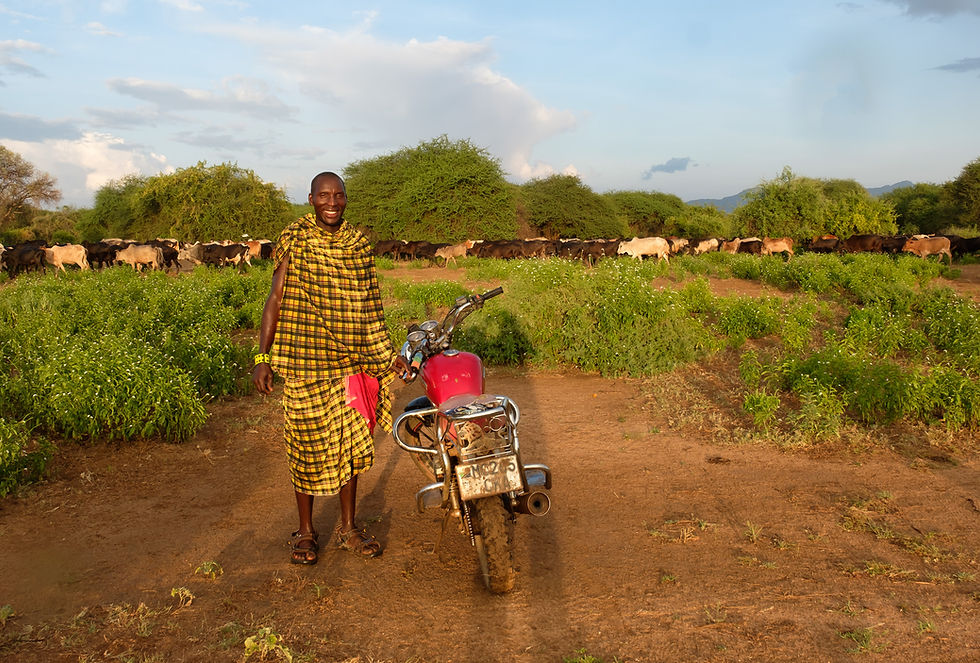
.png)


Is It Ethical to Give Money or Gifts to Indigenous Communities? A Practical Travel Guide

Updated: Sep 29

Quick Answer: Giving money or gifts directly to individuals in Indigenous communities is often inappropriate unless explicitly advised by local hosts or guides, as ethical support usually follows community approved structures, collective funds, or professional tipping systems. |
Ethical Indigenous travel is not defined by good intentions alone. It is shaped by how well travelers understand and respect local authority, cultural systems, and community-approved forms of exchange.
Money and gifts are among the most sensitive and misunderstood aspects of visiting Indigenous communities. Travelers often arrive with genuine care and a desire to help, but are left wondering what is actually appropriate. Is it okay to give sweets to children? Should you bring school supplies, pencils, or notebooks? Is it respectful to hand out cash, or to bring small souvenirs from home as gifts?
These seemingly simple gestures can carry complex meanings. In many Indigenous societies, gifts are not casual or individual acts, but part of social systems that involve obligation, hierarchy, reciprocity, and community balance. When money or gifts bypass local structures or are given without guidance, they can unintentionally create inequality, dependency, or tension within the community.
This guide offers clear, practical answers to the questions travelers most often ask about money, gifts, and contributions. Drawing on Indigenous-led tourism principles and long-term field experience, it explains when giving is appropriate, when it is harmful, and how support can be offered in ways that strengthen communities rather than disrupt them.
After reading this guide, you will know what is appropriate to give, who should receive it, how much to tip and whom, and how to ask about contributing more, without causing harm or bypassing local cultural systems.

Why Gifts Are Never “Just Gifts”: An Anthropological Perspective
Long before tourism or ethical travel guidelines existed, anthropologists were already examining why giving is never a neutral act. One of the most influential thinkers on this question was Marcel Mauss, whose 1925 work The Gift fundamentally changed how we understand generosity, reciprocity, and social obligation.
Mauss identified three core rules that govern gift exchange in many societies, particularly Indigenous ones: the obligation to give, the obligation to receive, and the obligation to reciprocate. A gift is therefore never just an object. To give initiates a relationship, to receive is to accept a social bond, and to fail to reciprocate risks shame, loss of status, or conflict. What circulates through gifts is not only material value, but trust, hierarchy, and moral responsibility.
One of Mauss’ most important insights was that gifts always carry part of the giver with them. This means they create lasting ties between people and groups, binding them into ongoing relationships. For this reason, Mauss famously argued that there is no such thing as a free gift. Not because generosity is insincere, but because every gift enters an existing social system with expectations and consequences.
A classic example comes from societies where a gift given to one household obligates that household to respond later, often publicly and proportionally. Giving too much, too often, or to the wrong person can be just as disruptive as giving nothing at all, because it shifts power, status, and dependency within the community.
This dynamic is especially visible among the Maasai of northern Tanzania, where hospitality, resource sharing, and authority are structured around elders, households, and community norms rather than individual transactions. Understanding these social expectations before visiting is essential, which is why travelers are encouraged to familiarize themselves with Maasai village etiquette and cultural norms before visiting Tanzania.
For travelers, this matters because money, sweets, school supplies, souvenirs, or spontaneous donations do not enter empty space. They enter living gift economies with established rules about who may give, who may receive, and how balance is maintained over time. When visitors give directly to individuals without guidance, they may unintentionally create inequality or tension within families or between households.
Understanding Mauss’ work helps explain why ethical Indigenous travel is not about giving more, but about knowing when not to give, when to ask, and when support should be collective rather than individual. Responsible contributions are guided by local authority and social structure, not personal impulse. In this sense, cultural literacy and restraint are as important as generosity.
If you want to explore Mauss’ ideas more deeply and see how they continue to shape modern anthropology, ethics, and development work, we recommend reading more about The Gift and its legacy here.

What the Hadzabe Teach Us About Gifts, Power, and Equality
Among the Hadzabe hunter-gatherers of Tanzania, equality is part of everyday life and shapes how people live together, share resources and make decisions. The Hadzabe do not recognize formal leaders, chiefs, or individuals with authority over others. Even respected elders do not hold decision-making power. Men and women participate equally, and social life is organized around autonomy, mutual obligation, and the freedom to choose where to live, with whom to associate, and when to move between camps.
Within this system, accumulation is actively discouraged. Hoarding more than one needs is socially unacceptable, and sharing is not optional. If someone asks, one is expected to give. These norms ensure that no individual can gain lasting power, status, or control over others through material means. This is important to understand when bringing gifts or giving money as a visitor. For a deeper understanding of Hadzabe culture, daily life, hunting practices, and values around sharing and equality, see our in-depth guide: The Ultimate Guide to the Hadza (Hadzabe) People of Tanzania: Culture, Hunting, Honey, Diet and Daily Life.
When Gifts Create Power
In societies like the Hadzabe, giving a gift or money to one individual can unintentionally introduce exactly what the culture works to prevent: inequality. A gift to a single person can elevate their status, create obligation, or introduce dependency. Even when the recipient shares the gift, the moment of receiving places them in a position of advantage. Over time, repeated individual gifting can quietly reshape relationships, generate tension, and undermine the social balance that protects equality. What appears as generosity from the outside can function as power on the inside.
Traditional Redistribution Without Accumulation
Historically, the Hadzabe maintained balance through social mechanisms that ensured goods circulated rather than accumulated. One example is lukuchuko, a traditional gambling game through which items such as poison arrows or stone smoking pipes moved from person to person. The purpose was not profit, but redistribution. Objects followed people across camps, preventing long-term ownership or control.
While practices like lukuchuko have declined in many areas, partly due to the growing presence of money from tourism and research, they illustrate an important point: Hadzabe society already had systems for sharing and balance long before outsiders arrived.
When external money or gifts enter without awareness of these systems, collective redistribution can be replaced by individual advantage.
Why Ethical Giving Requires Restraint
For visitors, this means that giving is not merely a personal moral choice. It is a social intervention. In cultures that prioritize equality, autonomy, and non-dependency, ethical support must respect collective structures rather than individual transactions. This is why responsible Indigenous tourism avoids direct gifting to individuals unless it is explicitly guided by local hosts or community-approved systems.
Sometimes, the most respectful choice is not to give at all, at least not in the way we are accustomed to. The Hadzabe remind us that ethical travel is not about how generous we feel, but about whether our actions protect or disrupt the values of the communities we enter.

Why Is Giving Money in Indigenous Communities Often Inappropriate?
Money does not carry the same meaning everywhere. In many Indigenous communities, it is not an individual resource but something that enters existing systems of kinship, obligation, and collective responsibility.
In communities where resources are traditionally shared or redistributed through elders, households, or agreed social pathways, direct cash gifts can bypass these structures. This places the recipient in an uncomfortable position and can disrupt relationships that existed long before the visitor arrived. The imbalance does not disappear when the traveler leaves; it remains within the community.
This is why experienced local hosts often discourage spontaneous cash giving. Not because support is unwanted, but because money introduced without context can shift attention away from hospitality and toward negotiations and explanations that visitors are not part of and cannot resolve.
Ethical Indigenous travel recognizes that support works best when it follows local systems rather than individual impulse. This may mean contributing through community-approved funds, shared costs arranged in advance, or compensation handled transparently through hosts, guides, or leadership structures that already manage redistribution.
For travelers, this requires restraint rather than generosity. Choosing not to give money directly is often the more respectful option, even when it feels counterintuitive, because it allows dignity, balance, and local authority to remain intact.
At the same time, it is essential to distinguish between spontaneous giving inside Indigenous communities and professional tourism labor. In contexts where guiding, driving, cooking, or logistics are paid roles, money follows different rules. Withholding tips in the name of ethics can be just as harmful as giving impulsively in the wrong setting. Responsible travel means understanding which system you are entering, and acting accordingly.
A Real Example: When Generosity Leaves Nothing Behind
During a visit to a Maasai village, a widow welcomed travelers into her home with warmth and hospitality. The guests were deeply moved by the encounter and, wanting to show appreciation, gave her a substantial amount of cash in front of others.From the visitors’ perspective, the gesture felt generous and direct. From within Maasai culture, however, the situation unfolded very differently.
Maasai society is collective. Resources are not privately owned in the way outsiders often assume, and a woman, especially a widow, cannot keep a visible cash gift for herself. Once the visitors left, the money immediately became a matter for the wider community. She was expected to redistribute it among relatives and others who had witnessed the exchange.
In the end, the woman was left with nothing.
The guests’ intention was to support her personally. The outcome was the opposite. By giving publicly and outside local structures, the gift activated obligations the visitors could not see and could not control. What felt like kindness from the outside became a social burden on the inside.
This is not an unusual outcome. It is a predictable result of introducing money into collective systems without understanding how authority, sharing, and obligation operate. The harm was not caused by giving too little, but by giving in the wrong way. This is why ethical Indigenous travel emphasizes asking first, following local guidance, and allowing hosts to decide how support should be structured. Without that, even generosity can erase the very support it intends to provide. |

Tipping, Money, and Contributions in Indigenous Travel
Money and tipping are among the most sensitive practical realities travelers encounter when visiting Indigenous communities, not because generosity is unwelcome, but because how, when, and to whom money is given carries social meaning that outsiders often underestimate. In destinations such as Tanzania, where tourism has long shaped local economies, tipping is not optional or symbolic, but an established and expected part of professional relationships, especially for guides, drivers, cooks, and support staff who rely on this income to sustain their livelihoods.
That said, tipping follows clear social rules, and understanding these rules is part of traveling responsibly.
Tipping in Tanzania: What Is Appropriate and How to Do It Right
In Tanzania, tips are always given in cash and traditionally offered at the end of the journey, when goodbyes are said, not daily and not publicly. We strongly recommend placing the tip in an envelope and handing it over privately, keeping the moment simple and respectful rather than performative.
For professional guides and staff who come from towns or cities, tips can be given either in local currency or in foreign currency such as USD or EUR, as they have access to currency exchange services. For Indigenous hosts living in remote villages, however, tips and contributions should always be given in local currency, as foreign cash creates practical difficulties and dependence on others for exchange, which may involve long travel, fees, or the risk of being taken advantage of.
Recommended Tipping Guidelines in Tanzania
While tipping is always at the traveler’s discretion, the following ranges reflect widely accepted practice and help create clarity and fairness for everyone involved.
For assistant guides, who support logistics, translation, safety, and daily coordination, we recommend approximately 10 USD per day per person.
For cooks or bush chefs, who work long hours in remote conditions sourcing ingredients and preparing meals, we recommend approximately 20 USD per day per person.
Assistant guides and cooks should be tipped individually, each in their own envelope, rather than pooled, as each role carries different responsibilities and contributions. This avoids internal imbalance and recognizes labor clearly and respectfully.
For lead guides or driver-guides, tipping varies depending on responsibility, group size, and length of stay, and your guide can advise you on an appropriate range toward the end of the trip but we recommend approximately 20 USD per day per person.
If you feel especially well cared for or supported, it is entirely appropriate to give more. Tipping in this context is not charity, but recognition of skilled labor carried out under demanding conditions.
Tipping Indigenous Hosts and Village Communities
When staying with Indigenous host families or communities, money should not be handed directly to individuals unless specifically advised. Any agreed contribution should be given to the main local guide or designated community representative, in an envelope, in local currency, and at the end of the stay.
Unlike professional drivers or guides, who can receive tips in USD or euros and exchange them in towns or cities, Indigenous hosts in remote areas often cannot change foreign currency. Giving USD or euros may leave them unsure of its value, vulnerable to being taken advantage of, or unable to use the money at all due to lack of transport or access to exchange facilities.
Providing contributions quietly and in local currency ensures that money enters existing community systems rather than creating embarrassment, obligation, or imbalance. Respectful giving follows local guidance and protects the dignity and autonomy of Indigenous hosts.
Why This Matters
In many cultures, giving money is not a neutral act. Who gives, who receives, how publicly it happens, and whether it creates future obligation all matter deeply. Well-intentioned travelers sometimes cause tension by giving spontaneously or in inappropriate currency without realizing the long-term effects this can have within a community.
Responsible travel means understanding that generosity works best when it follows local structures rather than bypassing them. Thoughtful tipping strengthens relationships. Uninformed tipping can unintentionally disrupt them.

Gifts, Souvenirs, and Objects: When Giving Things Creates Harm Instead of Help
Objects carry meaning far beyond their material value, and in Indigenous communities gifts are rarely neutral, especially when they arrive from visitors whose assumptions about need, childhood, or improvement are shaped by very different cultural realities. While travelers often bring small items such as school supplies, sweets, clothing, or toys with good intentions, these gestures can unintentionally create harm when they do not align with how life is actually lived within the community.
School supplies are a common example. When notebooks, pencils, or backpacks are given to individual children, they can quietly mark one child as favored, creating jealousy, pressure, or confusion within classrooms, households, or extended families, especially in communities where access to education is unequal or limited. In many Indigenous contexts, not all children attend school, and the presence of school-related items can highlight exclusion rather than opportunity, making children who cannot go to school feel left out or diminished rather than supported.
This dynamic is also visible among the Maasai of Tanzania, where social life is organized around collective responsibility, age sets, households, and elders rather than individual accumulation. Hospitality, sharing, and authority follow clear cultural rules, and resources introduced from outside are rarely understood as private or personal in the way visitors might assume.
Understanding these structures is essential before offering gifts or money, as even well-intentioned gestures can activate obligations and expectations that outsiders do not see. For a deeper cultural context, see our guide on Maasai Culture in Tanzania: Traditions, Rituals, Beliefs & Daily Life of the Maasai Tribe.
When gifts are disconnected from local ways of living, they can create disappointment, confusion, or quiet harm, especially when objects symbolize a world that some children cannot access, without offering anything that supports their role, dignity, or contribution within their own cultural system. Over time, repeated mismatched gifting can reinforce inequality, undermine local values, and subtly shift attention toward what is lacking rather than what already exists.
Plastic toys and non-essential objects add another layer of harm. In remote communities where there is no waste management system, these items do not disappear once the visitor leaves. They remain as long-term waste in places that did not generate them, contributing to environmental burden without providing lasting benefit. What may offer a moment of curiosity or novelty rarely brings sustained joy, and instead leaves communities with materials they did not choose, cannot recycle, and must live alongside long after the gift has lost its meaning.
A Common Mistake: Donating Western Medicine
One of the most common and least discussed mistakes travelers make is donating Western medicine to Indigenous communities, often from personal first aid kits brought with good intentions but without understanding how medical knowledge, healing systems, and responsibility actually function in these societies.
In many Indigenous communities, especially those living traditionally, healing is primarily rooted in herbal medicine, bush knowledge, and spiritual or communal practices, with Western medicine used only secondarily, selectively, or not at all, and almost always through trained professionals rather than informal distribution.
Introducing unknown pharmaceuticals into this context can create real risk, particularly when medicines are mixed with traditional remedies, something that is medically unsafe and culturally inappropriate.
There is also the issue of literacy, dosage, storage, and long-term responsibility. Giving medication to people who may not be able to read instructions, who lack safe storage, or who cannot assess side effects or contraindications places the burden of risk entirely on the recipient, not the giver. What feels like help in the moment can become harm weeks or months later, long after the traveler has left.
For these reasons, travelers should never donate prescription drugs, antibiotics, painkillers, or other Western medicines directly to Indigenous individuals or families. Medical support, when needed, should always go through trained medical professionals, clinics, or community-agreed health systems, not through informal handovers driven by urgency or emotion.
Ethical Indigenous travel respects that healing systems are not interchangeable, and that health, like money or gifts, follows cultural logic and professional responsibility. Carrying a personal first aid kit for your own safety in remote areas is recommended, but turning that kit into a donation is not. Knowing when not to give is part of traveling with care.
Why the Wrong Gift Can Do More Harm Than No Gift at All
The issue is not generosity itself, but misalignment. Gifts that do not emerge from local context, consent, or collective decision-making risk becoming symbols of external judgment rather than support. In Indigenous communities, where relationships and balance matter more than objects, giving the wrong thing can be more disruptive than giving nothing at all.
Responsible travel therefore requires resisting the impulse to give tangible items simply to feel helpful, and instead learning to ask, listen, and accept that in many cases the most respectful choice is not to bring gifts at all, but to support communities through pathways they have defined themselves.
💡 A Practical and Respectful Personal Gift: Local Food
When personal gifts are appropriate, food purchased from a local market is often the most respectful option. Indigenous families are usually extended, and hosting travelers often involves many people rather than a single household. Bringing food supports both the host community and local farmers, and avoids creating imbalance by singling out individuals.
Food has long played a central role in hospitality and sharing in Maasai life, where generosity is collective rather than personal. These dynamics, and how they are experienced from within a household, are explored more deeply in 4 Life Lessons from Living in a Maasai Village in Tanzania, which offers a personal perspective on everyday sharing, responsibility, and community life.
Diets vary greatly across Indigenous communities, and not all food is suitable. Some communities do not consume sugar, vegetables, grains, or processed items, and food practices are shaped by environment, livestock, and tradition rather than external ideas of nutrition. For this reason, travelers should always ask their guide or tour operator in advance what food is appropriate and buy only what is recommended.
In Tanzania, maize is commonly consumed by both Maasai and Hadzabe communities and is often an appropriate contribution when advised locally, especially when purchased in larger quantities from nearby markets. |
Donations, Community Funds, and Collective Support: How to Contribute Without Disrupting
In many Indigenous communities, shared funds exist for specific purposes such as school fees, medical needs, livestock care, drought recovery, or communal infrastructure. These funds are typically overseen by elders, councils, or trusted representatives who understand local priorities, timing, and internal responsibilities far better than any visitor could.
Contributing through these collective channels ensures that support follows local decision-making rather than visitor emotion. It also protects individuals from being placed in uncomfortable positions where they are expected to explain, redistribute, or justify a gift they never asked for, a situation that can quietly create pressure or long-term tension within families or clans.
This approach preserves dignity. Support offered through collective systems frames giving as solidarity rather than charity, avoiding the creation of hierarchies between those who receive and those who do not, which can fracture communities long after travelers have left.
For this reason, responsible Indigenous travel operators working long-term on the ground do not encourage spontaneous giving or visitor-led initiatives. Instead, they collaborate only with community-designed, community-led projects that Indigenous hosts themselves have defined as meaningful and necessary. These projects reflect local priorities, cultural values, and long-term needs, not short visits or outside assumptions about what “help” should look like.
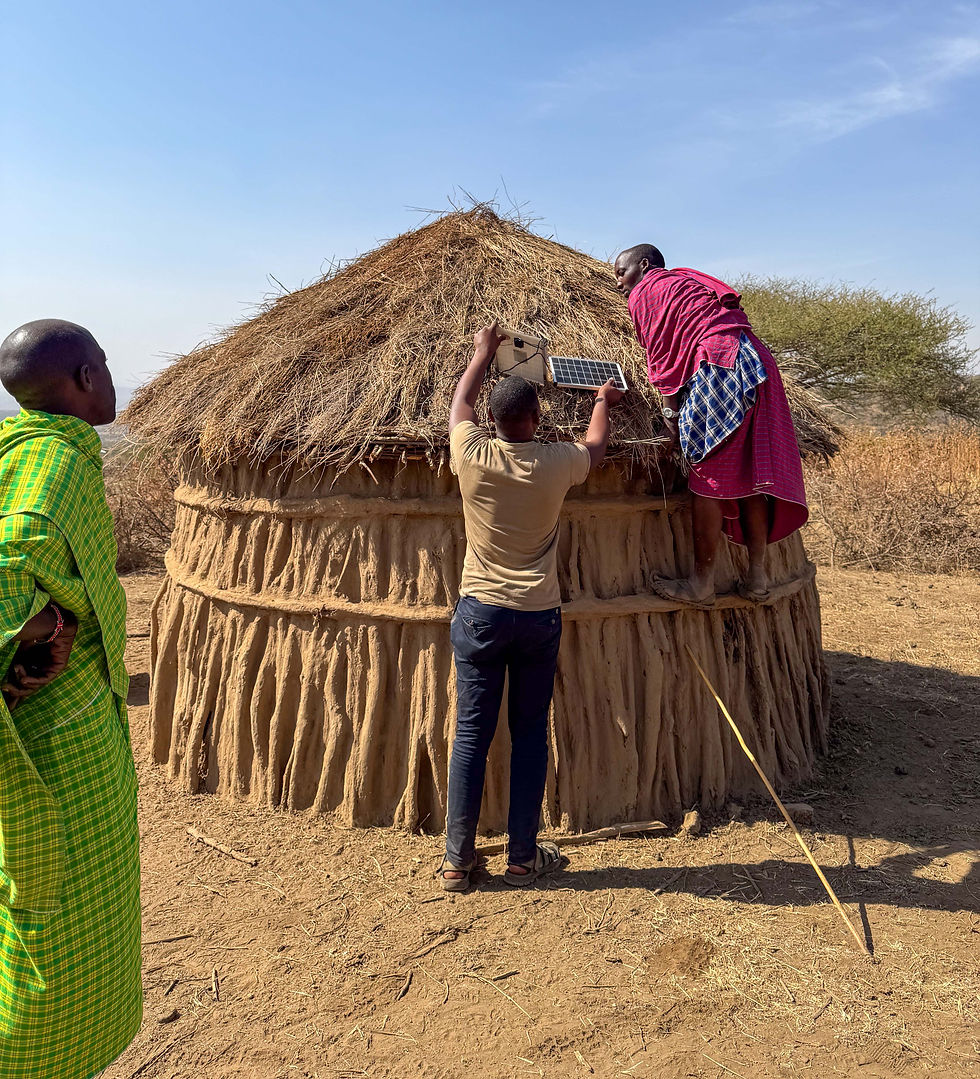
One example of this approach is our Kilimanjaro climb with purpose, where travelers summit Mount Kilimanjaro and then continue into a Maasai community to install solar panels through community-approved structures, ensuring that support follows local decision-making rather than individual impulse.
Travelers should not arrive with their own proposals, donations, or improvement ideas, even when motivated by goodwill. Introducing unsolicited solutions can create pressure to agree, perform gratitude, or redirect community energy toward external expectations rather than internal goals.
Ethical support means trusting systems that already exist. When traveling with Visit Natives, community contributions are discussed in advance, handled transparently, and directed through agreed local structures, ensuring that support strengthens existing social systems rather than reshaping them around visitor impulses.
The same principle applies across Indigenous contexts, including Sámi reindeer herding communities in Northern Europe, where access is not informal or open-ended but organized through specific families, seasons, and community-approved frameworks. Understanding where, how, and when encounters are appropriate is essential to respectful travel. For travelers interested in deeper cultural context, see our guide on What Are the Shamanistic Beliefs of the Sámi Reindeer Herding People in Norway?
Responsible Indigenous travel requires patience and humility rather than immediacy. When in doubt, asking before giving is always more respectful than surprising, and collective support is almost always more powerful than individual gestures.

Is It Ever OK to Give Gifts to Indigenous Children?
Encounters with children often trigger the strongest emotional response from travelers. The urge to give, to help, to respond immediately feels natural. Yet this is also where the most unintended harm occurs, because children are not independent actors, but part of family systems, school routines, and community responsibilities that visitors rarely see.
In places like Tanzania, travelers may see children running toward safari vehicles calling out “pipi, pipi,” asking for sweets or small gifts. This behavior is not traditional. It has developed through repeated tourist interaction, where children learn that approaching vehicles can result in handouts. Over time, this can pull children away from school, household duties, or lessons, and in some areas has contributed to declining attendance and increased dropout rates along tourist routes.
Giving sweets, money, or objects from a vehicle window may feel harmless in the moment, but it reinforces patterns that benefit no one long-term. Children begin to associate outsiders with rewards rather than learning or relationships. Risk-taking behavior increases as children run toward moving vehicles. Inequality emerges between those who live near roads or lodges and those who do not. Parents and elders are left to manage the consequences long after visitors have gone.
It is also important to understand that in many Indigenous societies, children are not considered autonomous recipients of gifts. Parents, elders, or guardians are responsible for what children receive, use, and are exposed to. Giving directly to a child without consent can undermine parental authority and place the child in a difficult position within their own family.
For this reason, travelers should never give anything to a child without clear permission from a parent or guardian. Helping children does not mean bypassing adults. Ethical support flows through families and communities, not around them.
The most respectful ways to support children are collective and community-approved: schools, shared meals, educational projects, or long-term initiatives defined by the community itself. In many moments, the kindest choice is not to give anything at all, but to allow children to remain children within their own world, rather than shaping their behavior around tourism.
Good intentions do not protect children. Understanding context, authority, and long-term impact does.
How This Applies in Real Indigenous Communities
If you want to see how ethical principles around money, gifts, and respect translate into real-world travel situations, explore these in-depth field guides based on long-term, Indigenous-led experience:
Traveling to the Bush in Tanzania: What to Pack and How to Prepare for a Maasai & Hadzabe Homestay How to Prepare for Indigenous Travel in Papua New Guinea: Culture, Ethics, and What Visitors Should Know How to Visit Indigenous Communities Respectfully: The Complete Guide to Ethical Indigenous Tourism How to Dress for a Sami Reindeer Experience in Arctic Winter |

Asking Before Giving: The Most Overlooked Ethical Skill in Travel
In Indigenous contexts, asking before giving is not a formality. It is an act of respect.
Asking acknowledges that visitors do not automatically understand local needs, priorities, or social dynamics. It recognizes existing authority, whether held by parents, elders, hosts, or community representatives, and allows support to move through pathways that protect dignity rather than disrupt it.
For travelers, asking may feel uncomfortable. It requires slowing down, letting go of impulse, and accepting that the answer may be no, or not now, or not in the way you imagined. Yet this discomfort is often a sign that power is being handled responsibly rather than assumed.
Asking also shifts the relationship. It turns giving from a personal gesture into a shared decision, and from charity into consent. Whether the question is about money, gifts for children, tipping, donations, or participation in community life, asking first allows Indigenous hosts to define what is appropriate within their own world.
When in doubt, ask. And when the answer is unclear, trust guidance over instinct. Ethical Indigenous travel is not about always doing something, but about choosing actions that leave communities stronger, more balanced, and in control of their own terms of engagement.

Frequently Asked Questions About Giving, Gifts, and Donations in Indigenous Communities
Is it rude to give money to Indigenous people?
Giving money or gifts directly to individuals in Indigenous communities is often inappropriate, as ethical Indigenous travel follows community-approved structures, which is often considered inappropriate unless local hosts or guides explicitly advise it. In many Indigenous societies, resources are managed collectively, and spontaneous cash gifts can create social pressure, jealousy, or obligation for the recipient. Ethical travel prioritizes community-approved systems rather than individual handouts.
Should I give sweets to Indigenous children?
No. Giving money, sweets, or objects directly to Indigenous children is strongly discouraged. Children exist within family and community authority structures, and bypassing parents or elders undermines local norms and can create conflict after visitors leave. Any support intended for children should always go through parents, schools, or community-approved initiatives.
Is tipping Indigenous guides appropriate?
Yes, tipping professional guides, drivers, and staff working within tourism economies is appropriate and often expected. In countries like Tanzania, tipping is part of professional labor relationships and should not be confused with charity. Tips should be given privately, in cash, and according to locally accepted guidelines.
How much should I tip guides when visiting Indigenous communities?
Tipping varies by role and region. In Tanzania, commonly accepted ranges include:
Assistant guides: ~10 USD per day per person
Cooks: ~20 USD per day per person
Lead guides or driver-guides: ~20 USD per day per person
Your local guide or tour operator can advise on appropriate amounts based on group size and length of stay.
Is it okay to bring gifts to Indigenous communities?
Only when gifts are advised by local hosts or guides. Many well-intentioned gifts, such as school supplies, toys, or clothing, can create inequality or reinforce outsider assumptions about need. When gifts are appropriate, they should align with local life, be collectively suitable, and never be distributed publicly or impulsively.
Are school supplies good gifts for Indigenous children?
Not necessarily. In many Indigenous communities, especially land-based or pastoralist societies, childhood learning does not center on formal schooling. Giving school supplies can highlight exclusion for children who do not attend school and unintentionally reinforce inequality. Educational support should always go through community-approved channels rather than individual gifting.
Can I donate medicine to Indigenous communities?
No. Travelers should never donate prescription drugs, antibiotics, or Western medicine directly to Indigenous individuals or families. Mixing pharmaceuticals with traditional medicine systems can be unsafe, and improper dosage, storage, and responsibility pose real risks. Medical support should only be provided through trained professionals or community-approved health systems.
What is the safest way to support Indigenous communities financially?
The safest and most respectful way is through collective funds, community-led projects, or contributions arranged through trusted local operators. These systems are designed by the community itself and ensure resources are distributed according to local priorities, authority structures, and long-term needs.
Is buying local food a respectful gift?
Yes, when advised locally. Purchasing food from nearby markets supports local farmers and avoids singling out individuals. However, diets vary widely, and travelers should always ask what food is culturally appropriate before buying anything. Never assume that commonly consumed foods elsewhere are suitable everywhere.
Why can giving gifts cause harm even when intentions are good?
Because gifts are never neutral. As anthropologist Marcel Mauss explained in The Gift, giving creates obligation, hierarchy, and expectation. When gifts bypass cultural systems, they can destabilize relationships, create dependency, or shift power dynamics long after the giver has gone.
Should I ask before giving anything?
Always. Asking before giving is one of the most respectful actions a traveler can take. It signals humility, cultural awareness, and trust in local knowledge. Surprising communities with unsolicited gifts or donations often creates pressure rather than appreciation.
Is it better to give nothing than the wrong thing?
Yes. In many Indigenous contexts, giving nothing is far more respectful than giving the wrong thing. Ethical travel values restraint, consent, and cultural literacy over emotional impulse. Support should strengthen existing systems, not reshape them around visitor expectations.
Want to Experience Indigenous Travel the Right Way?
If you are considering visiting Indigenous communities and want to do so ethically, responsibly, and in partnership with local hosts, you can explore journeys designed through long term, Indigenous led collaboration.
At Visit Natives, all travel experiences are created together with Indigenous communities themselves, with clear agreements around money, contributions, and consent, so that travel strengthens existing social systems rather than disrupting them. |

About the Author
This article was written by the founder of Visit Natives, an anthropologist and Indigenous travel specialist with long term field experience living and working alongside Indigenous communities in Tanzania, Northern Europe (Sápmi), Papua New Guinea, and beyond.
With an academic background in anthropology and years spent in the field including extended stays in Maasai villages, Hadzabe hunter gatherer communities, and Indigenous societies where daily life is not organized around tourism, her work focuses on ethical Indigenous travel, cultural literacy, and community led tourism models that prioritize dignity, consent, and local authority.
Through Visit Natives, she collaborates exclusively with Indigenous hosts and local leadership to design journeys rooted in long term relationships rather than short term visits, ensuring that money, gifts, and contributions follow community approved structures rather than outsider impulse. Her writing draws on both anthropological theory and lived experience to help travelers understand how to visit Indigenous communities respectfully, avoid common ethical mistakes, and support communities in ways that strengthen rather than disrupt existing social systems.